Twilight Film Studio sues Affiliate Marketer

In the “very interesting” news category, Summit Entertainment LLC, the film studio that makes the “Twilight” series of films, has sued the owner of Twilight.com for trademark infringement. According to the complaint, Twlight.com (which was registered before the Twilight books were even created) is infringing on the Twilight films TM, by falsely leading the public into believing the site is associated with the films.

The lawsuit claims that a cease and desist letter was sent in April of 2009, and the owner Tom Markeson of San Mateo, California responded that he was not infringing on the Trademarks of Summit.

This is an interesting case because the site is only a very basic site with links to a variety of things being sold on Amazon.com. Nothing on the site itself suggests that its associated with the site, nor is anything being sold except authorized Twilight books and CDs, and one link to Twilight Zone products.

This is a very interesting case, because the products being sold include products from Summit Entertainment, which in theory allows them to be sold via Amazon.com and their affiliate program.

Again nothing on the website refers to it being associated with the Twilight movies, except those links to products.

Questions I would ask is what is the difference between this and any fan website that might talk about a product and have links? What about a search with affiliate links.

My personal opinion is that this is a junk lawsuit: that there is no infringement here. This is obvious fair use, and the owner is just using a domain that he had before to get the traffic from people who enter twilight.com and then he provides links to the authorized products of Twilight.

The studio is a huge corporation with the ability to bring this frivolous lawsuit, hoping that in return for dropping they can get this lucrative domain.

I do think this is also an important case, because what is to prevent anyone from suing another affiliate marketer who is talking about products, or is a fan of a product with links to affiliate products on Amazon?

Peter Bordes Leads the Industry

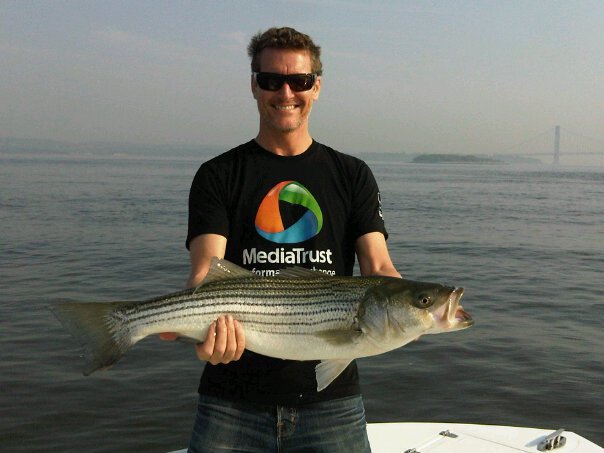
Peter Bordes is not shy for words. He’s become one of the most outspoken members of the Performance Marketing Industry, and has made it clear to anyone who is listening that he wants to clean up the industry. As the CEO of MediaTrust, he’s taken the industry to new levels, and has introduced the first performance marketing exchange of its kind. Most recently he was elected as the new President of the Performance Marketing Association and plans to use the PMA to make changes in the industry, make it more professional and help combat fraud.

First of all, how did you get into this interesting industry?
I was running Empire Media in NYC, post Internet bubble. We were incubating and acquiring assets from companies that survived the crash. My two co-founders, Jivan Manhas and Matt Wise, whom were at Azoogle, approached me about incubating an affiliate network.  I did some research and was very intrigued with what I found. This emerging industry segment was growing very rapidly and was like the wild-west with a hint of boiler room. It was marked with incredible growth rates with very little technology and business culture; high turn, high volume traffic in, high volume traffic out, and no brands. There were many problems to be solved, big and small. Most importantly, it was a logical place to focus on building a business and brand. The CPM business had just tanked and Adsense and CPC, which was the beginning of performance marketing, were taking off. There was one stop before “free” which was transactional performance driven advertising. This, therefore, seemed like a logical place to invest in building an enterprise. The market would eventually move deeper into performance marketing models.

MediaTrust came out of nowhere after being launched as AdValiant in 2005(?) What was the key to MediaTrust’s success?
MediaTrust’s key to success was its solid foundation. Our brand and business culture’s foundation was built around trusted long-term and deep partnerships, all driven by technology. We found that the industry was so high volume and transactional driven that its culture was built upon an “all for me, more for me” mentality. This created a significant amount of paranoia and lack of trust between affiliates, advertisers and networks. No one was doing any kind of financial modeling or thinking about building long-term enterprise value. It was high- turn “make as much money as fast as you can because who knows what will happen tomorrow” type of mentality that plagued the industry. We felt that there was a need for a brand whose foundation emphasized a proactive collaborative partner-centric organizational culture, supported by great technology. “The better our partners and industry do, the better we do” was, and still is, the base of our core values. That kind of ethics and integrity are what drive trusted and long-term partnerships.

Regarding the transition from AdValiant to MediaTrust, we decided that AdValiant was the name of a network; we felt the future was about platforms. MediaTrust reflected the vision of what we wanted to build and where we thought the industry could head. We were very fortunate to create the brand MediaTrust and that the two words that were not synonymous with each other in digital media and marketing can now stand true.

You’ve been one of the most outspoken members of the community when it comes to compliance: what do you see one of the biggest issues regarding compliance now?
If we wish to become a significant segment of the Internet marketing industry, we have to become more proactive and work together. We have a legacy of always being reactive and moving from one high volume campaign to another, like hamsters on a hamster wheel. This is just not sustainable. In order to gain enough critical mass and create a single unified voice, we have to break this cycle of short-term thinking and move away from being a highly-fragmented black box. This is how industries are made or not. We are so under the radar screen that it makes it next to impossible to have any research or meaningful data about how large performance affiliate marketing really is, and it’s very large. Regulation is inevitable. The FTC has left a 12 lane super highway of grey for marketers to run around in, which is starting to change rapidly.  The consumer is now behind the driver’s seat; the consumer is king. Compliance, standards and regulation are critical. We need to take control of our own destiny by proactively driving compliance standards and guidelines. This is the key to our future, and the biggest challenge for affiliate performance marketing. We can either make it happen ourselves and make sure it makes sense, or have someone make it happen for us who doesn’t understand our industry. I personally don’t want to have legislators who don’t understand us do it for us. It can be catastrophic if not done correctly as evidenced by the Nexus Tax, which has proven to be is a serious threat if not managed properly with the right knowledge.

How do you see this industry changing? Is it less about “affiliates” and more about relationships? Do you use the word affiliate marketing, or is it more “performance marketing?”
We think it’s about “performance marketing.”Affiliate marketing is now becoming one of the channels in the “performance marketing industry”. As we move from being network-centric to platforms that are open modular and agnostic,  its all about relationships. Understanding and building great relationships are part of the foundation of any great business and industry. The legacy of affiliate marketing is about being advertiser or affiliate centric, and never the consumer. The future is about being agnostic and holistic about triangulating the relationship between consumer, advertiser and publisher/affiliate and creating value by driving quality relationships. That “relationship” between them is the future of ALL Internet marketing. We are in the middle of a significant shift from the age of “MASS marketing & media” to “ME marketing & media”. The consumer no longer sits at the bottom of the pyramid being told what and how they will consume. They are at the top and know what they want, = and how they want to interact. By empowering that relationship with tools and technology, we create a much higher ROI for all 3 constituencies.  Web 3.0 is not the semantic web. It’s the relevant web, and relevance is driven by understanding these relationships.

What is your opinion on incentive based marketing? Is there any room for content-portals (ie, places that reward you for filling out forms etc) or is it just a bad idea? “Garbage in … garbage out” that’s my view point of incent paths. Its mass marketing that tricks the consumer into giving up as much info as possible with the promise of getting something “FREE”. Free is the killer of all good marketing and has been beyond abused, as well as used, to destroy great business models like the “continuity” marketing model. Free iPod, free ring tone, free trial, free $1000 Home Depot card. This is just another easy money low hanging fruit channel that basically produces low level data and garbage results for most advertisers. Its noise vs quality, and one of the biggest problems here is that most advertisers don’t measure life-time value. So, they keep buying because they can’t measure how effective this form of marketing really impacts them (this is changing rapidly as advertisers are getting smarter in measuring life-time value). There are other forms of incent marketing such as the portals that offer rebates and shopping points that are valuable assets because they care about building a brand and relationship with the consumer based on value. This is completely different from paths which don’t care about brand and users returning as a destination. These one hit wonders will have to evolve or will become relegated to the low end dregs of the industry. I don’t know of any single shining star example of great success for advertisers in incent path marketing. Its turn and burn.

What is MediaTrust’s main push revenue wise for 2011?
We have moved our entire business model from the MediaTrust performance marketing platform to the PerformanceExchange. The MTPX is the future of performance marketing as we push to innovate into being a highly scalable technology & quality driven company for direct response marketing.

Tell me a bit about the MT Performance Exchange? The PerformanceExchange is the next generation of highly scalable real-time platforms that’s focused on “connecting quality clicks to conversions” for the performance marketing industry. It’s a hybrid CPC bid platform /ad-exchange that empowers direct response marketers, advertiser and publishers with the best tools and technology to maximize their inventory yield and campaign conversion ROI. Similar to the concept of the eBay’s quality clicks program which is still CPA marketing, but paying in a CPC currency based on the quality of the click to conversion and life time value. The MTPX creates tremendous “right price” efficiency by connecting the value chain together from the click to the conversion in real-time (to the minute). All traffic and all clicks are not created equal and have a value when driving conversions. It’s not black and white in that there is only good traffic and bad traffic. The MTPX allows publishers who generate low volume high quality traffic to get the right value for their inventory as well as the high volume lower converting traffic sources. What we have found is that all traffic has a value based on the transactions it drives, and that performance marketing pricing in a pure CPA/CPL model isn’t dynamic enough to be able to give traffic sources the appropriate value based on quality. The MTPX lets partners trade CPC currency (and in the future CPM) in different markets such as email and contentvs lumping all the traffic sources into one single channel. Think of it like a Bloomberg financial markets trading terminal for direct response marketing. Its core tenants solve many small and larger problems in the performance marketing industry by being a transparent environment that drives consistent value based pricing driven by quality. Transparency creates great efficiency that enables our partners by empowering them with knowledge to better understand their markets and get more out of them. Performance marketing has a history of being a black box and we feel that needs to change if we are going to evolve and grow as an industry. Especially with the new compliance and regulation that’s beginning to happen across the entire digital marketing ecosystem.

We have not even gotten started yet and we are already seeing tremendous results due to all the proprietary performance algorithms we have developed into the MTPX with 7to 13.7 % conversion rates in the email channel with little to no fraud. We are launching the “content channel” soon and have a ton of tools and technology in our product pipeline that is game changing for our partners and industry. We have flipped the switch from being 80% service/20% tech (industry standard) to 80% tech/20% service which is the future of all things direct response. We must become a product/tech centric driven industry in order to grow and work with all the brands, agencies and publishers that want to participate in performance driven marketing.

Why is MediaTrust starting to move to a PPC/CPC model, when Google founder of PPC just got into the CPA model?
Instead of opening a new channel, what we have done is merged them together. We are focused more than ever on CPA/CPL marketing. We have only evolved the model and changed the currency to paying in CPC to create greater pricing efficiency based on quality. Think of it as an auto arbitrage exchange platform that is built from the view point of a performance marketer from the back of the conversion funnel out vs from the impression or click back. It’s the same thing. Google is connecting the value chain together into an ecosystem of solutions the same way we are. We are approaching it from different points of view, relative to direct response marketing. The future of all things digital is about platform driven ecosystems that speak to each other and are driven by data.

Some people would say that MediaTrust embracing this model means that you don’t trust the performance model anymore, thoughts?
Absolutely not. We are passionate believers and advocates for the performance model and industry. We think that there is a very large opportunity as more and more brands and agencies move to more accountable metrics driven advertising. The PerformanceExchange is the future of performance marketing as a highly evolved technology driven platform that will allow them to begin to participate in performance marketing. The industry must start delivering more transparency, data and analytics that are required for more sophisticated partners to feel safe and confident that they can hit their metrics and maintain their brand integrity and compliance needs.

Some people accuse you and MediaTrust as being “above” what is really happening in the affiliate community, that you personally aren’t in the “ditches”. What is your response to that?
That’s interesting to hear and something I have not heard. I have actually heard the opposite in that I “personally” am very involved in being present at every trade show, on the floor, in the booth talking to everyone about what’s working or not vs staying in the CEO tower. You can’t innovate and evolve what you don’t understand and embrace. We have always strived to understand the ditches so we can stay on the leading edge of the industry. If we don’t evolve the industry then no one wins and we all stay stagnant or contract. I would say we understand the industry extremely well and that’s what has allowed us to move from a network to a performance platform and now to a performance exchange. We have been pushing for regulation, compliance, technology innovation, helped form the first industry association, and have been very vocal advocates for the growth of performance marketing. You can’t do any of that unless you have a strong fundamental understand of every aspect of the industry.

If you could dictate any changes for the industry to make in 2011, what would it be?
That every person in the industry come together as a unified voice and get behind the Performance Marketing Association so we can become a strong, unified and viable segment of the internet marketing industry. We must evolve in order to move away from the past “red headed step child “ legacy reputation of affiliate marketing. We need to stop being a fragmented black box and move from being reactive and always running to the next fast money thing. To being a unified proactive group that solves problems and takes issues such as standards, compliance and regulation head on. This is how we build industry value and enterprise value for our companies and business partners vs. making another fast buck and moving on. Aren’t people tired of being hamsters on a hamster wheel going in circles by playing a constant game of musical chairs? The FTC and new technologies are not going to allow this behavior to continue. There will be a divide between the compliant and the non-compliant. We are not an industry until we have an Association to represent and help make sure the right laws, taxes and more are created to help us flourish. Not contract. Now we have an association and its essential everyone participate so we can take control in shaping the future of our industry vs running around in the shadows trying not to get caught.

What’s going to happen with email marketing? Are spammers still going to “Control” parts of the industry?
There will always be the dark dirty side of every segment in the market. But it will start to become smaller and less predominant based on better technologies and systems to prevent it. There are very good systems now that create significant transparency in email. Email done right is a very effective channel that can drive meaningful value to the consumer, advertiser and email publisher. In order to do that mailers need to think about how to create better one on one relationship with consumers. We are in a meaningful shift from “mass marketing” to “me marketing”. Mailers who are evolving are seeing tremendous results from their data. That being said there will always be the noise of spam in the inbox. Its just going to become a smaller segment of the consumer experience.

What does MediaTrust look for in (affiliate) partners to work with? We look for publishers who want to build a long term proactive and collaborative partnership who share the same core values that are based on the success of our partners “first”. We want to work with partners who believe that transparency creates greater efficiency in a partnership which creates greater trust. This is how you grow serious long term and stable business partnerships and value.

How do you see the industry contracting in 2011? What type of companies do you see succeeding, and what type of companies do you see disappearing? We are at a critical inflection point in the performance marketing industry. One segment of the industry is already contracting which is the non-compliant companies who keep doing the same next hot thing get rich quick schemes and run around in the shadows. The companies that are embracing regulation and compliance will be the ones who are able to evolve and build significant businesses while the rest cannibalize the lower end of the market with no name fast money low margin business. That’s just not sustainable or scalable. The consumer is becoming so much smarter and companies need to understand its about creating products and campaigns that create value for the consumer. Not trick them into buying something that’s based on a breakage model or misrepresents the word “free”. Those who realize and embrace that concept will thrive.

You’ve been very active in the Performance Marketing Association, what is the reason? Don’t we already have the IAB and the DMA, why have another, less-funded association? Aren’t we just dividing our ability to work together? I would be very curious to know how many of your readers are members of the IAB or DMA. They are not the same and are not associations that have been created to specifically represent the affiliate performance marketing industry. The IAB has a leadgen committee. Do you think that properly represents us? I certainly don’t. As a matter of fact we used to be IAB members and when the tax issue came up I spoke to them about this being a great opportunity to become champions of the industry for affiliates and they said “we have a leadgen committee and we don’t think of affiliates as real publishers”. So in a nut shell they think of affiliate marketing as a dirty illegitimate industry segment. The DMA is primarily representing traditional direct response marketers and also doesn’t understand or represent affiliate performance marketing. The IAB & DMA are very good organizations. But they have not demonstrated that they understand or are champions of our industry. They have literally done literally “0” when it comes to the Nexus Tax or regulation or FTC issues in relation to performance marketing. So do you or anyone else reading this want or consider these organizations people they want representing performance marketing? We are not even considered an industry until we have an association that specifically represents us. For all the reasons I outlined in the other question. We MUST take control of our destiny as a group with a single voice that is proactively taking on issues and stop being a fragmented black box that’s reactive and running to the next best thing. The grey area is going to get smaller and smaller and smaller. Its essential that we all participate and get behind the PMA and help them to help us, and that goes for everyone in every part of the affiliate marketing ecosystem no matter how big or small. We are an enormous segment of the online advertising industry. But no one knows that because there is “0” data or research that’s meaningful enough to show how vast performance marketing is and all the areas of digital marketing we touch. As an example of this when the PMA was fighting the Nexus Tax it became very evident that none of the states had any idea what affiliate marketing was or how big it is. We tried to pull enough information together and found almost nothing. Why? Because there has never been an entity driving the need for this kind of research. We ended up creating a mash up of the LinkShare affiliate base in CA with a Google map and it was incredibly eye opening to all. Affiliate marketing in CA is gigantic, and the state legislators all of a sudden understood what they were dealing with. Colorado was the same thing. I led a panel and the legislator flat out said “we were just following NY State and had no idea how big affiliate marketing was in Colorado”. That says it all. We MUST have proper representation and data in order to be a viable and relevant segment of the online marketing industry. Neither the IAB or DMA stood up or had that info. It was the little old PMA fighting on all our behalf.

 If you could pitch Disneyland/Disneyworld on a performance marketing plan, how would you do it? How would you like becoming significantly more efficient with how you spend you advertising budget by only paying for users who sign up for your service or buy your product. If they don’t you don’t pay by leveraging 100% accountable transactional data driven advertising in a transparent trusted environment. Stop flushing you money down the toilet.

What is your dream car? 1987 Aston Martin DB8 Vantage.

Jean Maurice Touboul Makes Video Watchers Click-Happy

Performance marketing is all about change.  While today’s buzz may be mostly about mobile marketing, tomorrow’s hot topic could easily be video. According to Borrell & Associates, “Online video spending is forecasted to account for more than 1/3rd of all online advertising in 5 years.” For marketing professionals 1/3rd of any overall advertising budget is a big number.  So when I caught up with an old colleague, Jean Maurice Touboul whose company EnContext had broken into video marketing in a big way I had a lot to ask him.

Jean, first can you tell me a bit about your professional background leading up to this current venture?

I’ve come from a background of entertainment having gone to film school, working on a dozen or so film projects and with Disney in distribution.  This is where I started using what we called New Media, video solutions in an industry where celluloid was it!  Eventually the Internet started to take shape and I always had the feeling that media such as film and video were a natural for the Internet making it possible for anyone almost anywhere to be connected in some way and enjoy similar programs and with them feelings, desire, attractions.  Today the technology has advanced so much and it is so accessible that this convergence is no longer limited by technical issue. Images, the Internet are all entwined into this new media that we watch and enjoy every day using all kinds of devices.

What was it like working at a media giant like Disney?

Disney is a household name in the US and throughout the world, and probably more so in countries like Japan or Taiwan and China so opening distribution for Disney in Asia was a blast.  We were received like liberators arriving in an occupied country.  Europe was much more challenging but overall working at Disney was like a dream and to some extent it was a dream since we were pushing the concept of a mouse that was entertaining, teaching, showing, goofing around.

How did the work you did at companies like Disney and Commission Junction help lead to the creation of your current project EnContext?

EnContext is a direct result of my experience at Disney and CJ or World Avenue for that matter, combining the ultimate form of entertainment, moving pictures, with the Internet and ultimately lead generation as well as the incredible power of knowledge that the Net can provide.  Watching films and videos all day long and viewing things that actors wore or were using or places that I was attracted to made me wonder why I could not simply click on the image and get these items or information on what I saw.  Quite a few years later, the result in EnContext.

Can you explain a bit more about what EnContext does for advertisers and marketers?
EnContext enables viewers watching videos to click on almost anything that is seen on a frame and be connected to a web page where information on that item is available and a purchase can be completed.  The system uses geo-targeting and optimization to deliver the right web page to the viewer wherever this person may be.  This in itself is a great advantage for advertisers.  However what this technology does is to turn video, a passive media that we watch for information or enjoyment purposes, into what I call a pro-active media that invites people to know more about what they are watching or getting something that they see and like.

As a lead generator I’m always inclined to look at something from the perspective of my own business.  In terms of B2C lead generation can you elaborate on how your company can help?
Videos like ads can be used (and to some extent are already used) to generate leads, however they typically contain only one link to an advertiser’s website.  EnContext enables us to put as many links as we want in a video, so you can imagine a typical city scene with someone walking in front of a store while a car is driving by.  We can link most everything this person wears such hat, shoes, suit, watch and so on as well as add a link for the store (let say Macy’s) and the car (Audi for the sake of example).  The videographer or film maker can make deals with any advertisers that fits the bill for what the on-screen person is wearing as well as make a deal with Macy’s and Audi. Leads can then be paid by one of these entities when an action at their site is recorded.  EnContext enables all this to happen from the encoding to the tracking and recording of clicks as well as action on the advertiser’s “action” page.

Do you serve mobile advertisers and marketers as well?  Are online and mobile the same as far as your technology is concerned?  If there are differences can you explain them briefly please?

EnContext is compatible with most Smart Phones and Tablets.  As far as the technology is concerned there are no differences.  However there are obvious limitations in terms of screen size with Smart Phones.  This being said, Smart phones and tablets offer a new level of targeting that is unique since their geo-location can be better defined than simply relying on IP address.  As a result, I believe that there is tremendous potential in that space for EnContext.

How well does your technology work in terms of creating sales?  Is it typical that a visitor to a video makes a decision to purchase at a later time?

We are testing various solutions to enhance sales on video that are encoded with EnContext.  For example realizing that not everyone would click on something when they see it, we are implementing an option to review/replay specific sequence of a video that features items that were offered but that may have been missed by the viewer.

Major video content owners like Disney seem like obvious fits for your technology but what about the smaller, viral video producers out there on YouTube and other video sharing sites?  Do you think your technology will spur the entry of people into affiliate marketing who previously had no experience with it for example?

Actually I believe that this technology can help the smaller and what you call viral producer much more than large conglomerates like Disney since it would provide 1) more depth to any program that wants to carry a message by linking the video to web sites that are relevant and contain information that complement the video.  As importantly and 2) it could help independent producers who struggle with distribution and, indirectly, generating returns the opportunity to create revenue streams that could last for a long time.  As a matter of fact they could also use this technology to enhance the SEO of some sites since it would be yet another way to attract traffic and links.

As far as providing this technology for entry-level affiliates, this is precisely what we are working on for the next generation of EnContext Advertising.  The technology is already in place but we have to finalize the offering to users and how far we want to go as far as connecting affiliates’ videos to affiliate networks.

You’ve made a great case for advertisers to use your technology but what other uses do you see for it outside of the marketing world?

I really believe that EnContext is an ideal solution for enhancing educational programs.  We have a perfect example on our website of an educational program explaining the discovery of the Atomic Nucleus that we linked to a many websites.  Each website enhances the video by enabling the user to know more about the scientists that discovered the Atomic Nucleus and their work.  The current research on Atomic decay and related research at the super accelerator at CERN in Switzerland, and so on.  The possibilities are endless and could truly take video learning at a new level.

Seems like social media such as Facebook could really make use of your technology.  I can imagine a Facebook user uploading a video of a wedding for example and tagging friends in the video.  Any chance we’ll see big news in the future involving your company and one of the big social media players?

Absolutely, this is something that we see as well as that we are working to implement whereby someone could tag friends, items, things to get or send, etc.

If you had to name one thing that has been your biggest inspiration as an entrepreneur what would it be?

That may sound predictable but my biggest inspiration comes from my experience at CJ as a model for working as a team focused on being the best and with a very clear purpose. I also inspire myself from Google as a model for vision and quality before profits, something that I believe is paramount to any company’s success.

How can you be reached if readers have additional questions?

I’d love to hear from anyone who has a question or comment and can be reached via email at jeantouboul@encontextadvertising.com or by phone at 415-670-9397.

You can also find out more about EnContext here.

Survey: How Bloggers Monetize Blog Content

A recent survey asked small business owners — who are also bloggers — how they use affiliate marketing and performance marketing networks to monetize blog content.

In the introductory part of this series I shared some general observations of the survey responses that provided a snapshot of thinking and experiences from bloggers’ perspectives about the overall state of the performance marketing industry. Surprisingly, a high percentage of the bloggers who took the time to answer this survey are also small business owners with wide ranging experience across different industries.

They are social media savvy, early adopters of emerging technologies, and influential across all segments of the blogosphere. While the sampling was small, this audience was international, spanning at least four of our seven continents. With the exception of a very few, none would call themselves “affiliate marketers.”

Survey Responses

Now let’s take a closer look at the two important questions asked in the survey and the bloggers’ responses about how they use affiliate and performance marketing to monetize blog content.

  1. Best thing about performance marketing networks, PPC, and CPA networks?
  2. Worst thing about performance marketing networks, PPC, and CPA networks?


Best Features

Best ~ Worst ~ Further Reading ~ Thanks

The best thing [about performance marketing networks, PPC networks, CPA networks] is the opportunity to make money without having to have a product. — “Mitch” Mitchell, T.T. Mitchell Consulting

Quicker Than Creating A Product

The general consensus is that affiliate marketing and performance-based marketing provides an easy way to make money without having to spend your own time and money to create a product. Overwhelmingly, the bloggers participating in the survey used the larger affiliate networks from which to select products that complemented their niches and appealed to their readership.

The main appeal to bloggers for this type of monetization strategy was getting paid for every sale.

Getting Paid For Every Action

For those preferring CPA (click-per-action) or PPC (pay-per-click) networks, the “sale” is the culmination of “the action” at the end of which is a commission. Using these networks, bloggers agree you can quickly and easily generate an income. In theory, there are no ceilings or caps. In their own words:

  • The best thing about PPC networks is that you get paid for every click.
  • As for CPA, the best thing is that you can get paid quite well for referring people who complete a sale.
  • The traffic [can] make at least two hundred a month from AdSense alone.
  • PPC marketing is excellent for start-up businesses that need to have income generated fast and have not yet established themselves in the free search engines.
  • Some PPC and CPA networks also have dedicated affiliate managers to help with any promotions.

Control and Choices

Supplemental to the allure of easily earning an income is the attraction of having choices. Those choices include having control of the advertisers you work with and deciding for yourself who gets what space on your blog. Of course, that control can be somewhat erroded by the insistence of some CPA networks that their ads sit in the choicest spaces, above the fold. But, for the most part, these choices remain in the hands of the blog owners.

Small business, especially an online business blogger with global reach, can earn revenue in a variety of ways according — no matter what his niche. Networks with a worldwide presence give bloggers in remote, obscure locales the same opportunity as those operating in major cities. Thus, if they desire to use any of these blog monetizing strategies, they too have choices.

Worst Features

Best ~ Worst ~ Further Reading ~ Thanks

Heck, is it my fault they can’t produce a page that converts prospects into sales? — Peter Pelliccia, WassUp Blog

Whenever there is a “best dressed list” not far behind is a “worst dressed list.” The same holds true for our subject at hand. While the good things about the industry give them a means to monetize blog content, business bloggers also had much to say about the worst performing aspects of affiliate and performance-based marketing networks. They spoke about payments, creatives (banners and ads), niche relevance, ethics, and customer service.

Further down you will see some suggestions for improvements in a much longer checklist; for now, these are the absolute worst offenders.

Payment Levels and Threshholds

  • The worst thing about PPC is the amount you get paid is pitiful. The worst thing about CPA is getting nothing at all for sending all those people to their landing pages. Heck is it my fault they can’t produce a page that converts prospects into sales?
  • Sometimes the weasels don’t pay you, then won’t respond to your email.
  • My personal gripe is Google’s $100 payout minimum. I never collected. I’m stuck at $74.00.

Customer Service

The top pet peeve of a disproportionate number of bloggers was either the total lack of customer service or the glaring disregard for the customer. Respondents cited instances in which advertising networks don’t have contact phone numbers, pass the buck, give them the run-around, and blatantly treat them badly.

Such obvious inattentiveness to basic tenets of responsive customer service was considered almost unforgiveable.

Creative Control

The worst thing about these networks is the three-way tension between network, publisher and vendor. — Mitchell Allen

Creatives are advertisments, banners created by the advertisers for your use on your sites. They come in a variety of sizes and oftentimes you get text versions, too. Using some magical formula and a bit of conversion wizardry, advertisers have decided that the sizes that convert best have nothing to do with my sidebar, or your’s either.

While you might have a choice of where you will place them, Mitchell Allen of Morpho Designs points out how you, as a publisher, “have no control over the creatives.” I understand what he means. As an example, I prefer 250×250 size banners because they fit perfectly in the space allotted by my WordPress theme for the sidebar. Unfortunately, if I want that size banner for most of the advertiser programs I work with, I’ll have to create it myself.

Niche Relevance

Either the super-networks are niche-challenged or they are so large small business owners and bloggers cannot find the products and services they want to promote to their website audiences. The search engines on these networks could use some algorhythm changes to make results more relevant.

Networks like ClickBank and Share-A-Sale mainly focus on ebooks, software, themes, and services. To ClickBank’s credit, it offers thousands of information products covering a broad market, so if you need information products, you’re covered. Or, if your audience includes business owners seeking software solutions or SaaS services, Share-A-Sale represents a large volume of advertisers who might have what they need.

As challenging as it can be to find quality products relevant to your customers, readers, and target market, affiliate marketer Ron Cripps highlights a hurdle that is specific to CPA marketing:

CPA Networks can encourage you to promote products and services that are not related to your niche as each month you receive a list of products to promote from your affiliate manager. — Ron Cripps, Affiliate X Files

What’s next in the worst dressed category?

Ethics, Standards, Corruption

Almost unanimously, those survey respondents who spoke on the issue agreed that ethics and standards were at issue. Bloggers like Gera (@sweetsfoods) are certain that a lack of “filters to sort out real proposals and scams” is the first place many networks fall short. Along the same lines, another business consultant alluded to the proliferation of offers that “mislead unsuspecting consumers.”

While the actual misdeeds are not so much the fault of the advertising networks and agencies that provide the means for bloggers to present these offers to their readers, the oversight certainly falls squarely upon their shoulders. (I’ve never seen a mechanism that asks for any feedback from a consumer who purchases or particpates in an offer managed by an advertising network.)

Many of the networks are riddled with crooks on both sides of the fence. — Gail Gardner, GrowMap.com

Strong opinions were expressed about the ethics, standards, and levels of corruption perceived to be in operation within the performance marketing industry. Listen in . . .

  • Many of the networks are riddled with crooks on both sides of the fence. There are affiliate marketers who use cookie-stuffing and toolbars to generate commissions for sales they did nothing to generate who steal from both the sellers and other affiliates.
  • There are offers being made that mislead unsuspecting consumers.
  • Networks without any type of filters to sort out real proposals and scams.
  • The corruption with the adware, theft and ripping off legit Affiliates and websites. Some of the network’s parent companies have begun buying Affiliate sites, including ones with adware. Not only are they competing with us, but certain applications have the ability to overwrite our cookies and steal our commissions.
  • You also sometimes don’t get paid if the merchant decides not to pay; there is no control if you will be kept in a program or removed. If you are removed you may end up having to change out thousands of links.

I mentioned in the first article of the series how one of my accounts was closed because the network decided my level of sales — on their behalf — was not up to snuff. That annoyed me to no end, but it was hardly as grievous as some of the situations reported by bloggers like Mitchell who had accounts closed and were never paid their earnings. This situation prompted him to blog about it, in Finish Line Steals My Money Then Cancels My Account.

Final Thoughts

The best and the worst, from bloggers’ perspectives, give us some food for thought. The good things are very good indeed. The not-so-good? It would be fair to say that every issue highlighted today can be satisfactorily addressed. Coming up in Part 3 are some suggestions for improvements in the affiliate marketing and performance marketing industry. And,we’ll see what bloggers had to say about which types of programs work best to monetize blog content.

If you missed Part 1: Established Methods to Monetize Blogs, you still have time to catch up before the next article!

Take the Survey

Are you a small business owner or blogger? Take the survey (it’s anonymous). Our collective voices could be the catalyst that effects a change for everyone’s betterment – especially the ability to earn a decent income from our blog content.

Please share your thoughts in the comment area below. Thanks for reading.

Further Reading

Special Thanks

Special thanks go out to the many bloggers who participated in the survey.

Peter Pelliccia, Small Business Owner “Blogging for fame and fortune”
Twitter: @AussieSire

Mitch Mitchell, Business Management Consultant, Writer
Twitter: @Mitch_M

Gera, Blogging Strategies
Twitter: @sweetsfoods

Mitchell Allen, Software Developer, Writer,
Twitter: @AnkleBuster

Gail Gardner, Small Business Social Media Marketing Advisor
Twitter: @GrowMap

Adam Riemer, Affiliate Management company, Washington DC Marketing Firm
Twitter: @RollerBlader

Alicia Jay, Transcription, Proofreading, Typing Services
Twitter: @TranscripESvcs

Ron Cripps, Affiliate Marketing
Twitter: @affiliatexfiles

Adrienne Smith, Achieve Success Online
Twitter: @AdrienneSmith40

And many, many thanks to all of our other small business blogging friends!

Take the Survey. Are you a small business owner or blogger? Take the survey (it’s anonymous). Our collective voices could be the catalyst that effects a change for everyone’s betterment.

Other Articles in this Series

Read Part 1, Established Methods to Monetize Blogs.

Read Part 3: Improvements Pave the Way to Monetize Blogs.

Ryan Eagle: Making Publishers Rich & Lovin’ It.

If you don’t know who Ryan Eagle is, you haven’t been paying attention. He advertises in almost every affiliate publication, website, portal, blog you name it with flashy ads that match his well known flashy personality. His CPA Network, EWA was named one of the top 10 CPA networks by affiliates.  His content Unlocking Network, BLAM ads has come out of nowhere and has become a major player in the space. As part of our ongoing look at the Content Unlocking space, we’ve decided to sit down with him and ask him the hard questions about his business, his personality and what drives him to make buttloads of money. He’s found a place in the industry, and whether you like him or not, he’s here to stay.

How long have you been involved with the industry? Can you give us a brief background on yourself?
For as long as I can remember I’ve been a computer geek, making my first gaming community in 2002. I began generating enough revenue to cover the server costs so at the time it was simply a hobby which expanded into learning SEO to gain more visitors to my community. In little time I realized the full potential of this and developed several other properties until I hit massive success in 2004 during the “easy days” of making money. I became an affiliate in 2005 and hit massive success throughout the years via media buying, social and contextual marketing. After saving capital throughout the years of success, I launched EWA Network in February 2009 and that entity of Eagle Web Assets has grown drastically since it’s inception. After researching market trends, I decided to submerge myself into content locking in Mid-2010 by launching BLAM Ads.

Love me or hate me, I’m here to make publishers rich. You can check the credentials, I’m a man of my word and I work harder than anyone I know – that’s how I’ve reached the success that I have now.

I’m the absolute best at what I do, and that’s why I’m a cocky asshole – but do not mistake that for ingratitude. I’ve been blessed with everything that I have in my life and I never take it for granted.


What can you tell us about your content unlocking business, BLAM ADS?
BLAM Ads was launched in Mid-2010 and his grown immensely since it’s inception, working actively with thousands of affiliates and webmasters. We came into an industry and applied the same values that all my other companies pride themselves on. BLAM Ads is here to outdo what has not been done, and makes webmasters more money than any other content locking network. We’ve learned a lot, made our mistakes, and I’m confident when I’m saying this: we’re unleashing some of the most advanced and innovative technology to our publishers in the next quarter that will revolutionize the industry, as we’ve done before. We make it look easy, but it’s the sleepless nights that have gotten us to where we are at now.


There have been accusations against content unlocking companies that the model is that they bounce from network to network running unauthorized offers. What are you guys doing to prevent this or to ensure the end advertiser is interested in being on your site?
In all honestly, one company gives the rest of the industry a bad name, and I need not name them because they’ve already gotten their fate set. I can confidently say that both BLAM Ads and one competitor you interviewed earlier are the two companies that actually care about merchant quality. Circumventing merchants not only is deceptive and unethical, it’s short-term and is simply a means to an end. We go to lengths to insure the success of our merchants, abide by their rules and regulations, and operate an ethical business model. If our merchants are not successful, we are not successful as a company.

We have never knowingly done this to merchant, and have always handled every compliance issue with seriousness – we are in it for the long-term and we cannot reach our larger goals by damaging relationships with merchants.


Why do you think that your company is better than your competitors?
More offers, higher payouts, faster pay-terms, stronger support, a sense of community, and superior technology – and that’s being modest. BLAM Ads has the strongest solution for content lockers, and in the coming weeks we will be unveiling a new version of our tracking technology entirely with literally hundreds of new functions that make it easier for all levels of webmasters to make more money. If we do not build, we are getting destroyed.


What do you think is the biggest challenge in the incentive based marketing industry in general? What changes would you like to see?
The biggest challenge is overcoming the old “standard” of incentive quality from years before that merchants are still scared of. When we first started EWA, the incentive industry was booming from primarily GPT websites (hard-incent). The entire industry imploded because “hard-incent” simply does not make merchants money (for the most part). Over the past couple years soft-incent and content locking emerged and because it does not offer any tangible product, the consumer is more inclined to actually follow through and generate profit for the merchant. At Eagle Web Assets, we fully understand the metrics required for our advertisers to profit – and our most successful campaigns are deals that we’ve worked hand-in-hand with the advertiser to make it profit. In fact, in several cases we’ve gotten merchants to experiment with our content locking traffic and generated them far more money than display traffic!


If I was going to ask your publishers & affiliates why they work with you over another company, what would they say?
BLAM Ads makes them more money than the competitors. Period. I’m confident that we have the most dedicated staff, most comprehensive training, and several other benefits as discussed above that are all reasons why publishers switch their traffic to BLAM Ads. I’ve made it a point to research the market and outdo every aspect that every network could offer, and I’m not happy until I outdo myself. I don’t even think that’s possible, so I have a long road ahead.


What do you think about content unlocking for mobile content?
We were the first network to release this and it’s seen a fair amount of interest and traction using it. We’ve developed an entire propriety company to focus on growing our internal distribution which will coincide directly with the release of our new technology.


Do you think brands could benefit from content unlocking? If you could pitch Bose Radio to work with your company, what would you tell them?
Brands are profiting from incentive advertising, just look at the Zynga and their offer walls. The model is simple, BLAM Ads can deliver sales to both small and large brands products. We’ve developed technology that will allow us to work with larger brands which have already been signed on board with our company. BLAM Ads is successfully delivering millions of clicks a day and brands will profit through our service with hands-on support from our company.


You’ve made a great personal brand for yourself that has matured with time. What have you learned in the last few years, and what mistakes have you learned from?
More publicity, more infamy, more money, more problems. I’ve obtained the respect from the right people and generated a lot of haters on the way up to the top; I love them both equally. What’s important is the way I conduct business, and publishers of mine know that I’m entirely serious through direct interaction with me and my companies.


What would be the perfect offer for BlamAds?
Well, I guess one that would have a 100% conversion rate would be a perfect deal – wouldn’t it?


What does the Blam Ads team do on a daily basis that makes the job enjoyable?
Honestly, interacting with our publishers is what keeps us going. BLAM Ads has the most dedicated staff in the industry, the sales team is often up during the zombie hours of the night right along my side. I love waking up every single day and learning through my mistakes, innovating, and outdoing what has not been done. We love our publishers and seeing their success is what keeps us going.

What is your dream car?
I have all my dream cars already, I’m working towards the European Gas Mileage Jet now.

You can Review Blam Ads Here

Ultimate Long Tail PPC Methods

There are advantages to leveraging paid search advertising in website marketing. It is efficient, immediate and measurable – these benefits are all very well documented. Paid search and performance-based CPC promotions have forever changed the advertising/marketing landscape and its multi-billion dollar valuation is evidence.

Paid search has its disadvantages too and not only are they detrimental to advertisers, they are perpetuated by large networks that care less for advertisers with limited budgets (perhaps unknowingly) and more for big brand advertisers spending millions of dollars each month – or more. As someone that buys keyword search traffic you should understand this before portioning budget for CPC ad campaigns as the approach taken will vary by advertiser.

To squeeze every iota of value from search, marketing campaigns need to be well balanced between long tail searches (where the aim is conversion) and short head keywords/phrases which tend to drive the majority of awareness/impressions for advertisers. The distinction is an important one. In a quality score world, understanding each campaign’s objective and aligning keywords (and keyword groups) accordingly is of paramount importance. Failure to will never enable advertisers to move the revenue needle from “negative” to “positive”.

It is not uncommon for some advertisers (particularly merchants) to have thousands (sometimes tens of thousands) of keywords within their accounts. Digging into the data will reveal however that only a handful of keywords are responsible for the majority of clicks. Take a look at your own data to confirm. What you will find is that while these “short head” terms are fantastic at driving awareness (and clicks) they don’t compare to the value that is provided in long tail search terms which do little for volume but possess the ability to drive a significant percentage of actual sales.

The reason is that since these long tail phrases have lower CPC’s (on average) than their high-traffic, short head phrase counterparts, they are capable of driving a significant amount of the profit that can result from advertising upon them. Many marketers will look at this as an untapped opportunity (many already do) and if you’re moving from negative return to a positive one you should too.

Advertising exclusively on the long tail is not always the answer however. Long tail search advertising requires an immense amount of work (made far easier of late with features in CPC networks including DKI – dynamic keyword insertion) and attention to detail than a campaign which focuses on a handful (let’s say a few hundred) search terms. More terms within a campaign often means a greater chance of inefficiency and potential errors. Not only will you need strong systems to generate and maintain compelling, relevant, and targeted ad copy, but you’ll need a rather sophisticated reporting and analytics system to identify gaps and gaffes.

Ultimately, when long tail PPC search advertising is done well and thoughtfully it can provide a significant overall increase in performance. Here are a few suggestions for long tail CPC campaigns:

1) Spend Time Defining Bid Rules

Not all clicks are created equal. Just because a keyword/phrase receives a low number of clicks does not mean that you can apply a broad rule to all of them. Keyword research should indicate what if any terms are being used by your competitors so start there. While setting rules can reduce the amount of management time involved, rules set too broadly will prohibit keywords from working their magic – positioning your brand at precisely the right time for precisely what consumers are searching.

2) Customize Landing Pages Accordingly

While there are certainly some challenges associated for those PPC accounts with tens of thousands of keywords, all keywords/phrases should be treated equally and that means proper grouping, and directing users to the proper landing pages. As you might image, organization is fundamental to CPC advertising success – particularly when you get into the long-tail.

3) Manage Long Tail/Short Head Bids Differently, Patiently

Success in the tail is about aggregation, smart copy management, and aggregation. Success in the short head is about copy testing, match-type optimization, and quality-score improvements (should you use a network that relies on quality score). Long tail queries, by their very nature, may not produce results right away so be patient with these low-frequency phrases.

Managing bids on long tail phrases manually can be an exercise in futility if the wrong approach is taken or taken hastily. The long tail, while not an appropriate approach for every small, medium or large-budget advertiser, can be the catalyst for higher profits and deeper user engagement. Advertisers that take the long tail seriously are advertisers that more easily move from negative to positive.

For more: Advertise on 7Search PPC Engine

Established Methods to Monetize Blogs

Now you can hear the perspective of bloggers who monetize blog content using one or more performance marketing techniques, advertising networks, and affiliate programs. This is Part 1 of the survey results. Although informal, the survey gleanings are telling.

Never mind the ebooks and so-called special reports — these are the real inside scoops!

The Performance Marketing Challenge

Performance marketing has been a hit-or-miss affair for me. One of the big advertising networks even shut down my account because I had not made enough sales to warrant them being bothered. According to the literature and website marketing mantras, such networks exist to enable big companies to make more money by extending their virtual arms into the realm of a small army of publishers. On the flip side, the networks exist in order to help small publishers increase their income from websites, blogs, and other contacts with their readers and customers.

To my way of thinking, when the publishers actually make sales should not be a concern, since they only pay for performance. I’ve made a few dollars here and there. In some cases the challenges have outweighed the change but I haven’t abandoned the notion of making money through the performance marketing industry. It remains a part of my content monetizing mix.

Bloggers Survey

I realized I’d never asked the bloggers I read, follow, tweet, and chat with how they use affiliate marketing in the overall scheme of monetizing their blog content. I’ve certainly noticed Google Adsense advertisements on some of them, sought out those who display Amazon products, and recognized offers for web hosting and other services. While I could just speak from my own perspective, my curiosity grew and grew the more I thought about writing an article here at Performance Insider. I became convinced that other bloggers and affiliate marketers wanted to know the experiences of their peers as much as I did.

The Real Inside Scoops

To this end, today you have Part 1 of the results of an informal survey I conducted via email, Skype, and text documents of some of the most influential bloggers, Twitter users, social media mavens, and Google+ early adopters setting pen to digital paper right now. For good measure, also included are a smattering of long-time affiliate marketing experts who have worked within the performance marketing industry in one capacity or another.

The overall gist of the survey concerns how bloggers are using performance marketing — including PPC and CPA — to monetize blog content and how the industry can better serve them. The survey responses will be presented in three parts.

Are Bloggers Really Affiliate Marketers?

Performance Marketing Bloggers Survey - Affiliates Monetize Blog Content

A number of the bloggers who were asked to take the questionnaire declined because they didn’t use any performance marketing activities to monetize content on their blogs. Interestingly, many of those who declined confessed they didn’t understand what performance marketing entailed. Others were in fact using a performance marketing advertising network but didn’t realize it was considered part of the performance marketing industry.

General Observations

The bloggers who participated in the survey represented a diverse group in their knowledge base, length of time on the scene, earnings, and experiences. Some bloggers were new to the industry, some reported not having good results after only a short while, some were somewhat indifferent to the entire industry and process. After reading the responses, these are my general observations. While there are not any real numbers attached, they provide a snapshot of thinking and experiences from bloggers’ perspectives about the overall state of the performance marketing industry. Keep in mind, these are not the results of a widely dispersed survey.

  1. Over half of the respondents were small business owners, many with offline businesses
  2. More men than women appear to use performance marketing methods
  3. Newer bloggers seemed less certain as to what avenues are considered performance marketing
  4. Ability to earn some income seemed to outweigh the negatives
  5. Most bloggers think improvements are needed in more than one area
  6. About half cited an experience that either negatively impacts or somewhat hampers ability to earn
  7. A small percentage had some experience with a diverse marketing mix, including PPC activites and monetizing with CPA networks
  8. Some bloggers indicated they were simultaneously using at least two of the larger affiliate networks
  9. A percentage indicated the need for better creatives and variety in creatives as a factor of improvement
  10. Several indicated corruption (or at least some dishonesty) was a part of the industry

Next Up . . .

Next up is a closer look at the first four questions asked in the survey and the bloggers’ responses about how they use performance marketing to monetize blog content. Thanks in advance to all those who took the time to share opinions and suggestions, and to industry giants like Adam Riemer and Ron Cripps, who provided a primer on getting started with CPA marketing.

Stay on the lookout for PART 2 – Survey: How Bloggers Monetize Blog Content coming in the next few days. UPDATE: Part 2 is now available.

*Image courtesy of Wordle.

Survey is Still Open. Please add your perspective and experiences. Take this short, multiple choice survey.

Other Articles in this Series

Read Part 2: Survey: How Bloggers Monetize Blog Content.

Read Part 3: Improvements Pave the Way to Monetize Blogs.

Content Unlocking King: Fehzan Ali is Now Big Man on Campus

 Fehzan Ali is one of the new breed of young entrepreneurs who are making a killing in the industry.  He’s the owner of AdscendMedia, one of the top content unlocking companies in the world.  He’s part of an industry that is starting to grow very fast, but is extremely misunderstood by much of the industry. I actual first met him when I criticized the entire content unlocking industry on another publication, and he quickly came to the defense of him and his competitors. He’s an interesting guy, vocal about what he believes in, which mainly is that his company is the dominant and best player in that side of the industry. Whether that’s true, time will tell but until then we have a lot to learn from this young upstart.

How long have you been in the industry?
I have been in affiliate marketing since I was 15, so late 2004! During that time, most of my focus has been on incentivized affiliate marketing. I started off with free gifts site where users were able to earn a free iPod (or similar gift) for referring 5 friends to try a product from an advertiser. It was great and we worked with major advertisers such as Netflix and Blockbuster. Adscend Media was conceptualized in August 2008 and launched in early 2009. The rest is history!

What can you tell us first about your business, what you do?
Adscend Media is a CPA affiliate network that specializes in incentivized marketing, however we also cater to a wide range of paid traffic, social, and display publishers to offer a complete monetization solution for our publishers. Within the incentivized realm, our primary focus is our cutting edge content locking tool that allows publishers to generate additional revenue from their premium content. We offer content locking tools that can be deployed and integrated within a matter of minutes or custom solutions for a tighter integration with the publishers website or project. We also work with a limited number of quality virtual currency partners.

What is content locking best used for?
A few ideas:
– conversion sites, such as doc to PDF conversion site
– indie bands/artists – musicians looking to lock their content
– ebooks
– instructional videos (e.g. guitar lessons)
– mobile application downloads and/or in-app monetization
– royalty free sound packs
– access to premium membership content
– software downloads
– software features, unlocking features for completion of a brief survey

Any movies, music, graphics, ebooks, etc. are fair game as long as the publishers own the rights to the copyrighted file or is the creator. We have many publishers who create their own content. I believe the true potential of content locking has still yet to be unlocked (ironic eh? Ha). There are many innovative uses for content locking that I have yet to be seen done.  

How do you prevent offers from being placed in your system by third parties unauthorized?
We have a dedicated campaign manager who works to hand pick offers that can be displayed on our network. We have a fairly stringent guideline that we follow to minimize instances of offers that do not provide value to the end user.

Why do you think your company is better than your competitors? What do you offer that they can’t?
We offer a versatile proprietary platform that allows us to adapt to the need of each and every publisher. We place a strong emphasis on building relationships with all of our publishers AND advertisers, regardless of size. Given our extensive experience in incentivized marketing, we also understand the full flow of the business from the advertiser to the publisher. This insight is a competitive advantage that allows us to ensure inventory with unique advertiser offer that provide higher EPCs for our users and more value for the end user. We work to make sure the advertiser is happy, the publishers are happy, and the end users are happy. In a nut shell, higher EPCs, better offers, and happier end users as a result.  Additionally, we also place a large focus on ethical marketing and compliance which allows us to gain additional advertisers.

If I was going to ask your affiliates what the best thing you offer them, what would they say?
High quality offers, higher EPCs, high quality support, and adaptability! This is what I’ve heard them tell me at least.

What do you feel is the biggest challenge in the entire incentivization industry?
Quality, quality, quality! I’ve noticed there is often a disconnect between advertisers and incent publishers. The publishers do not always understand what would constitute a profitable lead for the advertisers. To reduce this disconnect, we work to educate our publishers and advertisers about the full flow of traffic. When everyone is on the same page, many of the challenges with incentivized marketing disappear and we’re able to find a point where everyone is gaining value through incentivization. 

In general, where do you think the affiliate marketing industry could use improvement?
I think we are heading in the right direction right now, especially with the inception of the Executive Council of Performance Marketing. The ECPM includes over 100 C-level executives from within the performance marketing industry that have a strong interest in moving the industry further towards legitimacy. I think a major improvement is needed in advertiser offers that are available within the industry. There needs to be a bigger movement towards advertisers that provide strong value to the end user.

Do you feel that brands could benefit from content unlocking? If you could pitch let’s say American Airlines, what would you do?
Absolutely! I think for brands especially, there is a strong synergy to introduce content locking into their business models. Big brands are already established with a customer base so the introduction of a tightly integrated content locking solution can generate additional revenue much easier. Hmm… American Airlines is not the most ideal company I would pitch to, however I’ll give it a shot. I would recommend that American Airlines look into offering an alternative payment solution on their in-flight Wi-Fi services. For example, in addition to offering GoGo Inflight, they could offer 10-15 minutes of Wi-Fi access for passengers who complete a quick survey. This is just off the top of my head however and may be flawed if it interferes with revenues from GoGo, however there are many implementation options to reduce chances of cannibalizing revenues and actually increasing them overall, even if only incrementally.

If you could make the perfect offer for content unlocking, what would it be?
There are so many different offers that could work well with content locking. We currently work with a wide range of advertisers who drive sign ups to their newsletters, services, or even customer leads for auto insurance. With our continued and increased focus on ensuring our advertisers are happy, we have been able to deliver quality leads. The perfect offer is one that can be adapted to the content locking model and we have helped many advertisers create profitable models for everyone involved.

Do you think there is a legitimate way to use content unlocking in social media?
No doubt in my mind! For example, if there is a publisher with a large game guides website and also has a fan page or group, he/she can release premium game guides to his/her fan base via a wall post that guides them to the website and proceeds to offer the end user access to the content. Or in the case of a musician, they can release new music and share with their fan base. 

You are currently in college while running an enormously successful company, how does that work out?
I just finished my last class about 3 weeks ago actually. I’m glad to be out so I can place an even bigger focus on my career. Going to college and running a business at the same time was a great experience, it allowed me to learn about running a very effective business. I applied what I learned in class actively to my business. I didn’t sleep too much… but hey I don’t plan on sleeping too much now either. My family and friends are always wondering where I am in my head… well let’s just say I place most of my focus on my career. I was able to balance university and a business because I am very passionate about my career and what I do. I love it, it energizes me to work.

What is your dream car?
Ha! Great question considering I just purchased it this week. The Maserati Gran Turismo S is one of the most beautiful cars on the road in my opinion, I told myself in 2008 that I would work my ass off to buy it in late 2011 so here I am with the car! Well, now that I have it… my new dream car is the Audi R8, which I plan to add to my garage sometime in the next few years.

On that note, here’s a related story:

George Avery Gets it With GetAds

George Avery used to be the right-hand man at Affiliate.com (the network formerly known as CPAEMPIRE) until a few years ago. Not soon after Affiliate’s parent company MediaBreakaway was hit, and then subsequently lost a multi-million dollar lawsuit from Myspace, he left the company along with half-a-dozen other employees to start GetAds, a direct competitor.   Avery’s company took its own path, broke away from the “spamking” labels that could have followed them and became a major player in the industry seemingly overnight. He’s one of those guys that everyone likes, his way of doing business down to earth and because of that has earned the trust of his clients and affiliates. Also, as an ex-hockey player and hockey fanatic, he’s always willing to get down and dirty to protect his clients best interests.  In the Denver area, when people ask about affiliate marketing, GetAds and George have become synonymous with the growing industry. He provides some real insight in this interview to compliance issues, how to run a company and how to do business in general.

GetAds has managed to stay out of trouble with no major lawsuits, no compliance actions. What are you doing to keep your company clean that other companies may not be doing?
At GetAds we have a very proactive approach to compliance. We monitor our traffic constantly to make sure that if a rogue affiliate is doing something against the Terms & Conditions of the offer, we are the ones to catch them first. You can’t rely on the Advertiser to monitor things, by the time it is flagged by them it is too late. Each of our Affiliate Managers is trained on what to look for and how to deal with fraud & illegitimate traffic. They are the front lines of our defense. It’s really just about staying educated about what is going on in the industry and keeping ahead of the frauders.

What is the biggest lesson you’ve learned in the industry? What can you pass on to others in the industry from this lesson?
The biggest lesson I’ve learned is that networks live and die by their relationships. It doesn’t matter how great your offers are if nobody likes you. With so many competitors in the industry, affiliates can choose to run with whoever they like. That’s how we get them in the door, and then we keep them there with our offers & service.

What do you feel that GetAds provides to advertisers that other networks do not provide?
We are constantly telling advertisers how they can improve their offers. Whether it is landing page tweaks, little details in the path, or even suggesting a new traffic type, we tell them what they need to know to make more money. We have advertisers coming in to our office, meeting with us at shows for strategy sessions, and doing calls on a regular basis to make sure the entire process is flowing smoothly. When you work with us, you aren’t just setting the offer live on our network and leaving it there, you are getting the full package.

What do you feel that GetAds provides to publishers that other networks do not provide?

For publishers, we really get to know them. We want to have an intimate knowledge of their business and how they market offers. That allows us to bring in better offers and make better suggestions to them on how to increase their profits month after month. We are always talking to our publishers to find out what they want, what we are doing right, and what we need improvement on. It really boils down to the relationship. The stronger your relationship is with your network, the more money you will make in the long run.

What lessons have you learned from Hockey that you can apply to managing affiliates?
The number one thing is that it takes a team. Hockey is not an individual game, and neither is managing affiliates. You need people that are each good at one aspect of the business, and when you put them all together you get the full effect. You also need to be ready for anything and look at the game from all angles. You never know where the game winning shot is going to come from.

What do you look for in affiliates that helps you know they might be a good choice to approve?
We look for affiliates that are serious about their business, and are willing to be transparent in how they market. I’m not saying we need to know your landing pages, keywords, campaigns, etc., just that we need to know how offers are being marketed. We want affiliates that know the difference between Incent traffic and Non-Incent traffic. Basically, we want to work with anybody as long as they are serious about making money and they are willing to follow the rules.

I know you are familiar with DirectTrack, but what made you choose LinkTrust?
We worked with DirectTrack for years at CPA Empire (affiliate.com), but when we started GetAds we decided to go with LinkTrust. The number one reason is tracking. We just have less issues with tracking discrepancies on LinkTrust. Plus, they are a smaller company, like us. I like that I can call the CEO on the phone if we have issues and he will get them taken care of ASAP.

What changes do you expect in the next year for Performance / Affiliate Marketing?
It’s only going to get bigger. The projections for 2011 are something around $28 billion for the online ad industry, and affiliate marketing is going to be a large piece of that. I think we are going to see more networks shutting down and consolidating, much like we saw in 2010. Margins are slimmer, and a lot of people are being pushed out.

What products do you think would benefit from Performance Based marketing, and how would you bring them into the industry?
I think that any product in the world would benefit from performance based marketing. They key in bringing them into the industry is to make sure that the advertiser understands exactly what their goals are. They need to know exactly what a lead or sale is worth to them. They also have to have their back-end conversion funnel optimized so that they are ready for the traffic. Once they have those things in place, and if they have solid cash flow, we can bring their product to market.

What technology do you want to see created for the industry?
Anything that will help us prevent fraud and lower advertiser scrub rates as well as stopping other networks from scrubbing. Affiliates need to get paid for the work that they do in promoting offers. Nobody wins when there is fraud or scrubbing in the picture.

GetAds can be found here.

What Google Doesn’t Want you to Know About Panda

Despite all the conversations about what Google is looking for when indexing pages, there is still one thing that they are completely focusing on: incoming links from other sites. In fact, from what I’ve seen in my own personal SEO studies, incoming links is still one of the main factors that determine the rank for any site – but not like it used to be.  I believe that the Panda Update that everyone has been talking about still, was only a revamp of this strategy.

Not all links are the same and here are some thought and ideas that I have about what works, and what does not. A lot of this has been through testing, but also conversations with Gail Gardner of Growmap.

Relevancy Matters

While this has been pointed out many times before, there seems to be a substantial change to Google’s algorithm. The entire link building strategies that include anchor texting on random sites doesn’t have much effect anymore especially faced against links from relevant content.

What does this mean exactly? If a site is about a topic, let’s says Cats and Dogs, and has a lot of pages about Cats and Dogs, the entire ranking of any link coming from that site is worth more than let’s say a page about Cats and Dogs on a site about Cars.

Google’s algorithm somehow ranks an entire site’s relevancy and provides that links from that site to something similarly relevant has more juice than any random link. I’ve tested this with link building, finding that about 200 random links are worth about one link from a similar relevant PR4 site. That seems crazy, but it also means that if you only get a few people linking to you from really good sites with good keywords, you’ll do a lot better than let’s say the guy who paid some offshore guy to spam blog comments.

First Unique Content Goes First.

I believe that this is probably the least understood part of the entire system. There was so much talk about article sites that were losing SEPRS because they had so much content. It makes more sense that they lost their rankings because their content wasn’t just not unique, but wasn’t the first mention of the content. Duplicate content isn’t the issue here. I think all those people saying “Don’t allow someone to copy your content” are lost, because you can’t prevent people from stealing, mentioning, content. Then you could hurt other people’s SERPS by copying it everywhere.

There is a crazy theory that perhaps the first instance of content actually gains rankings based on the other versions of the content, even when not linked!

I know this doesn’t particularly make sense, but I did several tests of this myself. I put some content on a friend’s very small blog, and then two weeks later duplicated that same exact content on one of the top technology sites in the world. At first the content showed up in that site on the first page of a search, but then it dropped off and the original content on the small blog turned up at a higher ranking than the bigger sites original ranking.  This site was originally only page 4 on the ranking, and suddenly went to page 1 with no links in.

Also I tested this several other times with similar content, duplicating it on other major sites that I have access to and found the same results.  In every instance, the original content gained ranking eventually but only when duplicate content was placed on a secondary very high ranked page.

It is my belief that the engineers Google realize that a lot of content is copied from a variety of places, often without permission, or as part of a feed, news service. Penalizing the original source because of duplication makes no sense whatsoever! Why would it?

In theory, getting links from that duplicate content should enhance your listings too – something which I am going to test more and more in the coming months.

Age of Site & Links is Utmost Importance.

Google has gone nuts with the whole refreshing of content– often showing new content with new links on the first page of searches and having them quickly drop off within a week to page 3 or 4. I believe that this is part of Google new strategy to change things up a bit, to allow new content to get a “day in the sun” but also to emphasize that the age of a site brings more relevancy to the table.

I’m pretty sure that they’ve created a system that a site must be around for a certain amount of time to get any juice –and combined with the fact that older sites generally have more content about a certain topic, their age of site has become a significant factor.

Basically, if you have links coming from an older site that has been around for longer time, to your site that has been around for a longer time, you will see immediate jumps in keyword rankings over younger site links of any type.  New links aren’t as powerful as old links.

It seems to me that even newer content on older sites has less value than older content. It causes a temporary jump, but long term unless it consistently builds in links to it from other sites, it’s not as valuable.

If I could find a term for this, it would be a “gravitas” scale of some sort. Basically, Google wants reference, fact sites to have a higher ranking than those sites that are opinion, news or promotional sites. The proof of a sites authenticity or gravitas would be in people consistently linking to it over a period of time. People who link to a site or article only over a small period of time are usually just linking to an interesting news story, a fad, or link building.

Links over a long time show that a site is a valuable “resource.”

That’s why Wikipedia scores so high in so many factors (including PR) because its s stable resource that people link to all the time when making references.

Here’s the basic formula, for those who don’t want to read my entire article:

First + Relevant Content + Age + Links

About Pace Lattin

Work Hard, Play Hard With Affillion CEO Jared Esguerra

Affillion is a major  private affiliate network.  They feature an industry-leading content locking platform, high quality email submits, and offers that are hotter than the sweaty city they are based out of – Miami, Florida. If you’ve ever visited their super slick website, then you know these cats don’t mess around. You think you’ve got what it takes to be #1? You don’t have a clue until you’ve spoken with CEO of Affillion, Jared Esguerra.

Check out my interview with Jared to find out what offers are hot right now, and he’ll tell you straight up which elements of a campaign will make you money. Oh, and if you’re wondering exactly how Affillion lives up to their slogan, “Money never sleeps and neither do we,” Jared will let you in on this not-so-dirty little secret.

But, as far as I’m concerned sleeping is for second place finishers or what most people like to call losers, so watch out CPA networks because while your sleeping, Affillion is climbing their way to the tippity top.

Tell us a little bit about yourself. Where are you from? How did you first get involved in affiliate marketing?  I was born and raised in Miami, Florida and I am half Colombian and half American. I love living and working in Miami as it’s the most diverse and ethnically mixed cities in the US and there is never a dull moment. It also provides us a great opportunity to fly affiliates down and show them a great time since there is so much to do in this city. I have been involved in affiliate marketing for over 5 years now and like most people I got involved in the industry by speaking to a friend who was making a ton of easy money at the time. Once I learned what he was doing and how he was doing it, the rest was history. In my spare time I enjoy going to the gym, practicing mixed martial arts, partying and watching movies!

Why should someone choose Affillion as their CPA network? What makes you better than the rest? At the end of the day the majority of CPA networks all have similar offers and payouts; what really sets us apart is the relationships we develop with our affiliates. If you want to be part of a CPA network that treats their publishers like family, and takes the time to really get to know you and your needs then Affillion is where you need to be.  We personally test the majority of our offers in house and use that knowledge to then take publishers campaigns to the next level.

Reputation is the most important element in the CPA world, and we live and die by ours. We have never missed a payment and strive to pay our affiliates on a weekly basis given the offers they are pushing.

Another main difference is that we are very picky on who we allow to be accepted into our network and as a result of being a smaller “boutique” CPA network, we can dedicate a huge amount of resources and time to each individual publisher and as mentioned before really build a great mutually beneficial relationship.

Affillion also now has a community and social element to it were affiliates can communicate with each other and affiliate managers via live chat and forums every day to really develop that family feel and help each other out. We also host weekly webinars on various media outlets such as PPV, POF, and Media Buying etc.

There are a lot of mentions about your content locking platform. How does this benefit affiliates? We launched our content locker in beta a short while back and affiliates went crazy over it, the amount of features we added and functionality blew away the competition. We switched tracking platforms and as a result had to rework our content locking platform but it will be back stronger then ever very soon. Once its live again affiliates will be able to monetize their original website content and make money from it regardless of which country they are in.

What traffic sources prove to be most effective for your affiliates? Social media and facebook  are the most effective for our affiliates at the moment. Emailing and mobile traffic come in second. Mobile traffic is exploding and affiliates need to take advantage of it before it becomes to saturated.

At the end of 2010 both Google and Bing confirmed that Twitter and Facebook signals influence search rankings. Do you think Social Media is the new SEO? I do believe that social media is impacting SEO. However I will be the first to say that SEO has never been my forte but I do believe that back linking will always have a huge impact on SERPS and social media might be a smaller part of the algorithm.

With the recent crackdown by the Federal Trade Commission (“FTC”) on Internet-based false and deceptive advertising, do you think enough has been done to weed out the bad guys from the good guys? How does Affillion prevent and deal with fraud? I think the impact the FTC is having is just affecting the actual marketing strategies of the big time affiliates who were making a killing back in the Acai crazes. I do not think its actually having any effect on the amount of fraud in the industry.

Every affiliate who applies to Affillion must undergo an extensive phone interview and supply a home or cell phone number, no skypes or google voices. We generally are not accepting publishers from high fraud areas, with a few exceptions here and there. Once an affiliate finishes the phone interview, we then analyze their application based on a few fraud metrics that our tracking platform provides. If approved since they are new, there traffic is monitored extensively through more fraud tools that we have. Between all those steps, we have greatly reduced the amount of fraudulent affiliates that sign up with us.

What are the most important elements of running a profitable campaign? The most important elements are making sure you are catering to the right demographics, you can lose so much money by having the wrong targeting so make sure you do a lot of research as to who your ad should be catered to. You can get very creative here and do niche targeting as well, the more niche you go the cheaper your bid prices will go and higher CTR and conversion rates.  Another extremely important element is testing, split test every thing from titles, ad copies, landing pages and pictures.

Online ad spending is said to hit $50 billion through 2015. Can you give us some insight on your business strategy for the upcoming years? We plan to just keep growing Affillion as fast and as large as we can. We will be expanding our incentive and content locking side of the business as that sector is growing in popularity as well. We will also be working to bring in more exclusive offers that will be unique to Affillion. We have some amazing plans in the works for some future projects however I cant discuss them publicly yet at the moment.

Which offers are performing well on your network? Email submits are doing great and is definitely what is hottest. Daily deal type offers are doing awesome.

What advice would you give someone first starting out in affiliate marketing? Where are the best places for newbies to learn about the industry? I always repeat my self when this question is asked because I cannot stress it enough. Spend more time DOING and not so much time READING. Obviously some basic knowledge and preparation is good but what new affiliates need to understand is that they will learn infinitely more by actually just getting their hands dirty and running some campaigns even if its at a loss. There are countless places and methods to get free advertising vouchers for Adwords, Facebook and others, so sign up for those and use them to test. Chances are you will lose the money however what you gain from the experience is priceless.

If I had to choose one source, I would def say Mrgreen’s blog. He has some great posts and on top of that he actually posts case studies and tips you can apply to your campaigns. So if you want to do a small bit of research before you start take a look at the case studies and put your own twist on them. Remember copying campaigns will only get you so far, the publishers that really bring in the big bucks are the ones that are on the cutting edge of the trends and constantly thinking out of the box, so be creative.

So you’re website says, ‘Money never sleeps and neither do we.’ That’s clear with the success you’ve had in the past year. What’s your trick? Coffee? Red Bull? Are your employees chained to their chairs? I guess we need to keep the chains tighter to the chair if word got out about that already LOL. On a serious note, I could not ask for a better team, everyone is 100% dedicated to taking Affillion to the next level and helping affiliates scale. My business partner Kenneth Metral is the best out their at bringing in new advertisers, going offer hunting when affiliates need offers, and over all affiliate management. Our approvals team is top notch and is the main reason why we have eliminated so much fraud recently. We also have one of the best Affiliate managers in the industry, Brottany Dawkins. To this day I have not met anyone that works as hard as he does to make sure publishers have everything they need to be successful. He is literally on 24/7 helping affiliates.

We want to make Affillion the #1 private network in the industry and we will not sleep until it becomes a reality.

When you’re not busy kicking ass in the affiliate marketing industry, how do you spend your time? Give us a glimpse into what your typical day looks like. A typical day mon-fri basically starts in the AM waking up, responding to emails, checking stats, chatting with affiliates and basically doing everything that goes into running a network! To fast forward through all that boring stuff I am huge into fitness and mixed martial arts so around 4 pm I will head to my local crossfit gym for my first work out of the day, then around 8 pm head to my mixed martial’s arts gym for another hour or 2 of jiu jitsu and boxing. In between those sessions is just more work and after as well. So its Affillion and Gym for me Mon- Fri! Weekends are spent enjoying Miami’s restaurant scene and nightlife.

What’s on your ipod’s playlist right now? Well you caught me at a bad time because normally I am a House head and enjoy Axwell, Kaskade and Steve angello However right now my gym playlist is on my ipod with music that would probably make you think im crazy like System of a down, breaking Benjamin, three days grace, Deftones and my favorite, the soundtrack from the new TRON movie!

$4.8 Million FTC Action against Swish Marketing

At the request of the Federal Trade Commission, the U.S. District Court for the Northern District of California has ordered Swish Marketing, Inc. to pay more than $4.8 million for misleading hundreds of thousands of payday loan applicants into paying for an unrelated debit card. For some time, the Commission has been closely monitoring payday lending and other financial services in order to protect financially distressed consumers.

According to the FTC’s complaint, Swish Marketing and three individuals operated websites advertising short-term, or “payday,” loan services that allegedly matched loan applicants with lenders. The websites included an online loan application form that tricked online loan applicants into unknowingly ordering a debit card.

On many sites, clicking the button for submitting loan applications led to four product offers unrelated to the loan, each with minuscule “Yes” and “No” buttons. “No” was pre-checked for three of them, while “Yes” was pre-checked for a debit card, with inconspicuous disclosures asserting consumers’ consent to have their bank account debited. Consumers who clicked a prominent “Finish matching me with a payday loan provider!” button were subsequently charged for the debit card. Additional websites represented that the card was a “bonus” and disclosed the fee only in inconspicuous fine print below the submit button. Consumers were each improperly charged up to $54.95.

The Commission charged Swish Marketing, VirtualWorks LLC (the seller of the debit card), and principals of the operation with deceptive business practices in 2009. The FTC filed an amended complaint against the Swish Marketing defendants in 2010, including allegations that they sold consumers’ bank account information to VirtualWorks without consumer consent, and that the principals were aware of consumer complaints about the unauthorized debits.

Three principals, as well as the VirtualWorks defendants, settled the charges against them.

The court order announced last week requires Swish Marketing to pay more than $4.8 million and bans it from marketing any product with a “negative-option” program, in which a consumer’s silence or failure to reject a product is treated as an agreement to make a purchase. The order also requires the company to obtain consumers’ informed consent before it can use their personal information collected for a particular purpose for any other purpose or by a different entity, and bars the company from: (1) misrepresenting material facts about any product or service, such as the cost or the method for charging consumers; (2) misrepresenting that a product or service is free or a “bonus”, without disclosing all material terms and conditions; (3) charging consumers without first disclosing what billing information will be used, the amount to be paid, how and on whose account the payment will be assessed, and all material terms and conditions; and (4) failing to monitor their marketing affiliates to ensure that they are in compliance with the order.

Richard B. Newman is the premier Internet Attorney and FTC Compliance and Litigation Defense Lawyer at Hinch Newman LLP. He has made a name for himself in the interactive advertising and affiliate marketing industries and can be contacted at rnewman@hinchnewman.com

The FTC Targets Scam Flogs But Ignores Media Companies That Promote Them

Technorati – The Federal Trade Commission has gone to war against all the fake news sites. If you’ve visited almost any real news site recently, you’ve most likely seen these advertisements that advertise a “special report” from some news station you never heard of, has discovered the cure to belly fat or a special new secret to working from home. First these fake news sites completely ticked-off the public, who filed complaints against the owners with everyone from the FBI to the FTC. The FTC took the complaints seriously and earlier this year filed several lawsuits against those involved in these practices.

However, while this is progress, the FTC has completely ignored the actions of the large companies that allow these types of advertisements.

The issue here is simple: while the advertisers, and affiliate networks are being targeted by the FTC for compliance actions for creating these deceptive websites, the large advertising networks, including Pulse360 and AOL’s own network continues to run these ads, knowing that they are deceptive and causing harm to consumers. Worse, the companies that run these ads are major news organizations, where the ads seem like real news stories embedded in the content.

When I was talking to the writer for this AdAge article, I pointed out that the VP of Sales at MSNBC, Kyoo Kim has recognized this as a problem and said almost 18 months ago that they would no longer allow these advertisements. As the reporter of the AdAge story pointed out, the original story, also run by MSNBC was still actually flanked by these advertisements. They knew that these ads were a problem, admitted it, but then went back on their promise and continued to make money from it.

Simiarly, as ADOTAS editor, and my friend, Gavin Dunaway, points outin his article, that Washington Post was running a story on this, and “that WaPo is guilty of running the ads as well — he asks his own publication why it ran the ads and a representative says they are investigating the situation.” Whatever that means, it shows that the publishers are well aware of what is going on.According to Richard B. Newman, an Internet attorney at Hinch Newman LLP in New York City, if regulators genuinely want to pursue those ultimately responsible for health-related deceptive advertising on the Internet, the perceived scope of responsibility must be broadened. Also an attorney for the Executive Council of Performance Marketing, Newman states that “neither the media companies, nor the digital media buyers should be automatically exempted from the regulatory scrutiny of unfair and deceptive trade practices when there is some degree of willful blindness, which often exists.”This means simply that these companies, from MSNBC, Washington Post to the networks that run these ads need to be proactive and look at their policies. More importantly, since they are all aware of what is going on, their current defense that they are “just a publisher” doesn’t fly, and their ignoring of how they are making money is at least questionable and unethical. As news sites, they need to really stand up and be “better” than the rest of the industry, not defend themselves with legalize and excuses

Has Google+ Already Beaten Facebook

Just within the last two years Facebook overtook Myspace as the king of social networking. Myspace has been relegated by the technology and advertising community to the garbage heap of websites. Now has arrived what everyone knew would come, Google+, the newest best “social network” to compete in a crowded pack, dominated significantly by Facebook. Many people see that Facebook has a stranglehold on the social networking, and that nothing will take away its crown. I see completely the opposite that Google+ has already won, and within a year will easily take away any dominance that Facebook has, quickly sapping Facebook’s influence and value.

For the last few years, I’ve made the argument to friends and colleagues that Google should be buying Facebook, it was only a natural progression. Instead of selling to Google, Facebook felt that it was a long-lasting company that itself needed to buy other companies and become the next Google. In this, Facebook has made a complete miscalculation and they’ve already lost the war, barring some miracle — and here’s three reasons that I feel confident in my prediction:

1) Google has everything already Facebook has and more. While Facebook is attempting to buy or partner with companies like Microsoft, Google already have competitive features for almost everything Facebook wants. From mail, to video chat, to embedded search, these features are seamless within Google and in many cases superior. Now when you login to Google+ you are connected to all these features and will be able to use it as part of your social networking experience. If they don’t have it, rest assured they will get it.

2) Advertisers love Google. Despite Facebook’s enormous growth in advertising, Google is still the main source of advertising money. Google has known for a long time that everything is interconnected in interactive advertising and has been building and buying solutions that will connect with their Google+ technology. The universal login that Google+ will become, combined with mail, calendars and much more will provide targeting feature that no other network, no other behavior targeting company can even come close to duplicating. Pretty much, with Google+ turned on, most of what you do, from networking, to search, to mail, to surfing non Google websites will have you somehow connected eventually to their back advertising and targeting systems. Advertising prices will rise, Google’s income will double, and many other advertising solutions will have no way to compete, including Facebook.

3) Facebook cares too much about “social networking.” Social networking as a stand-alone solution is gone. With Google, everything will become on function of the internet. People have made for a while the argument that Facebook is really just another extension of the internet, and that “social networking” is nothing more than another word for what we all do on a daily basis – just made easier by software solutions. However, with Google+ all these interests, all of the networks and groups that we create will be more integrated into every other function of the internet. Remember that Google is often the first site, the main site that everyone uses on a daily basis to connect to everything else they want to know. Search will become a social tool and social networking will become a search mechanism. There will be no distinction perceived or in reality. When you are connected to the Internet, for most of us, you will always be connected to Google.

That last point really wraps up all the points together. Technologists have been claiming for a while that at some point the Internet will be more than just a destination on a computer or phone, but instead a part of everything we do. Microsoft knew this many years ago and has been trying unsuccessfully to have a universal login that will log you into everything. Even before that America Online (AOL) wanted to be the login to the internet, but never even came close to converting from an ISP to a destination. Facebook has been quickly addressing this, with integration into blogs, login for everything, but they still aren’t anywhere near the daily influence and reach of Google. That’s what Google has over Facebook, and what will make Google dominate the market. The pure integration potential of Google is just amazing. Since most users on the internet chose the easiest solution, whatever is put in their face (or the first page of Google), that is where they will all eventually go.

If Facebook doesn’t like it, they also have another reality to face: Google generates somewhere around 30-times as much revenue as Facebook and they can easily buy all the new users they need.