
The FTC vs. AI: Who Knew Regulating Lies Could Be So Complicated?

The FTC just dropped the hammer on one of the most obnoxious practices in the world of online marketing: fake endorsements. It’s about time, too, because if there’s one thing consumers don’t need more of, it’s getting bamboozled by bogus reviews and celebrity testimonials that have about as much credibility as a late-night infomercial.

So here’s what went down: On Wednesday, the FTC finalized a rule that basically says, “Enough with the BS.” They’ve made it crystal clear that businesses can no longer sell or buy fake reviews, whether they’re glowing or scathing. You know those sketchy reviews that sound like they were written by a robot? Well, they probably were, and now that’s off the table too. The rule even takes aim at companies trying to game the system with AI-generated reviews—because, apparently, it wasn’t enough to just deceive consumers with human-written lies.

But wait, there’s more! The FTC’s new rule also slams the door on insider reviews that don’t disclose connections. No more getting your cousin’s best friend’s roommate to write a five-star review without mentioning that they’re basically on your payroll. And for those businesses that thought they could get away with setting up a fake “independent” review site to sing their own praises? Think again. The FTC’s coming for you.

And if you’re one of those companies that think they can suppress negative reviews by threatening customers or simply making them disappear? Consider this your official wake-up call. The FTC rule makes it clear that messing with authentic feedback is a one-way ticket to penalty town.

Now, here’s where it gets really juicy: the rule doesn’t just target the usual suspects in the retail space; it’s also throwing shade at the influencer industry. We’ve all seen those cringey fake celebrity endorsements plastered across social media. You know, the ones where some B-list actor pretends to use a skincare product they’ve clearly never touched? Yeah, that’s going to be a lot harder to pull off now. The FTC cited an in-depth Better Business Bureau study that exposed fake celeb endorsements, so if you’re thinking about slapping a fake “As seen on Shark Tank” sticker on your product, you might want to rethink that strategy.

Oh, and speaking of AI, the FTC’s rule also specifically bans the use of generative AI tools to cook up fake reviews. It’s like they’ve been reading the tea leaves and know that as soon as one door closes, marketers are already looking for the next trick up their sleeve. But this time, the FTC’s one step ahead, slapping down that nonsense before it even becomes a trend.

This isn’t just about slapping wrists, either. The FTC means business, with the rule reiterating that fines will be issued for each violation. So, for all those e-commerce sites with thousands of questionable reviews? Let’s just say the penalties could add up faster than you can say “deceptive advertising.”

FTC Chair Lina M. Khan summed it up perfectly: “Fake reviews not only waste people’s time and money, but also pollute the marketplace and divert business away from honest competitors.” In other words, this isn’t just about protecting consumers—it’s also about leveling the playing field for businesses that actually play by the rules.

Now, if you’re thinking this is just another chapter in the FTC’s long-running series of consumer protection efforts, you’re not entirely wrong. But there’s a fresh edge to this latest move, a sense that the FTC is done playing nice with those who think they can pull a fast one on the public. The rule will take effect 60 days after it’s published in the Federal Register, so the clock is ticking for those still trying to figure out how to weasel their way around it.

And in case you’re wondering if this might spill over into politics—well, we’ve already seen the kind of drama that can unfold when fake endorsements start circulating. Just look at the recent mess in Duval County, where a lawsuit is accusing state representative Angie Nixon’s campaign of distributing fake endorsement flyers. It’s a perfect example of how the lines between marketing, politics, and outright deception can blur, and why the FTC’s rule is a big deal beyond just the retail space.

The Bigger Picture: The FTC’s Heavy Hand on AI Raises Concerns

But let’s zoom out for a moment, because this rule is about more than just cleaning up the cesspool of fake reviews—it’s also a signal that the FTC is gearing up to flex its regulatory muscles over emerging technologies like AI. And while this might seem like a win for consumers and honest businesses, it also raises some serious concerns about the FTC’s approach and the potential for regulatory overreach.

The rule explicitly bans the use of generative AI tools to create fake reviews and testimonials, which shows that the FTC is acutely aware of the role AI is starting to play in the marketing landscape. But here’s the rub: the FTC is stepping into a regulatory gray area where the laws haven’t quite caught up with the technology. Critics have already pointed out that the FTC’s move to regulate AI without clear legislative backing could be seen as overstepping its authority.

Take, for example, the criticism that emerged when the FTC first started hinting at regulating AI. There’s a growing chorus of voices arguing that the agency might be biting off more than it can legally chew. As attorney Brian Hengesbaugh, a partner at Baker McKenzie, noted, “The FTC is signaling that they want to take a broad approach to AI regulation, but without specific laws, their actions could be vulnerable to legal challenges.” The FTC’s attempt to regulate AI through existing consumer protection laws—rather than waiting for new legislation to be passed—puts the agency on shaky constitutional ground.

This is where things get even more interesting—and potentially problematic. The recent Supreme Court decision in West Virginia v. EPA is a case in point. The ruling significantly curbed the Environmental Protection Agency’s power to regulate greenhouse gas emissions without explicit congressional authorization, setting a precedent that could come back to haunt the FTC. The Supreme Court’s decision suggests that federal agencies need clear and specific mandates from Congress before they can impose new rules, especially when it comes to regulating cutting-edge technologies like AI.

So, while the FTC’s new rule might look like a strong stance against deceptive practices, it could also be seen as the agency overstepping its constitutional bounds. If the rule is challenged in court—and let’s be real, it probably will be—there’s a legitimate question about whether it will hold up in the long run. The FTC is treading into new territory, and without a solid legal foundation, its efforts to regulate AI could be seen as an overreach.

For those of us who believe in the importance of keeping the marketplace honest, this rule might feel like a step in the right direction. But it’s also a reminder that even well-intentioned regulations need to be backed by law—and right now, the legal landscape for AI is anything but settled. If the FTC wants to continue down this path, it might need to push for clearer legislative backing, or it risks having its efforts undone by the courts.

In short, while the FTC’s heavy hand on AI might be good for society, it also raises the stakes in a legal and constitutional showdown that’s just getting started. Marketers, influencers, and anyone else who thought they could skate by with a little creative dishonesty are in for a rude awakening. It’s time to get real, or get out.


Meet the Monsters of the Ad Supply Chain: Greed, Inefficiency, and Cowardice

Ok, this might get me killed by the secret advertising police, if they existed — or at least some nasty comments and slander. The advertising supply chain—what a dumpster fire. It’s like someone took the worst parts of a sketchy pawn shop and a DMV waiting line and mashed them together. 

You’ve got layers upon layers of middlemen, each one more useless than the last, all feeding off the same carcass of inefficiency and greed. And the sad part? 

The folks who are supposed to be the gatekeepers—yes, you, media buyers—are too scared to rock the boat. 

So instead, they shuffle papers, collect their paychecks, and pretend the whole mess isn’t about to implode.

The Bloat of the Supply Chain: A Modern-Day Horror Story

Let’s talk about this monstrosity of a supply chain. Once upon a time, programmatic advertising was supposed to be the future—the streamlined, automated process that would make ad buying faster, cheaper, and more effective. Instead, it’s turned into a Frankenstein’s monster of inefficiency. We’ve got so many players involved that it’s like trying to untangle a plate of spaghetti with a pair of chopsticks. Every SSP, DSP, and TLA (Three-Letter Acronym) in the book wants a piece of the action, but all they’re really doing is selling you the same tired inventory over and over. 

It’s the ad industry’s version of Groundhog Day, and we’re all stuck in the loop.

And let’s not kid ourselves—most of what’s being sold as ‘premium’ inventory is about as premium as a gas station sushi. It’s the digital equivalent of selling knock-off handbags on a street corner. You’ve got ads showing up on made-for-advertising sites that no one actually visits, buried in non-viewable placements, or spread across supply chains so convoluted you need a map and a compass just to figure out where your ad is showing up. And the worst part? The people in charge of buying this crap are too lazy or too terrified to do anything about it.

The Emperor Has No Clothes: The Big Lie of Transparency

Let’s start with the fairy tale everyone in the advertising world seems to love—the myth of transparency. It’s right up there with Santa Claus and the Tooth Fairy, only less believable. Sure, everyone talks a good game about transparency, as if just saying the word enough times will somehow make it true. But let’s be real: transparency in the advertising supply chain is about as real as a unicorn sipping a latte at Starbucks. When it comes down to it, no one actually knows where their ads are going, who’s seeing them, or if anyone’s even paying attention. The whole thing’s like playing darts blindfolded in a pitch-black room—sure, you might hit something eventually, but you’re just as likely to end up with a dart in your foot.

But the real kicker? Everyone in the industry knows this. It’s the dirty little secret that everyone’s too scared to say out loud, because once you pull at that thread, the whole thing unravels. The moment you start asking questions, like “Where exactly did my ad dollars go?” or “Why are we paying top dollar for inventory that might as well be invisible?” you’re venturing into dangerous territory. And nobody likes dangerous territory—not when it threatens the cozy status quo that’s been lining pockets for years. So, what do the media buyers do? They pretend it’s all fine, nod along in meetings, and hope no one notices the emperor is buck naked.

Let’s talk about fear—because that’s what’s really driving this trainwreck. Media buyers are terrified of pulling back the curtain and admitting the truth: they’ve been complicit in this mess from the get-go. It’s like that scene in every horror movie where the character knows something’s wrong but decides to go into the creepy basement anyway. Why? Because facing the truth is scarier than whatever might be lurking in the dark. Admitting that the supply chain is broken would mean taking on the big players—the ones with deep pockets and even deeper connections—and that’s a battle most buyers just aren’t willing to fight. After all, who wants to be the one to say that the emperor has no clothes when everyone else is still pretending to admire his fine robes?

And let’s not forget about the money—because, at the end of the day, that’s what this is all about. The current system, as broken as it is, keeps the cash flowing. It’s a gravy train with biscuit wheels, and nobody wants to be the one to derail it. So, instead of fixing the problem, media buyers keep their heads down, cross their fingers, and keep throwing money into the fire. It’s the ultimate in willful ignorance—pretend the problem doesn’t exist, and maybe it’ll go away. Spoiler alert: it won’t.

What’s truly mind-boggling is the sheer level of denial. It’s like watching a slow-motion car crash where everyone’s too busy texting to notice the impending doom. The industry keeps talking about transparency like it’s some magical cure-all, but in reality, it’s just a buzzword that gets tossed around to make everyone feel better. Meanwhile, the same old games are being played, the same old problems are being ignored, and the same old money is being wasted. It’s a vicious cycle, and the only way out is to stop pretending that everything’s fine and start demanding real change.

Audience Curation: The Marie Kondo of Advertising

But there is a way out of this mess, and it’s called Audience Curation. Think of it as Marie Kondo for the advertising world—only instead of decluttering your closet, you’re decluttering your ad strategy. Curation is all about stripping away the layers of crap that have built up over the years and focusing on what really matters: reaching the right people with the right message at the right time.

When you curate your audience, you’re not just playing a numbers game—you’re making sure your ads are seen by people who actually care about what you’re selling. It’s like switching from a shotgun to a sniper rifle. You’re not just spraying and praying—you’re taking careful aim and hitting the target every time. By focusing on real-time data and dynamically updating your targeting, you’re not just improving efficiency—you’re unlocking new opportunities. You’re finding those hidden gems of audience segments that everyone else is missing, and you’re turning them into brand advocates.

The Benefits: Less Crap, More Connection

The beauty of audience curation is that it’s not just about saving money—it’s about building real connections with consumers. When your ads are relevant and aligned with the interests of your audience, people notice. They engage. They convert. And that’s not just good for your bottom line—it’s good for your brand.

But here’s the kicker: curation also future-proofs your strategy. The ad industry is changing faster than a TikTok trend, and if you’re not staying ahead of the curve, you’re going to get left behind. By embracing curation, you’re giving yourself the flexibility to adapt to whatever comes next, whether that’s new technology, new consumer behaviors, or new industry regulations.

The Bottom Line: Get Your Act Together

The advertising supply chain is a disaster, and everyone knows it. But instead of sitting around waiting for someone else to clean up the mess, it’s time to take action. Embrace audience curation, cut through the clutter, and start delivering ads that actually make a difference. Because if you don’t, you’re not just wasting money—you’re wasting your time. And in this business, time is the one thing you can’t afford to lose.

The Unfiltered Genius of Terence Kawaja: How Adtech’s Peter Pan Refuses to Grow Up

If you’ve been anywhere near the ad tech world in the last decade, you’ve probably tripped over a LumaScape—or at least heard someone throw around the term like it’s a religious text. That sacred scroll of chaos, mapping out the sprawling, byzantine world of digital advertising, is the brainchild of Terence Kawaja, or Terry, if you’re on first-name terms with him. But while most of us are still trying to figure out if that mess of logos is a blessing or a curse, Terry’s moved on to bigger and bolder things. After all, he’s the guy who’s been navigating the labyrinth of cookies, AI, and billion-dollar M&A deals with a wit as sharp as a scalpel and the guts to say what everyone else is only thinking.

Let’s get one thing straight: Terry isn’t just another suit in a sea of ad tech wannabes. He’s the guy who’s been pulling the strings behind the scenes for years, orchestrating over $300 billion in transactions with the kind of ease most of us reserve for online shopping sprees. But despite his towering influence, Terry remains refreshingly down-to-earth—cracking jokes about power washing his patio and binge-listening to 70s workout playlists while casually discussing the intricacies of antitrust cases and the impending death of cookies.

Terry’s journey into ad tech royalty wasn’t a straight shot. He started out in investment banking, where he cut his teeth on some of the biggest deals of the early 2000s, including the colossal AOL-Time Warner merger. It was the largest deal in the world at the time, a $183 billion behemoth that made headlines for all the wrong reasons. But for Terry, it was more than just a notch on his belt—it was a turning point. “I negotiated the largest M&A fee in history at the time, $60 million,” Terry recalls. But instead of riding that wave to Wall Street immortality, he did something that left his colleagues scratching their heads: he quit. “Three months after announcing AOL-Time Warner, I announced my resignation from the firm,” he says. “Everyone said, are you smoking crack? Like, dude, you’re set up for life now. But I was bored.”

Boredom is a dangerous thing for a guy like Terry. It’s what drives him to take risks, like jumping into the chaotic world of startups at the turn of the millennium. “I joined a company as a CFO, took it public, and that was great for a while,” he says. But then the dot-com bubble burst, and Terry’s new venture came crashing down with it. “I had to become a public company CFO. I had to write all the analyst presentations. Then I had to restructure the business. I had to fire one of the co-founders, who later turns out was sexually abusing four different women at the company.” It was a brutal learning experience, but one that Terry doesn’t regret. “What I’ve decided doesn’t work for me is passing on an opportunity and watching someone else less qualified make a quarter of a billion dollars. That is razor blade and sleeping pill time.”

Terry Kawaja’s ability to see the big picture in the tumultuous ad tech landscape is what makes him a formidable force. He’s not just navigating the game; he’s often the one drawing the map. Back in 2009, he didn’t just create the LumaScape as a marketing gimmick—it was a lifeline for an industry drowning in its own complexity. “The LumaScape in its current manifestation was 2009,” Terry recalled, noting that he had been charting companies since 2005. But the turning point came in 2011 when the Wall Street Journal came knocking. “I had this light bulb idea: Landscape, LumaScape, I’ll put my brand in it. It’s going to be awfully hard for others to copy if my company’s name is actually the name of the product,” Terry explained. That single decision not only cemented the LumaScape’s role in the industry but also made it inseparable from his brand.

The LumaScape wasn’t just about slapping a name on a chaotic industry—it was about bringing order to the chaos. But for Terry, this was just the beginning. Over the years, he’s watched ad tech balloon into a beast of its own, not always in ways he might have hoped. “This industry is like Peter Pan,” Terry remarked, pointing out its refusal to grow up. The frustration in his voice is clear as he talks about the endless fragmentation and the numerous middlemen who siphon off profits without contributing real value. “When an SSP has a 20% margin, and DSP has a 20% margin, and a verification company has a 20% margin… it’s no wonder the ad tech tax exists,” he said, cutting right to the heart of the issue.

Terry’s critiques are sharp, and they don’t stop at surface-level observations. He’s acutely aware of the industry’s reluctance to face reality. The complex ecosystem, with its layers upon layers of players each taking their cut, has led to the much-discussed ad tech tax—a burden that falls squarely on the shoulders of brands and publishers. The numbers don’t lie, and Terry knows that unless the industry grows up and starts addressing these inefficiencies, the cost of doing business in ad tech will only keep rising.

Despite the challenges, Terry remains an influential figure, one who is not afraid to speak truth to power. His vision has always been ahead of the curve, and he’s not one to back down from challenging the status quo. The LumaScape, for all its notoriety, was never just about mapping the industry; it was about forcing it to confront its own complexities and inefficiencies. Terry’s light bulb moment back in 2011 was just one example of his ability to see beyond the immediate and to shape the narrative in a way that compels the industry to take a hard look at itself.

And then there’s Google, the 800-pound gorilla in the room that Terry has been keeping a close eye on for years. Google’s cookie deprecation saga is a perfect example of the company’s power—and its ability to keep the industry on edge. “Lucy keeps pulling the football away from Charlie Brown,” Terry quips, comparing Google’s endless delays to a classic Peanuts gag. “But let’s be honest, cookies are largely going away. So all of those efforts towards data collaboration, whether it’s clean rooms or alternative identities or contextual targeting solutions, that is not wasted.”

But while Terry might seem like he’s got it all figured out, he’s not above poking fun at himself—or the industry. When asked about his wildest, craziest prediction for the future of ad tech, he doesn’t miss a beat: “Google will be found guilty of antitrust in the ad tech case commencing in September.” And if that sounds like a joke, it’s not. Terry is dead serious about the challenges the industry faces, from antitrust issues to the impending death of cookies to the rise of AI and its potential to revolutionize targeting. “At the end of the day, interest is better than demographics,” he says. “I think technology will help lead the way.”

Terry’s take on the state of the industry might seem bleak, but it’s not without hope. He believes in the power of consolidation, in the idea that fewer players doing higher volumes at lower take rates with better quality is the way forward. “I think if you think of the fact that there are over 5,000 companies in ad tech, 95% of them will go out of business,” he says, matter-of-factly. “It just takes a long time because they’re getting a piece of ad spend.”

But if you think Terry is all business, think again. The guy knows how to unwind, and he’s got some surprising guilty pleasures. “Power washing while listening either to a podcast or a 70s workout playlist is so satisfying,” he admits with a grin. “I also love creating comedy. Creating is my happy place. I love thinking about a problem and how do I ideate it? How am I going to give a message about this using that in a way that’s humorous?”

That sense of humor is a big part of what makes Terry so effective—and so beloved in the industry. He’s the kind of guy who can drop lines like, “Exit large or die trying,” and make it sound both profound and hilarious. He’s unfiltered, unapologetic, and absolutely fearless when it comes to speaking his mind. “When I’m wrong and I know I’m wrong, I’m quick to apologize,” he says, his Canadian politeness shining through. “But I don’t believe in packing the audience so they’ll laugh for you. The fuck is that? I get no signal out of that.”

Terry Kawaja isn’t just your run-of-the-mill wisecracker; he’s the kind of guy who’ll drop a joke that makes you spit out your coffee, and then, before you’ve even wiped your chin, he’s already five steps ahead, plotting the next billion-dollar deal. When he says, “I like comedians that make people laugh, but also manage to do something else. There’s some other message, usually substantive,” he’s not just talking about stand-up routines—he’s laying down the blueprint for how he lives and breathes business. For Terry, a joke without substance is like a donut without the filling—what’s the point? He’s always looking to mix the sweet with the serious, making sure every laugh is laced with a deeper message that sticks with you long after the punchline.

In the high-stakes, cutthroat world of ad tech, where most folks are just trying to stay afloat, Terry’s the guy who’s not just swimming—he’s doing laps around everyone else while reading the fine print. He’s got this knack for seeing beyond the noise, cutting through the BS, and finding that hidden gem of truth that everyone else missed. It’s like he’s playing 4D chess while everyone else is still figuring out the rules to checkers. Whether he’s ripping apart the latest industry buzzword or putting together a strategy that makes you wonder if he’s got a crystal ball stashed somewhere, Terry’s always digging deeper, searching for that extra layer of meaning that turns the ordinary into something extraordinary.

And this isn’t just some artsy-fartsy philosophy; it’s the secret sauce that’s made Terry a force to be reckoned with. While others are content with surface-level success, Terry’s the guy who’s drilling down, going for the gold buried beneath. He knows that in a world full of smoke and mirrors, it’s the substance that counts—the real meat beneath the sizzle. And that’s why he’s not just another talking head in a suit; he’s the guy who’ll make you laugh, make you think, and, just when you least expect it, make you realize he’s already won the game.

So, what’s next for Terence Kawaja? More charts? More billion-dollar deals? More power washing? Probably all of the above. But one thing’s for sure: he’s not done yet. Whether he’s cracking jokes or making bold predictions, Terry is a guy who’s always thinking, always pushing the boundaries, and always ready for whatever comes next.

In the end, Terry’s story is one of grit, intelligence, and an unshakeable belief in the power of honesty—both with himself and with the world around him. He might be ad tech’s Peter Pan, but he’s also its guiding star, leading the way through the chaos with a smile, a joke, and a mind that’s always two steps ahead.

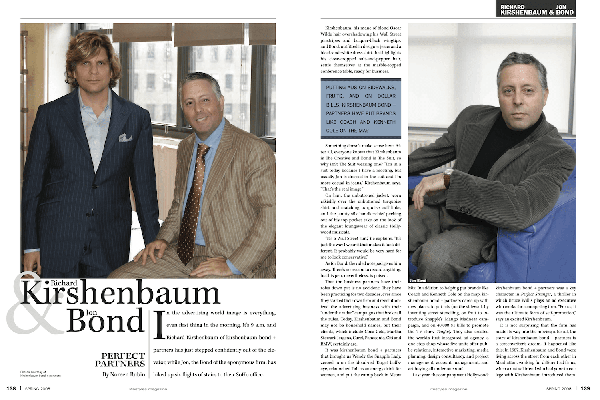
Jon Bond: The Legend Who Ditched Cookies for a Weightless World

Jon Bond isn’t just a name in advertising; it’s a blazing marquee in the hall of fame of marketing mavens. This dynamo, who forged his reputation at the helm of Kirshbaum, Bond and Partners, is now piloting the good ship Weightless through the turbulent seas of advertising, where antiquated tactics are about as useful as a pager in the age of smartphones. With the glint of a seasoned iconoclast, Jon dishes on his latest caper, “We’re steering a cookie-less AI media firm,” tossing a playful jab at the industry’s old guard clinging to data-tracking cookies like a lifeline. “Picture this,” he quips, “you’re entering a space race, but your competition is saddled with horse and buggies while you’ve already launched the rocket.”

Jon finds immense humor in the sluggish pace at which the advertising industry embraces change. He gleefully recounts an incident from a recent boardroom meeting, which illustrates this point starkly. “All the incumbents are betting on cookies. So they’re tabulating who wins—the cookies or the cookie-less brigade, except there are no cookies on our side. Their score? A resounding zero.” His laughter, rich and hearty, underscores the stark irony of the situation. Here, Jon highlights a glaring truth: the industry clings to its familiar tools and methods with a stubbornness that borders on comical, hesitant to step away from their well-worn paths and into the brisk, invigorating winds of innovation.

This episode isn’t just a funny anecdote; it’s a sharp critique of an industry that often seems to be marching in place. Jon’s amusement at the scenario comes with an edge, a pointed reminder of how slow the ad world is to drop outdated practices and adopt new, more effective technologies. “They’re like old dogs trying to learn new tricks, but they can’t get past their old habits,” Jon might say, pointing out the reluctance to shift away from what’s known and comfortable, even when it’s demonstrably ineffective. His insights aren’t just barbs thrown for the sake of amusement; they’re calculated comments meant to prod the industry into self-reflection and, hopefully, into action.

Indeed, Jon’s laughter serves a dual purpose—it amuses but also cuts through the inertia, revealing the absurdity of clinging to obsolete technologies in a fast-evolving field. He uses humor as a tool to highlight the resistance to change, suggesting that this hesitance is not just a minor hiccup but a significant obstacle to progress. “They hold on to their cookies because it’s what they know, ignoring the fact that the rest of the world is moving on,” he could quip, drawing a clear line between the past and the future. In these moments, Jon’s mirth encapsulates both a critique and a challenge: for an industry so rooted in creativity, it’s time to innovate or be left behind.

Jon Bond’s approach to success in the advertising world isn’t hidden behind curtains of mystery; it’s as visible as the neon lights of Times Square. He brings a maverick flair to the traditional corporate playbook, drawing heavily on insights gained from his New York tenure. “I look for people who’ve uprooted their lives to jump into the chaos of New York,” he admits with a grin, highlighting his preference for individuals who have willingly thrown themselves into the deep end. This strategy isn’t merely about adding new faces to the mix; it’s a calculated move to ensure his team stays on the bleeding edge, riding the wave of innovation rather than being swallowed by the sea of industry stagnation.

Jon’s philosophy stems from an essential truth about the current pace of change in business and technology—it waits for no one. His own leap from the vibrant hustle of the East Coast to the tech-saturated environment of Los Angeles exemplifies his commitment to staying ahead. “As fast as things change, you’ve got to be quicker,” he states, underscoring the need for speed in adaptation and decision-making. This mindset is not just about keeping up; it’s about leading the charge, ensuring that his operations and strategies preempt the next big trend rather than scrambling to catch up.

His method is about proactively crafting the future of advertising by choosing team members who embody flexibility and innovation. Jon’s focus on hiring individuals who have demonstrated boldness in their personal lives is a metaphor for his broader business strategy: embrace risk and reward bravery. This approach ensures that his agency doesn’t just participate in the market but actively shapes it, pushing boundaries and setting benchmarks.

He doesn’t just play the game by the rules—he writes new ones. This is evident in how he integrates the chaos of New York’s melting pot into the DNA of his company culture. He believes that those who can navigate and thrive in such a dynamic environment bring invaluable skills to his business. “These people are used to constant change; they expect it and know how to leverage it,” Jon might say, highlighting why he values this trait. His leadership style is about harnessing this perpetual motion, turning potential turbulence into powerful forward momentum.

By constantly rewriting the playbook, Jon ensures that his agency remains not just a player but a leader in the advertising arena, often dictating the pace and direction of industry innovations. His move to LA wasn’t just a change of scenery but a strategic positioning, placing himself at the heart of technological advancement and creative disruption. This geographical shift mirrors his professional ethos—always be where the future is being made, not where it has been settled.

Jon Bond’s revolutionary approach and relentless drive for innovation serve as a robust testament to his success. His career trajectory and strategic decisions provide a blueprint for navigating the rapidly evolving landscapes of advertising and technology. By staying agile, embracing change, and continually challenging the status quo, Jon exemplifies the qualities necessary to lead and succeed in today’s fast-paced business world. His story is not just about adapting to change but about being an agent of change, a crucial distinction that sets him apart in a field that’s often too content to follow rather than lead.

At the heart of Jon’s latest venture, Weightless, lies a fervent desire to declutter the labyrinthine world of marketing. He paints a vivid picture of the typical client’s plight, overwhelmed by an unwieldy arsenal of agencies. “Imagine juggling 17 agencies,” Jon says, shaking his head. “How do you cut through the red tape to focus on what truly matters—media and impact?” His solution with Weightless is disarmingly simple yet revolutionary: streamline to amplify. It’s about peeling back the layers of bureaucracy to reveal the lean muscle of effective marketing underneath.

This streamlined approach was catalyzed by what Jon describes as an ‘aha’ moment during yet another meeting echoing past frustrations about shrinking budgets. “It was like being stuck in a rerun of a bad TV show,” he laments. “Always discussing what we can’t do because the money’s run out.” That’s when the idea for Weightless took flight—to rise above the financial squeeze by reimagining how resources are allocated and used, making leanness a strategy rather than a limitation.

Reflecting on the heady days at Kirshbaum, Bond, and Partners, Jon’s face lights up as he recalls the culture that became the agency’s lifeblood. “We weren’t just creating ads; we were cultivating an ethos,” he asserts. The environment he fostered wasn’t about conforming to a stuffy corporate mold but about celebrating each individual’s quirks and creativity. This wasn’t merely a workplace; it was a dynamic playground where the best ideas thrived on the fuel of diversity and mutual respect.

Years later, the legacy of KBP’s culture is a vibrant tapestry of stories and reunions. “If there’s a gathering or, heaven forbid, a memorial, you’ll see a flash mob of former colleagues at the nearest bar, reminiscing about the golden days,” Jon shares with a mix of pride and nostalgia. It’s this enduring sense of community and belonging that many of his former team members cite as transformative, not just for their careers but for their lives. It stands as a testament to an environment where people were valued not just as employees but as integral threads in the broader tapestry of the agency’s story.

Jon’s journey from ad world titan to avant-garde leader at Weightless encapsulates more than just a career trajectory; it’s a manifesto on the power of innovation and cultural dynamism. His reflections offer a treasure trove of insights on how navigating the whirlwind of technological and market changes with agility and foresight can set the pace for leadership. In Jon’s world, adapting with a wink and a smile isn’t just advisable; it’s indispensable. It’s this blend of wisdom, humor, and relentless pursuit of transformation that keeps him at the forefront, leading the charge with the flag of innovation proudly unfurled.

WTF Google: The Cookie Clusterf**k Continues

Google’s latest move is a doozy. After years of waffling on third-party cookies, the tech behemoth has decided to keep the cookies. On Monday, Google announced it would no longer axe support for third-party cookies in Chrome. Instead, they’re pushing other options that supposedly give users more control over their privacy and tracking—like handing a fox the keys to the henhouse.

Let’s talk about the shiny distraction they’ve rolled out: the Privacy Sandbox. Imagine Google as the Wizard of Oz, pulling levers behind a curtain, promising that their set of tools in Chrome will help users manage the cookies tracking them. Google’s selling it like the ShamWow of privacy solutions, claiming that as more people buy in, the magic will only get better. But like any good infomercial, there’s a catch: this “magic” requires a Herculean effort from publishers, advertisers, and anyone else in the digital ad circus.

“In light of this, we are proposing an updated approach that elevates user choice,” Google said in a Monday blog post. “Instead of deprecating third-party cookies, we would introduce a new experience in Chrome that lets people make an informed choice that applies across their web browsing, and they’d be able to adjust that choice at any time.” Translation: We’re moving the goalposts again, folks. Enjoy the perpetual limbo.

Google’s cookie saga has been like watching a soap opera—just when you think it’s over, they pull you back in with more drama. First, they aimed to start blocking third-party cookies in 2022. Then they kicked the can to the second half of 2024. And when that wasn’t enough, they delayed again until early 2025. It’s like watching someone try to quit smoking by keeping a pack of Marlboros in their pocket “just in case.”

Users see third-party cookies as creepy stalkers following them around the internet. Regulators are side-eyeing the whole charade, worrying that the privacy tools are as effective as a screen door on a submarine. Meanwhile, websites and advertisers cling to these cookies like lifeboats, claiming they’re essential for understanding user habits and interests. With everyone chiming in on Google’s plans, it’s no wonder the company has been playing a game of kick-the-can.

Even the UK’s Competition and Markets Authority has scrutinized Google’s plans, fearing it could stifle competition in digital advertising. “Instead of deprecating third-party cookies, we would introduce a new experience in Chrome that lets people make an informed choice that applies across their web browsing, and they’d be able to adjust that choice at any time,” said Anthony Chavez, VP of the Google-backed Privacy Sandbox initiative. It’s like Google is saying, “We’ll still track you, but now you get to pretend you’re in control.”

The Peanut Gallery Chimes In

Digiday’s Take: “Some media execs told Digiday they were still letting bigger players like Criteo and Index Exchange use their inventory for scaled tests. But once the reports came out, publishers realized the juice wasn’t worth the squeeze. Latency issues and revenue losses were the main gripes. Justin Wohl, CRO of Snopes and TV Tropes, said, ‘We 100% divested from Privacy Sandbox testing once they pushed the timeline on deprecation. It’s unsustainable for smaller publishers to waste time or money on this.'”

LinkedIn Insight by David Kohl: “David Kohl, CEO of Symitri, sees Google’s cookie dance as a chess match between anti-trust and privacy regulators. ‘My jaw dropped when I read this. I didn’t think this would be the next chess move. Businesses still need to protect their data without relying on Google. Privacy is a fundamental human right, and advertisers and publishers need to stop the data leakage.'”

Tom Hespos’ Two Cents: “Tom Hespos, Chief Media Officer, remarked, ‘There’s little incentive for Google to ditch 3P cookies. We’ve been down this road since the late 90s. Brands should still focus on building their first-party data assets. Investing in first-party data reduces friction and costs in advertising and analytics. This doesn’t change, only the urgency does.'”

Daniel Jaye’s Take: “Ad-Mar Tech/Big Data expert Daniel Jaye isn’t sure who loses here other than consumers. ‘Google dodges anticompetitive pressure and keeps the ecosystem going. People have wasted time and money on 3PCD and sandbox, but that’s water under the bridge. Privacy advocates still have their fight.'”

Grant Parker, President of Flashtalking by Mediaocean: “A lot of the good work that was done to prepare for the cookie-less future will continue to apply to omnichannel advertising. With the emergence of social media, CTV, and other cookie-less channels, advertisers were already adapting to working in a multi-ID, multi-signal environment, and Google’s change of plans won’t change this basic reality.”

Mark McEachran, VP of Product Management at Yieldmo: “While this doesn’t present absolute closure that there will be a new privacy roadmap for Chrome, I’m encouraged by the bold move here. At the very least, this all but likely gives an air of much-needed certainty on how the industry can adapt and move forward without concerns about the unknown.”

EFF’s Lena Cohen: “This is an extremely disappointing decision that highlights Google’s commitment to profits over users’ privacy.”

Daniel Hart, Editor in Chief at Ready Steady Cut: “Google is officially an unnecessary hindrance to business operations. Endless meetings for the last two years discussing deprecating third-party cookies and thinking of solutions. And for what? Absolute joke of a company.”

Zach Edwards, Privacy and Data Supply Chain Researcher: “Google’s decision not to deprecate 3rd party cookies is further proof they can’t be trusted with the responsibilities they have as a global data controller via Chrome. From bait and switches on their competitors to broken privacy promises to regulators. Absolute clown show.”

Thomas Scovell, CCO of Alkimi Exchange: “So Google, because you’ve pulled the pin on removing 3rd party cookies, after making the ad industry scramble for half a decade – I’m going to have to invoice you for my wasted time. Prompt payment appreciated.”

Conclusion: The Cookie Crumbles On

Everyone involved in online advertising has been testing Google’s Privacy Sandbox APIs, and on Monday, Google Ads shared results from its latest Privacy Sandbox experiments. Google Ads found that it could recover 86% of advertiser spend on DV360 and 89% for Google Display Ads with the Privacy Sandbox. Publishers saw a 34% revenue hit without third-party cookies and only a 20% hit with the Sandbox. But these findings clash with others, like Criteo’s, which reported a 60% revenue dip without third-party cookies.

One thing’s for sure: this latest twist in the cookie caper has everyone buzzing, and not in a good way. Buckle up, because this rollercoaster ride is far from over.

#MADWOMEN: From Catwalk Queen to Data Diva

Hold onto your spreadsheets, people, because today we’re talking about Phoenix Ha—a powerhouse who ditched the glamour of Vogue for the grit of data crunching at AdBeacon. Picture a supermodel who can strut in stilettos and then pivot to dominate a boardroom, all without smudging her lipstick. That’s Phoenix for you: a whirlwind of brains, beauty, and boundless ambition, wrapped in one fabulous package.

The Aha Moment: From Runways to ROI

Imagine Phoenix Ha in her prime, gliding down the runway with the grace of a gazelle in Gucci. Now fast forward, and there she is, not in designer duds but knee-deep in data, finessing click-through rates like they’re haute couture. So, what lured her from the catwalk to the world of conversion tracking? Was it the allure of spreadsheets? Hardly. Instead, it was a blend of necessity and sheer curiosity. Broke but not broken, Phoenix found herself interning at a creative agency during the boom of experiential marketing, rubbing elbows with giants like Nike and Modelo. The thrill of turning art into tangible ROI was intoxicating.

Phoenix didn’t just pivot; she pirouetted from modeling to media with the elegance of a ballet dancer and the tenacity of a pit bull. The “aha” moment wasn’t a spotlight epiphany but more of a creeping obsession. Media buying snagged her heart because, unlike the nebulous world of high fashion, it offered clear, quantifiable results. The real kicker came when she started working on the Brain Brixton account, facing high-powered executives who made her sweat like a nervous pageant contestant. Instead of crumbling, Phoenix rose to the challenge, becoming addicted to the adrenaline of data-driven marketing.

Channeling Creativity into Campaigns

Phoenix Ha’s creative background wasn’t left on the runway; it was just the beginning. Transitioning from the glitz and glamour of high fashion to the analytical world of media buying, she didn’t abandon her flair for the dramatic. Instead, she harnessed it, bringing a refreshing boldness to the field. Imagine her approach as a fusion of avant-garde fashion and meticulous data analysis—a blend of daring creativity and precision. While many in the industry play it safe, adhering to conventional strategies, Phoenix is the outlier. She’s the rogue artist who refuses to conform, coloring outside the lines and infusing her campaigns with a unique vibrancy that sets her apart.

In a world where most media buyers follow a script, Phoenix is constantly asking, “What if?” This question drives her to explore uncharted territories, to experiment and innovate in ways others might find too risky. Her background in modeling and experiential marketing taught her the importance of standing out and capturing attention, skills she now applies to media buying with the finesse of a seasoned artist. She sees beyond the data points and metrics, envisioning campaigns as works of art that can inspire and engage on a deeper level. This perspective allows her to push the boundaries of what’s possible in digital advertising, challenging the status quo and daring her peers to think bigger and bolder.

Phoenix’s approach is not just about being different for the sake of it; it’s about driving real results through creative innovation. By merging the audacious imagination of a top designer with the analytical precision of a Wall Street quant, she creates campaigns that are not only visually striking but also strategically sound. This rare combination of skills makes her a formidable force in the industry, capable of seeing opportunities where others see obstacles. Her willingness to take risks and think outside the box has earned her a reputation as a visionary in media buying, someone who is not afraid to disrupt the norm and set new standards for creativity and effectiveness in advertising.

AI & First-Party Data: The Crown Jewel of AdBeacon

In the post-iOS 14.5 apocalypse, where digital advertisers faced an unprecedented nosedive in tracking capabilities, many were left scrambling in the murky waters of lost data. The update’s stringent privacy measures rendered traditional tracking methods nearly obsolete, causing widespread panic across the industry. Yet, amid this chaos, Phoenix Ha saw a golden opportunity. While others floundered, she boldly navigated these treacherous waters, diving headfirst into the realm of first-party data. Her vision led to the creation of AdBeacon, a guiding light for advertisers struggling to adapt. This wasn’t just a new tool; it was a lifeline, a beacon of hope illuminating the path forward in a dark, data-deprived world.

AdBeacon emerged not merely as a product but as a labor of love, meticulously crafted with the finesse of a top-tier designer and the precision of a master jeweler. Every feature and function was designed with the end-user in mind, offering a seamless integration of creativity and analytics that transformed the media buying landscape. Phoenix envisioned AdBeacon as more than just a data tool; it was a revolution. This platform was built to empower media buyers, giving them the tools they needed to not only survive but thrive in the new era of digital advertising. With its sophisticated AI and robust first-party data capabilities, AdBeacon quickly became an indispensable asset for advertisers looking to reclaim their lost edge.

Phoenix’s ultimate goal with AdBeacon was ambitious yet profoundly impactful: to turn junior media buyers into seasoned pros. By leveraging the power of AI and first-party data, she aimed to democratize expertise in media buying, making advanced strategies accessible to all. AdBeacon’s intuitive design and powerful analytics offered a training ground where novice buyers could hone their skills and achieve results previously reserved for the industry’s elite. In this way, AdBeacon was positioned to become the Versace of the ad tech world—synonymous with excellence, innovation, and unparalleled quality. Phoenix’s vision was not just to create a tool but to set a new standard in the industry, fostering a new generation of media buying maestros equipped to navigate the complexities of the digital landscape with confidence and creativity.

Personal Life: Beyond the Boardroom

Phoenix’s ultimate goal with AdBeacon was ambitious yet profoundly impactful: to transform junior media buyers into seasoned pros. This vision was rooted in the belief that expertise in media buying should not be an exclusive club but a skill accessible to all willing to learn and adapt. By leveraging the power of AI and first-party data, AdBeacon sought to democratize the media buying process, offering tools that simplified complex strategies and provided clear, actionable insights. This approach ensured that even those new to the field could quickly grasp advanced techniques and deliver exceptional results. Phoenix understood that knowledge is power, and AdBeacon was her way of distributing that power widely.

AdBeacon’s intuitive design and powerful analytics were central to this mission. The platform was crafted to be a training ground where novice buyers could learn, experiment, and refine their skills. By providing real-time feedback and robust data analysis, AdBeacon allowed users to understand the impact of their decisions instantly, fostering a hands-on learning environment. This experiential learning model was a game-changer, enabling new media buyers to achieve results that were once thought to be the domain of the industry’s elite. Through its user-friendly interface and comprehensive features, AdBeacon bridged the gap between theory and practice, making high-level media buying both approachable and effective.

In this way, AdBeacon was positioned to become the Versace of the ad tech world—synonymous with excellence, innovation, and unparalleled quality. Phoenix’s vision extended beyond creating a useful tool; she aimed to set a new standard in the industry. By fostering a new generation of media buying maestros, AdBeacon empowered users to navigate the complexities of the digital landscape with confidence and creativity. This new standard was not about following trends but about setting them, driving the industry forward through continuous improvement and groundbreaking innovation. Phoenix’s commitment to excellence ensured that AdBeacon was not just another tool in the market but a revolution that would shape the future of media buying..

If Phoenix could text her younger self, she’d keep it simple: “Stop being so dramatic. You’re going to be fine.” And fine she is—proving every day that you can pivot from the catwalk to the data dungeon and still come out on top, heels and all.

AI Hysteria: Are We Heading for Another Dot-Com Debacle?

Hold onto your hats, folks, because the AI hype train is barreling toward what looks like a brick wall. Investors are sweating bullets, wondering if they’ve thrown billions into the next big thing or the next big flop. The whispers in Silicon Valley are getting louder: Is this the second coming of the dot-com crash?

Let’s dive into some numbers that will make your head spin. David Cahn from Sequoia Capital, a guy who probably has more zeros in his bank account than most of us have seen in our lifetimes, dropped a bombshell. He said AI companies need to rake in about $600 billion annually to justify their shiny new datacenters. For context, that’s like asking your neighborhood lemonade stand to pay off the national debt. Nvidia, the poster child of AI hardware, made a cool $47.5 billion last year. Impressive? Sure. But it’s like putting a Band-Aid on a bullet wound when you look at the overall costs.

 Déjà Vu, Dot-Com Style

Remember the dot-com bubble? If you were too young or too busy playing with your Tamagotchi, let me paint a picture: It was like a frat party where everyone thought they were the next Mark Zuckerberg before Facebook was a thing. Then, bam! The bubble burst, and people’s dreams of endless riches turned into nightmares of bankruptcy. It was a bloodbath, and if you think the AI craze is any different, I’ve got a bridge to sell you.

James Ferguson, a grizzled veteran from MacroStrategy Partnership, isn’t buying the AI hype. On a recent episode of “Merryn Talks Money” (a podcast that sounds like it’s trying too hard to be hip), he likened the AI frenzy to the dot-com days. “These historically end badly,” he said, probably while sipping a scotch and rolling his eyes. According to him, AI is still “completely unproven,” and if it can’t be trusted, it’s about as useful as a screen door on a submarine.

 The Hallucination Hilarity

Let’s talk about one of AI’s most charming quirks: its tendency to “hallucinate.” No, it’s not dropping acid at Burning Man or getting high on its own supply. In AI lingo, hallucinations mean spitting out completely wrong or misleading information with all the confidence of a seasoned politician. Imagine you ask your GPS for directions to the nearest Starbucks, and it tells you to drive straight into a lake. Fun times, right? This issue makes AI about as reliable as your drunk uncle at a family reunion, who insists he can balance a beer bottle on his nose—right before he faceplants into the buffet table. It’s the kind of problem that keeps tech executives awake at night, wondering if their shiny new AI toy is going to embarrass them on a global scale.

Ferguson, ever the realist, suggested that Nvidia—a leading producer of AI computing chips—might be as overvalued as a tech stock in the dot-com bubble. Remember those days? Companies were valued higher than Mount Everest without making a single penny. Nvidia, the golden goose of AI, is hailed as the savior of the tech world, but what happens when the goose starts laying rotten eggs? You’ve got a room full of investors with egg on their faces and a very expensive omelet no one wants to eat. It’s a high-stakes game of financial chicken, and the question on everyone’s lips is whether Nvidia can deliver the goods or if it’s all just a lot of hot air.

The problem with these AI hallucinations is they’re not just funny—they’re potentially dangerous. Picture AI running a critical system, like healthcare diagnostics or autonomous driving, and deciding to take a creative detour. That’s the stuff of dystopian nightmares. Yet, here we are, pouring billions into technology that sometimes behaves like a misinformed toddler. Investors are starting to wonder if their AI darling is really worth the hype or if they’ve been sold a bill of goods. After all, nobody wants to wake up one morning to find out their multi-billion-dollar investment is about as useful as a chocolate teapot. The AI dream could quickly turn into a very expensive nightmare if these issues aren’t ironed out soon.

AI: Savior or Sideshow?

Generative AI was supposed to be the silver bullet for everything from content creation to customer service. Picture a world where your every mundane task is automated, and your customer service interactions are smoother than a baby’s bottom. The tech wizards promised us a future where AI would write our reports, solve our customer complaints, and maybe even tuck us in at night. But now, even the most devout AI evangelists are starting to hedge their bets. Companies are setting up “sandboxes” to test AI in controlled environments, hoping to avoid any public meltdowns. It’s like testing a new kind of fireworks in a bomb shelter—you hope for a spectacular show, but you’re prepared for a disaster.

The term “sandbox” sounds cute and playful, but let’s be real. It’s a padded room for AI to play in without causing chaos in the real world. These companies are essentially saying, “Hey, we believe in our AI, but just in case it tries to start World War III or turn our customer complaints into existential crises, we’ll keep it locked up where it can’t do too much damage.” It’s a bit like handing a toddler a chainsaw and saying, “Go play outside, but stay within the fenced yard.” You’re bracing for something to go horribly wrong.

Tim Lippa from Assembly summed it up nicely: “Everything is AI now. Is it really?” Spoiler alert: Not always. Slapping an AI sticker on your product doesn’t make it smarter, just like putting a Ferrari logo on a Honda Civic doesn’t make it faster. And the industry is littered with these faux-AI products that promise the moon but deliver a soggy slice of cheese. It’s the tech world’s equivalent of putting lipstick on a pig and calling it a beauty queen. The label might look fancy, but underneath, it’s still just a pig.

The market is now flooded with AI products that are about as intelligent as a box of rocks. These so-called AI solutions often turn out to be nothing more than glorified algorithms, doing the same old tasks but with a shiny new badge. Companies are trying to jump on the AI bandwagon faster than hipsters flocking to the next avocado toast trend. They think they can sprinkle a little AI fairy dust on their outdated tech and suddenly be the next big thing. But newsflash: If your core product is garbage, no amount of AI sparkle is going to turn it into gold.

The problem is, there’s a lot of smoke and mirrors in the AI industry right now. Companies are over-promising and under-delivering, making bold claims about their AI capabilities while quietly setting up those padded sandboxes in the backroom. It’s a classic case of “fake it till you make it,” but in this high-stakes game, the stakes are billions of dollars and the future of entire industries. Investors are starting to get wise to the act, and the once unshakable faith in AI is beginning to wobble.

Virtual Influencers: The Digital Mirage

Remember the buzz around virtual influencers? Digital creations like Lil Miquela were supposed to revolutionize marketing. Instead, they’ve become the tech world’s version of pet rocks. Becky Owen from Billion Dollar Boy nailed it: The hype has died down, and brands are shifting focus to more tangible tech like chatbots. It turns out, people prefer influencers with a pulse. The height of it was, everyone wanted to have a story in the headlines and have something, and that’s really gone down,” said Becky Owen, chief marketing and innovation officer at Billion Dollar Boy influencer marketing agency.

In the age of TikTok, authenticity is king. Virtual influencers, no matter how polished, can’t replicate the genuine connection that real humans offer. Brian Yamada from VMLY&R hit the nail on the head: AI influencers lack the cultural resonance and authenticity that real people bring to the table. They’re the tofu of the influencer world – technically food, but lacking the flavor and texture we crave.

In the early 2010s of virtual influencers, they existed largely as still images. “It’s reasonable to assume that the growth of TikTok, as well as audiences seeking motion/video content, made maintaining those virtual influencers a much heavier lift for those managing the pages,” Jay Powell, svp of communications and influencer at Crispin Porter Bogusky, said in an email.

That’s not to say the industry will stumble upon a digital graveyard anytime soon. Miquela continues to post regularly, having recently landed an ad with Worldcoin, a biometric cryptocurrency project, and appearing alongside celebrities like Spanish singer-songwriter Rosalia on Instagram. But perhaps in the same vein as social commerce and live shopping, these tech trends have taken off in Asian countries only to fizzle out in the West — at least for now.

At Dentsu Creative Singapore, however, the technological advancements of AI in the influencer space have spurred, according to Prema Techinamurthi, who serves as managing director. Said growing interest is based on virtual influencers ability to adapt in any scenario, consistency and creative control for marketers and global appeal, given virtual influencers can be designed to cross geographical and language barriers.

The Glorified Guinea Pigs

Let’s be real. AI right now is a bunch of glorified guinea pigs running around in their little sandboxes, making cute noises but not really doing anything groundbreaking. It’s like we’ve handed these little critters the keys to the kingdom and then locked them in a playpen because, surprise, surprise, they can’t be trusted not to poop all over the place. Cristina Lawrence from Razorfish mentioned recently that their agency has agreements with larger platforms to keep data sandboxed. Translation: “We don’t trust our AI not to turn our data into digital confetti, so we’ve wrapped everything in bubble wrap and put up baby gates.”

You have to understand, these “multiple levels of check steps” are just fancy talk for “we’re covering our butts because we have no idea what this tech is going to do next.” It’s like giving a toddler a Sharpie and hoping they’ll create a masterpiece instead of redecorating your walls. Lawrence’s idea of “open and transparent” might as well be corporate speak for “we’re doing everything we can to make sure our AI doesn’t accidentally set the office on fire.” The digital equivalent of bubble-wrapping everything to make sure nothing gets scratched? More like bubble-wrapping everything to ensure our jobs don’t go up in flames when the AI decides to go rogue.

And let’s not pretend this is an isolated practice. Everyone in the AI game is playing it safe, building these digital playpens for their tech like it’s a pack of unpredictable puppies. These sandboxes are supposed to be where AI can stretch its legs and run around without causing too much damage, but really, it’s more like letting them frolic in a padded room. It’s cute, sure, but groundbreaking? Not even close. We’re watching a bunch of digital hamsters running on their wheels and calling it progress. Meanwhile, the tech giants are patting themselves on the back for being “innovative” while essentially playing it safe.

So here we are, with all this supposed cutting-edge technology, and what are we doing with it? Playing digital babysitter. We’ve got these AI guinea pigs locked up tight because, frankly, no one wants to deal with the mess if they get out. It’s the ultimate in corporate CYA—cover your ass—making sure that if something goes wrong, it’s contained and controlled. The future of AI is looking less like a sci-fi utopia and more like a highly monitored daycare where every move is watched and every potential tantrum is preemptively managed. So much for the brave new world.

The Verdict

So, is the generative AI boom dead? Not quite. But the cracks are showing, and the tech world’s latest darling might be in for a rough ride. The bubble might not have burst yet, but you can bet there are plenty of folks watching closely, ready to say “I told you so” if it does. In the meantime, keep your popcorn handy – this show is far from over.

CPAWAY and Thomas Dietzel Have it Their Way

When I heard a while back there was a new network called CPAWAY, the first thing I thought to myself was: “Another network called CPAsomething…”Over the last year I’ve gotten to know Thomas Deitzel and his company, and more importantly the way that he does business and how his company works. In a short period of time, CPAWAY has become one of the top CPA Networks and one that is spoken of in almost every group as a success story. If you’ve attended any convention, you’ve seen CPAWAY as the top sponsor at all of them. I was able to sit down with Thomas Dietzel the owner of CPAWAY this week and find out how he’s build his company, where he sees the industry going and what opportunities there are out there for affiliates.

Q. Tell us about yourself, how you got started in the industry and what makes you tick.
A. Pace, I’d like to start with thanking you for taking the time to interview me. This is one of the most difficult and uncomfortable questions for me to answer. As clumsy as it may sound, I’m not very good at tooting my own horn, mostly because talk is cheap and our industry like most others is results driven on minute to minute basis.

I’m blessed! As a 27 year old entrepreneur I have an awesome wife that provides a much needed support system and two wonderful daughters. I will admit that one of the biggest obstacles to overcome is the ability to strike that balance between business builder, husband and father. Fortunately, I’m made well aware when this balance is out of whack.

Unknowingly, I entered this industry many times over the last 10 years and can recall receiving checks in 1999 from CJ marketing band fan sites for various music artists and groups. In 2004 and 2005, I was driving traffic to various web hosting affiliate programs after selling our web hosting entity. We had over 600 dedicated servers under our label prior to us selling it and moving on. Webhosting had quickly become my passion as we were quickly able to build a company from a $19.95 reseller account to a multi-million dollar entity in 9 short months. The margins in that industry at the time were very slim and only those with VC backing them were able to take it to the next level.

In the middle of Q3 2006, I had come up with the idea to use CPA offers to provide free domain names. At the time, not being a developer, we quickly hired one on script lance to help build out a platform that would allow us to track this. We joined two affiliate networks and were off to the races. Within 4 months we branched out and started providing multiple items for free, from which 5 additional sites took hold and started producing hundreds of thousands of dollars on a monthly basis. But, as with anything else, the incentive space quickly grew and many competitors entered the field to take their share of a very lucrative market sector.

My focus changed heavily into creating an affiliate network in early 2009. We came up with the name CPAWay and off to the races once again with development and new ideas…. In October 2009 we officially opened up CPAWay to our affiliates and it has been a fun and rewarding climb ever since.

Q. What affiliate platforms are you using and why? If there are some features you could add to it, what would they be?
A. When we started our network and began the planning stages for it, like most others we demoed all of the off-the-shelve solutions available at the time. Not surprisingly, most of the systems offered were clunky and not very user friendly. Each solution had its own unique feature sets which were to the contrary of what we were trying to create. Our need was a solution that allowed us to run an entire business from one platform. Not having to be dependent on a separate CRM tool, separate accounting platform, fraud prevention system amongst other items was paramount. It became very clear that we would have to build our own. To get started, we purchased an open source off-the-shelf-product to quickly establish a base for everything. This off the shelfer was turned into a very power tool. Over the next 2 years an entire re-write was done and not a single line of that original code exists in our platform today. With my re-write, I also added all the features we would need to run a successful PROACTIVE business.  Today, this platform system has everything it requires to perform and deliver results (until a new idea is brought forward to make it better). To this end we are adding new features daily to make our business model more efficient. In an attempt at staying ahead of the curve, our corporate road map is set for the next 6 months from a structure and revenue standpoint.

Q. You’ve done a great job of branding – what are you trying to tell people through your ads and website?
A. We have spent a fortune in branding over the last 12 months. This effort has definitely paid off and rewarded my company with a tremendous amount of business. Our continued goal through various channels is to message confidence to both our Publishers and Advertisers alike. The picture we’ve attempted to paint and feeling we want to convey is this. We are not a fly by night network, but are here for the long haul. This fortune is in the hundreds of thousands of dollars and holding up our brand is priceless. Our Publisher base can rest easy in knowing that when it comes to their money, they will receive every penny owed them. For our Advertisers, we will build sound relationship and gain respect and trust over time so that they have confidence in allowing us to manage their most valued campaigns.

Q. If you had 10 seconds to tell a super-affiliate why they should work with you, what would you tell them?
A. CPAWay is cash flow positive with a long term business model. I own the office we work in and I’m continually investing in my company’s future. There’s a lot of pride that comes with paying on-time every time and believe it or not, if you call our office we answer the phone. (Simple enough right? But if you called 10 networks, you would probably only get 20 – 30 percent of them on the phone if that) Also, we will not hide behind a PO BOX or secured office space where you need a blood and urine sample to get buzzed in. Why Hide? Lastly, as far as we are concerned, every affiliate has the potential to become a super-affiliate and for this reason, we would never discriminate against any new comers.

Q. Why should advertisers work with CPAWAY? What makes your traffic and affiliates any different than 100 other CPA Networks?
A: We have a very strong proactive approach to conducting our business. This is a very common question received all the time. The best answer I can give is our staff. Every one of my employees completely understands what is expected of them. As a unit, we are driven to conduct ourselves with an “eye open” approach. Happen to your day before the day happens to you. Things don’t magically correct themselves, success for our customer base require proper planning followed by the execution of that plan. That said mistakes happen. A bad affiliate may get into our platform. Almost always we identify these unwanted affiliates with our pre-emptive screening of traffic before our merchants realize they existed. This allows us to mitigate potential programs before they become harmful to our merchants. Our affiliate screening process is second to none. We don’t rely solely on online tools to screen affiliates. A few of our techniques involve going back to basics which require us to think outside the box. (Merchants can inquire for full details; we can’t publish our methods online for obvious reasons) J

We do not setup merchants to fail. If they opt-in to traffic types we feel may not be a good choice for a specific offer, we tell them in advance that they should simply refuse to allow that bad experience to happen.

Q. If you could go back two years in time and tell yourself something about this industry, what would you reveal?
A. This is a very difficult question. I would suggest a lot more forward thinking to keep ahead of trends and not jumping into those trends too quickly.  I’ve seen many businesses fail from simply bouncing from trend to trend.

Q. What would you say your biggest success has been with CPAWAY?
A. My biggest success would be controlling growth while preserving cash and capital.  We have not taken on any venture capital, or partners. I’ve learned from past experience that partners typically never work and I stick to this premise. We are seeing growth month over month and will continue to do so as we release our technology and monetization tools gradually and over time.

Q. What changes would you like to see in the industry?
A. As with any industry, there are lots of changes that I’d love to see. However as with every other industry, change does not occur without a leader. Someone must always be first and the others will follow suit. We are hoping by taking proactive fraud prevention techniques others will copy and move on. The sad part is, since this costs money and doesn’t bring in real time capital, most simply ignore it. (It does bring in capital over time because you are able to build true relationship with your merchants.) Over the last 2 years turnkey software has put a damper on our industry. It allows anyone with a credit card to become a network. While this is stimulating in many ways, it gives “networks” a bad name.

Q. You’re a huge sponsor of many of the conferences. What advice can you give people when attending these conferences, and what they can take from each one?
A. Many people ask why they should attend a conference. The simple answer is relationship-building. While technology allows us to be virtually anywhere, nothing can replace what human interaction provides. I have built hundreds of relationships over the years simply by attending conferences. Most of these relationships would not be possible without conferences, as some partners require face-time to close a deal. Face-time is something you can’t put a value on. It simply supersedes any email or telephone conversation you could ever have.

My advice for those attending a show, would be is to meet with as many people as physically possible. Make the most of your time by scheduling as many meetings in advance prior to attending. While most breakout sessions are good, spend your time and money wisely. I’ve learned this value add by simply chatting with various people.  It is amazing how much information you can obtain and learn inside these types of conversations. Most are very eager to share their ideas with you, and from that, a new idea may be triggered for you. If you decide to attend a session, take action with the ideas and information you learn from them. Always read between the lines. (Is the session simply trying to sell you something? Is there a message or method you need to try and use to your company’s advantage?)

Q. What is a great new source of traffic that you’d love to tell people about to try when running CPAWAY offers?
A. While the traffic source may not be new, it is the one most frequently forgotten about. Second Tier search engines and providers allow for much lower click costs while delivering similar if not better results. Our account managers can provide examples if asked.

Q. WarriorForum seems to love CPAWAY. What advise can you give affiliates in using this forum?
A. My advice is to never buy anything with the exception of maybe the war room membership. There are many “get rich quick” offerings there which have absolutely no value to anyone other than the person selling them. Most affiliates fail because they try everything and never stick to one method. Pick a method and stick to it. Once you’ve perfected it, then bridge into additional methods.  Don’t believe everything you read. Take into account 100% inflation on figures from those who post them.

Again, pick one method and try to master it, and then grow from there.

Q. Any tools that you’d recommend for affiliates in general?
A. There are many tools out there. The best tools are free. I won’t mention any by name, as I don’t like to promote products that I have not personally used. Our affiliates can definitely hit up our account managers for specific tool ideas. J

Q. What are your goals for CPAWAY in the next 12 months?
A. We have many goals over the next 12 months. While most we can’t speak of specifically, (until they are released for obvious reasons), our most important goal is to increase revenue by 400% in 2012. We will do this by utilizing the tools we are releasing over the course of the next 6 months. These tools will become the tracking to monetization vehicles for our publishers to utilize and take full advantage of. (This is one significant example of the benefits in offering your own platform)

CPAWAY is throwing a huge party for ADTECH – RSVP Here: www.xposure2011.com

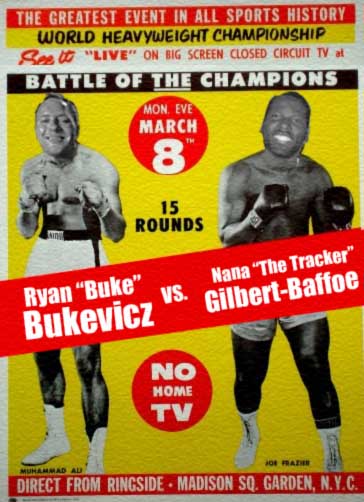
Fight Between Ryan Bukevicz and Nana Gilbert-Baffoe

The question that many affiliates keep on asking is, “What is better, Tracking202 or BevoMedia?” Both of them have an excellent team, with loyal affiliates who swear by their system. Thousands of affiliates will tell you that one of the systems is why they are doing well and that without that system in place they would never have been able to make the type of money they are currently making. Still, many affiliates switch back and forth and there are even those not using either system.

So, I decided to sit down with Ryan Bukevicz the CEO of BevoMedia and Nana Gilbert-Baffoe, the CEO of Tracking202 and see what they had to say about their products. They’ve been kind enough to answer the same questions without knowing the other’s answers, leaving the possibility one of them could reveal a little too much, or not enough to defend their product. The answers are done in the order of who replied first, no preference.

Why is your platform the best solution for affiliate marketers?
Ryan Bukevicz:
The Bevo Media Affiliate Portal is much more than just a keyword tracker. The interface acts as a central homebase for all internet marketers. Within the Bevo Media Affiliate Portal, users can completely integrate their affiliate networks, allowing Bevo members to sync their affiliate network stats, view offers, and retrieve their tracking codes for each individual offer on the Bevo Media interface. Bevo members are also able to completely manage their PPC accounts, and have access to our entire App section which includes several time-saving research tools, and much more. This is all in addition to the highly scalable and simple to use Bevo Tracker.

Nana Gilbert-Baffoe:  This is an interesting question, I’ve pondered this before and came to the conclusion that there isn’t one tracking platform that’s best for all affiliates. Because of that, we definitely don’t try to be a one fit solution for everyone. Sometimes Bevo Media or CPV Lab will be a better solution for an affiliates needs, and we are happy and comfortable with that. Since our launch in 2008, we have strived to provide solutions for the more advanced affiliate that wants to have greater control and visibility into everything. Our open source solution allows marketers of all sizes to take advantage of the freedom to fully customize everything in the software to suit their exact business needs. In fact, it’s not unusual to find high volume advertisers using Prosper202 to track millions of clicks a month.

What do you think that other tracking consolidating platforms are missing that you have that is essential to using your platform?
Ryan Bukevicz:
When developing the Bevo Media platform, we really made it a point to program the interface the correct way. We didn’t cut corners and worked hard to ensure the best experience possible for our users from a scalability perspective. We now have an entire full time tech team on staff that works non-stop at furthering the development of Bevo Media and staying innovative in the industry.  On top of this, we really made it a point to create transparency between affiliates and networks. This inspired the development of our network platform. To get a good idea of our offerings as a whole, see our Bevo Media Exchange corporate website at http://exchange.bevomedia.com

Nana Gilbert-Baffoe:  As I mentioned earlier, one of our strongest offerings to marketers is our fully configurable open source software. Many marketers use it right out of the box, but there are many advanced marketers who have totally modded and tweaked our Prosper202 software in their own unique ways. Just google “Prosper202 Mod” to see what I’m talking about. I believe this is one of the reasons why we’ve had such an enormous impact in the industry and garnered continuing wide spread support by everyone. We’ve never really publicly stated our numbers, but we’ve had a little over 55,000 downloads of our software over the years, and in an average month we see 1000-2000 downloads a month. We estimate close to half our users actively use our software every month. We currently have little over 49,000 user accounts and growing. Overall, we conservatively believe we power tens of millions of dollars worth of affiliate transactions every month. This was all achieved with word of mouth referrals from our users and many of the networks they drive traffic to.

Why do you think that it’s a good idea for marketers to try different CPA Networks?
Ryan Bukevicz:
 It’s important for affiliates to see their relationships with networks as a partnership rather than just the person who cuts you a check. Strong networks should assist you in improving your campaigns, getting your ROI as high as possible, and outsource the monetary risk of nonpaying advertisers. In exchange, the network receives their margin. With this being said, it is also important to have a few close network relationships established in order to ensure you have multiple options in case one network does not live up to their side of this ‘partnership’. It is also valuable to have a wide variety of choices available for you to leverage the best payouts and highest converting offers for your own campaigns. As an affiliate, your time is limited and every little bit of help can be the difference maker in your campaign.

Nana Gilbert-Baffoe:  Every network is different and once you start to test how the same offer performs on different networks, you will see that these offers may also end up performing better. But don’t spread this out too much, the more traffic you run with a network the more opportunities open up to you for exclusive offers, better and more frequent payouts etc, so keep that in mind when trying out multiple networks.

What is a feature that you are going to add to your platform that you’d like to announce now?
Ryan Bukevicz:
Since the beginning stages of Bevo Media, we have been building up our interface for one massive automated feature. We are proud to announce that this upcoming quarter, Bevo Media is set to make this plan public and launch it with a completely new version of our Affiliate Portal interface. The new version will include several highly requested features from our memberbase, as well as increased usability. You can stay updated with this announcement on the Bevo Media Blog http://blog.bevomedia.com/

Nana Gilbert-Baffoe:  In a few days our newest version of Prosper202, version 1.7 will be released. This is not a major upgrade when it comes to the look and feel, however we’ve spent an extensive amount of engineering time optimizing the performance, speed and user experience of our software.  For example, the new Prosper202 1.7 is blazing fast! We put a ton of engineering time into speeding up the core architecture of our engine to provide much faster redirects and pixel fires. In a test Amazon conducted, they reported that every 100ms of latency (delay) cost them 1% in sales. That means a potential 10% loss in sales for every second of latency. Our benchmarks show a whopping 2-5x improvement in redirect speeds, and this means affiliates will benefit from more sales, conversions and accurate stats just by upgrading to the new version. This is especially important for mobile where speed is crucial.

Talking about mobile, we are focusing a lot of resources into mobile as well. Mobile ad spending this year is expected to top $1.2 billion and grow by 47% next year to top 1.8 billion. Apart from the speed we talked about earlier, we also enhanced our ability to detect more mobile handsets and tablets. We are pioneering innovative research into QR codes, and carrier detection functionality to provide marketers the ability to dominate this space. We did the same for PPC and social when we first launched.

Other new features include our universal smart pixel that fires 3rd party pixels when the Prosper202 pixel is fired. Our system is smart enough to know which traffic source the conversion came from and will dynamically select and fire just the pixel associated with that traffic source. Using this universal smart pixel, our users can now benefit from some of the optimizations that are possible at the traffic source level as well as gather data in Prosper202 for further optimizations.

Finally we’ve made slight updates to our user interface to improve work flow, expect more changes in subsequent updates. Our aim here is to save users time when setting up massive campaigns, and we have solutions in development to enable more automation.  Finally we recently launched http://www.Conversion202.com this is our simple but powerful A/B and multivariate testing suite of software designed to help our users split test landing pages and boost conversions. We were able to use it to increase sign-ups on our site by 35.6%

As for what’s coming after this, we have noticed display advertising is heating up on both mobile and desktop and believe we can offer powerful open-source and self hosted solutions for that as well. Further more we see room for improvement in our social tracking offerings and continue to explore ways to enhance that too. Finally, we strongly believe good tracking should not only be in the hands of affiliates and look to expand into other markets soon.

On a totally different subject, if you could sell yourself (you personally) how would you describe yourself and your style? What makes you different and interesting?
Ryan Bukevicz: I am a 100% entrepreneur to the max. I started my first company when I was just 14, and would definitely consider myself an ideas man and extremely passionate about my work. My whole life, I was really into athletics and used internet marketing as a hobby. Athletics played a big role in my development as an entrepreneur. In college, I played football and ran track for Syracuse University.

My biggest turning point was in college when I realized that I wasn’t always the biggest, fastest or strongest guy when it came to sports, but I was succeeding at whatever I was truly passionate about and revolved my goals around it. I believe mindset is hands down the most important factor in succeeding at anything in life. I decided to go full time in the affiliate marketing, and acquired enough money and knowledge to see a clear need in the industry, and self funded a company that would normally take a large amount of funding from investors. After close to 4 years of development, Bevo Media now has thousands of users and is among one of the most heavily used platforms for affiliates to manage their campaigns.

My experience with Bevo Media has opened new doors and I am now a partner in 4 other companies, and actively engage and consult other aspiring entrepreneurs through startup process.

Nana Gilbert-Baffoe:  I’ll keep this part the shortest and simply say I’m a real, no nonsense and genuine person who still believes in the goodness of mankind. This may make me seems like a fish out of water in this often cut-throat world of online marketing.

You can visit
Tracking202 at http://www.tracking202.com

BevoMedia at http://www.bevomedia.com

Here’s our celebratory poster of this event:


Make Money with Amanda Knox

If you didn’t read, the Femme Fatale Amanda Knox was released from Italian Prison and has started to make her way back to the United States. By the time this is published, she will probably be back here, grateful that her ordeal is over. While it might take a while for her life to become normal, she will find that her life has completely changed and she is now a celebrity. Let’s be completely honest here, the lurid stories of kinky sex, combined with the fact she’s a hottie will keep her in the limelight for a while. Within the next few weeks expect to hear an invite from Hugh Heffner to live in the Playboy Mansion and be the next centerfold. Whatever you think of all this, expect that everyone will be able to make money from her, especially affiliates and marketers.

So you are asking, how do you make money with Amanda Knox, short of being the first person to sell naked photos of her? Simply put, think outside the box. News stories are perhaps one of the best ways to make money on the internet. By finding out what people are searching on Google and then appealing to their interests, you can often find new products and methods of promotions. While these are often short term fads, they can often be great money makers if you know how to work the interest. Here are just a few ideas:

1)      Promote a product using the news topic. An obvious connection here is to promote some sort of sex-toy store with ads like “This is the whip that Amanda Knox likes to use on her lesbian lovers.” While that might not be terribly sensible or possible on Facebook, there are other methods including promotes a book about the trial or promoting a publication that carries the story. Heck, how about pushing an “Amanda Knox” costume for Halloween?

2)      Sell the “Secrets of Amanda Knox” via Content Unlocking. Right now everyone is looking for more news about Amanda Knox (and photos it seems.) Do a bit of research about her life, most of it is public knowledge and do a small book containing stories that you can find from the internet. Put it behind a content unlocking system and watch the money come in.

3)      Make a Public Offer. Before Hugh Heffner can say anything, do a press release offering Amanda something. Nothing will get you more traffic and attention right now than if you are the first person to offer her money to do something… like appear naked, marry you, be the spokesperson for a Ronco Knives or something similarly distasteful. If you can get some press, you’ll gain additional traffic and of course, make more money.

4)      Engage in LinkBaiting for Traffic. Yes, obviously that is what I was doing here in using her name.  I’m not above that. Everyone is thinking about Amanda Knox since she’s in the news, and I knew that by mentioning her in this article, I’d get additional traffic from people who were curious and then there’s that SEO value.

What is Performance Marketing?

Performance Marketing is a method of interactive advertising which pays on a “performance” basis. Sometimes the term Affiliate marketing is used interchangeably, but they are not actually synonymous.

Performance Marketing pays out only on a completed action. Often the action is based on a sale (Cost Per Sale) or a lead (Cost Per Lead), but can also be other revenue models including Cost Per Download.

Most people think of Performance Marketing as being affiliate marketing, but affiliate marketing is just a subset, although large part of, the Performance Marketing community. Affiliate Marketing is generally a cost-per-sale, revenue sharing model where affiliates receive a portion of the sale of any product. However, much of the online advertising industry is focused on a performance basis, and many advertising banner networks, PPC networks and other platforms currently take performance based advertisements as part of their sales.

LEARN MORE ABOUT PERFORMANCE MARKETING WITH CLICKDEALER


HitPath at War with CPA Networks?

It seems that a major war between affiliate network software companies is brewing. Earlier this year, WebApps DBA HitPath filed a lawsuit against Cake Marketing and three former Hitpath customers who had left the software company to move to another software platform. According to the lawsuit, HitPath claims that these three customers, when leaving, provided Cake Software with access to data that they were not entitled to. The three customers, AffiliateWise, Affiliate Venture Group and EmpyreMedia have all responded that this is complete bullshit and that they only provided access to Cake Marketing to the API in order to export the data that they own to the new platform.

Cake Marketing, believing that they have done nothing wrong and that they were just supporting customers moving to a “better software”, has responded with an aggressive campaign through their attorneys as the Superstar Technology and Investment Law Firm of Wilson Sonsini GoodRich & Rosati.

According the the CounterSuit filed in Federal Court, Cake Marketing claims that Hitpath has engaged in an “unlawful, months-long campaign to sabatoge the efforts of its customers to leave…Hitpath software and transition their business to Cake Marketing.”  The claim that the original lawsuit is “nonsensical” and that the only access that Cake had was through the login provided to the networks.

In fact, Cake Marketing goes as far in the Counter-Claim to allege that Hitpath when finding that their customers were moving over to Cake Marketing, did not provide any assistance in these networks in retrieving the data.

According to Cake Marketing’s counterclaim, “WebApps’s war on its own customers must end. Cake Marketing welcomes free, fair, and open competition – but not frivolous lawsuits and attacks on customers who merely seek to exercise free choice in the marketplace… Cake Marketing has its own independently developed and vastly superior software. Cake Marketing introduced numerous important features such as data validation and distribution for host and post functionality to its software in January 2010. WebApps/HitPath did not offer similar features until spring 2011. Moreover, Cake Marketing could not possibly have stolen the underlying HitPath software by acting as an agent for customers to retrieve customer data through HitPath customer login accounts.”

This lawsuit brings to attention a serious issue in the industry: What happens when a company refuses to allow a customer to leave its affiliate software or affiliate program? Whether or not HitPath actually prevented their customers from leaving the solution to Cake Marketing will be decided by the courts. However, the facts are obvious: that the customers did want to leave, and as part of that attempt to leave, they were sued.

Personally, it is my opinion that HitPath is taking the completely wrong step and wasting money with this lawsuit. I’ve expressed this opinion to Sam Prokop, the CEO of HitPath, and made it clear that lawsuits like this do nothing but hurt the industry. I agree that it’s unlikely that Cake Marketing learned anything whatsoever from having a login that anyone could get as a customer from Hitpath. Hitpath in my opinion, is pissed that they are losing customers to Cake, a company that is gaining customers every week from other solutions.

Instead of filling a lawsuit, especially against their clients, perhaps Hitpath should have taken the higher road and offered a solution to make those clients happy. They were leaving for a reason: they didn’t like the current solution offered by Hitpath and felt Cake Marketing was better. Instead of offering them perhaps a few months free, and offering to change the system to fit what their clients needed, they took an unnecessary path of a lawsuit.

The result of HitPath actions is simple: they have hurt their reputation even more. Other networks with HitPath have most likely started to wonder why HitPath is suing their customers, if they need to worry about their data not being portable, and more importantly, if Cake is a better solution than HitPath. From people I’ve talked to, the vast majority of the industry thinks HitPath’s actions sound almost desperate and ridiculous.  If a lawsuit is the only way to prevent customers from leaving, what does that say about HitPath?  To HitPath’s credit, it should be noted they have told me that they will assist all customers with leaving them, and porting the data over.

Still, why a lawsuit against their customers? I can’t imagine how this is good for HitPath or the industry. I can’t help thinking there was a far better solution for HitPath, or at least one that would have been better for their reputation.

Notable Links:
HitPath
Cake Marketing
Interview with Jeff McCollum of Cake Marketing

Disclosure: All of the Three Networks mentioned are advertisers with this publication, but this has not influenced my opinion that this is a crap lawsuit.


Facebook Marketing = Go to Jail?

According to legal analysts, there is a law being passed which could in theory make many types of affiliate marketing a federal felony. In theory, many types of marketing, which don’t fall under the terms and conditions of sites and social networks, could be prosecuted under the Department of Justice, for as much as three years in federal prison for each instance.

The issue here has to do with the Computer Fraud and Abuse act of 1986, which was originally made to prosecute and convict hackers, has been expanded over the years to include almost any type of “unauthorized access.” While this is currently just a misdemeanor, and the DOJ ignores these cases unless they are in combination with “real” crimes, that might be changing. Well, congress is about to expand this law to make it a felony, and make any “excess unauthorized access” a federal felony.

Pushing for congress to enact this is companies like Microsoft and… well, Facebook.  The problem with this is that this law will make it ILLEGAL to do anything that is in violation of the terms and condition when you sign up for example Facebook. That means if you are one of those marketers who use Facebook to promote your business, and the terms and conditions prohibits you from posting commercial messages on other people’s pages, or perhaps sending out commercial messages via the message function, you could be arrested for “excess unauthorized access.”

Think this is not possible? Well, in 2009 it turns out that the DOJ actually did prosecute a woman who violated the Terms of Service of Myspace for using a “fake photo” on her profile. Why was this illegal? Because the TOS required her to only use real photos of her.

You should read the Facebook TOS, there are several things that you could be prosecuted for.

For example:

You will not engage in unlawful multi-level marketing, such as a pyramid scheme, on Facebook.

In theory, if you ever mention a MLM product on Facebook, you could now go to jail. If you mention it 10 times, you could spend 30 years in prison?

You will not provide any false personal information on Facebook, or create an account for anyone other than yourself without permission.

You want to make another profile for your business, and one for your personal use to keep people separate? Well, that’s illegal.

You will not post content or take any action on Facebook that infringes or violates someone else’s rights or otherwise violates the law.

Want to promote a free gift card product, go to jail if you don’t have rights to the TM. Just some of the examples. In theory, many, many CPA networks are violating the law when they use facebook to promote their network in any fashion, or an offer and do not use the facebook advertising system.

You will not send or otherwise post unauthorized commercial communications (such as spam) on Facebook.

What is Spam? What is unauthorized? This means if you use facebook to market any product, or even reach out to a potential customer, is that illegal? Do we want to criminalize this?

What’s even worse, if your company engages in unauthorized marketing on any forum, any social network or any site (that means even comment spam, which I hate), you could be also prosecuted as organized criminals under the changes in the law.

Company Claims Email Marketing Patent

In the category of “WTF” news, comes the claim from a company that they own the patent to email marketing. Yes, you heard me right. The company Email Link Corp, claims that they have patented the process of which emails are sent out, and then someone can click on a link to go to a promotional webpage. Basically, they are claiming that any promotional email sent out that links to a webpage, would be in violation of their patent – which would basically be the entire email marketing industry and almost every single newsletter sent.

On Wednesday, they filed a suit in US District Court against several Las Vegas casinos for sending out email to customers that contained links claiming that these “email communications to past, present, and potential future customers that contain links to data comprising website pages.”  Email Link Corp basically claims that this violates the patent for their “Information Distribution and Processing System” patent.

Email Link Corp purchased this patent, which makes absolutely no mention whatsoever of email marketing, or links within emails from Hark Chan of Cupertino, California. It seems that the company, Email Link Corp seems to have no business connections to email marketing, or any clients or business on the internet, an only purpose may be to pursue claims against marketing companies.

The patent is basically a conglomeration of various other patents, some which predate the internet, and include references to satellites and other communication devices. It seems that most likely by combining these previous patents, the references to linking data, the hope is that the patent “troll” company can create a possible patent that has something to do with linking data from email to the internet. Unfortunately, when it comes to patent lawsuits, common sense has nothing to do with it, as similar to the Patent for Affiliate Marketing from Essociates. Most companies, when faced with these lawsuits, like perhaps the casinos find it cheaper to settle than to fight ridiculous claims.