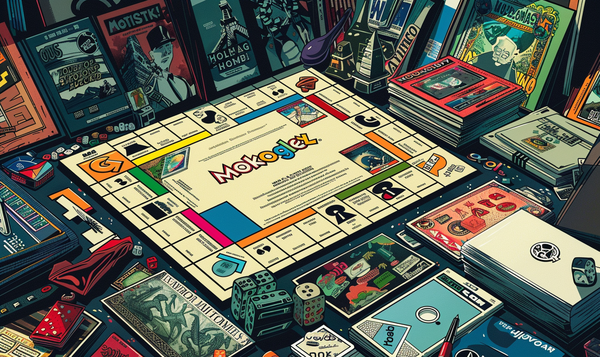

How Google’s 20% Cut Is Like Paying for a Penthouse and Getting a Broom Closet

So, here we are, folks. Google, the tech behemoth that knows more about your browsing habits than your mom, is in the courtroom again. And this time, it’s not just for some regulatory wrist slap or to pay a fine that barely dents their Scrooge McDuck-level vaults. No, this time, Uncle Sam is out for blood. The DOJ is accusing Google of playing Monopoly—not the fun family game that ruins Thanksgivings, but the kind that allegedly turns the online ad world into their personal fiefdom. Picture Google as the Godfather of ad tech, sitting back in a dimly lit room, stroking a digital cat while everyone else in the industry trembles in fear. And the Department of Justice? Well, they’re trying to break into that room and flip the table.

The case is as juicy as a prime-cut steak, and no one is walking away unscathed. In one corner, you’ve got the DOJ, painting a picture of Google as the ultimate puppeteer, pulling all the strings so that every ad dollar, every bid, every click, leads back to its massive ad empire. In the other corner, you’ve got Google, slicker than a used car salesman at a Sunday service, insisting that everything they’ve done is just really good business. And by “really good,” they mean the kind of good that makes everyone else in the room wonder why they even bothered showing up.

Monopoly or Business Genius? The DOJ and Google’s Battle of Narratives

Let’s start with the obvious. The DOJ isn’t pulling any punches. They’ve spent the first couple weeks of this antitrust trial laying out a case that makes Google look less like a scrappy Silicon Valley innovator and more like a black hole that’s slowly sucked the life out of the ad tech universe. According to them, Google has orchestrated an ad empire that works like an all-consuming vortex—once you’re in, there’s no escaping. They’ve bought up competitors, tied their products together like a Gordian knot, and made sure that every online ad transaction ultimately lines their pockets. It’s the corporate equivalent of being stuck in a casino where the house always wins, except the casino is also selling your data to the highest bidder.

To drive the point home, the DOJ has paraded a series of witnesses, from publishers to ad execs, who’ve all taken the stand to air their grievances. It’s like a public therapy session for anyone who’s ever tried to do business with Google and came away feeling like they’d just been hustled by a smooth-talking magician. Julia Tarver Wood, one of the DOJ’s top litigators, put it in plain terms: “The rules are set so that all roads lead back to Google.” In other words, Google isn’t just playing the game—they’re the ones writing the rulebook.

Google: The Godfather of Ad Tech, But With Way More Nerds

And that brings us to the heart of the DOJ’s case. They argue that Google has turned the ad tech stack—everything from publisher tools to advertiser tools to the actual exchanges where ads are bought and sold—into their personal playground. Through a series of acquisitions, most notably DoubleClick, Google essentially built a walled garden where publishers and advertisers are forced to play nice if they want to stay in business. Want to sell ad space? Better use Google’s DoubleClick for Publishers (DFP), because almost everyone else does. Want to buy ad space? You’ll probably be doing it through Google’s AdX exchange. Oh, and by the way, if you’re thinking about trying a competitor, good luck with that. Publishers who dared to break away from DFP quickly realized that without access to Google’s AdX, they were basically playing digital solitaire.

The DOJ has a laundry list of complaints, but one of the most damning is that Google’s dominance has led to what they call “clunkier” tools and higher prices for customers. It’s like being forced to drive a car with square wheels because the manufacturer decided it didn’t need to innovate anymore. Stephanie Layser, a former News Corp executive, testified that DFP is slow, outdated, and about as fun to use as a fax machine in 2024. 

But here’s the kicker: it doesn’t matter, because no one’s willing to leave Google’s ad ecosystem. Why? Because rejecting DFP means losing access to Google’s AdX, which is like throwing away your map in the middle of the desert—you’re just not going to make it.

Prebid: The Open-Source Thorn in Google’s Side

Now, let’s talk about Prebid.org, a name that’s popped up a few times in the trial. Prebid is essentially an open-source platform designed to make ad exchanges a little less one-sided by allowing multiple ad buyers to bid on ad space at the same time—kind of like an auction house where you’re not sure if Google is lurking behind the curtain, peeking at everyone else’s bids. It’s the scrappy underdog trying to keep things competitive in a world where Google’s already bought up the entire auction house, the paddles, and probably the auctioneer too.

But here’s where it gets interesting: Prebid was almost handed off to the IAB Tech Lab, the Interactive Advertising Bureau’s tech arm. Except, as Brian O’Kelley, one of Prebid’s founders, revealed in a video deposition, Google wasn’t having it. Google, which just so happens to be the IAB’s biggest financial backer, made it very clear they did not want the IAB to take over Prebid. 

In fact, O’Kelley testified that Google was “vehemently opposed” to the idea. It’s like being at a board meeting where the biggest shareholder suddenly pipes up and says, “Actually, no. Let’s not do that thing that would let everyone compete on a level playing field.”

Google’s “Clunky” Tech: Like an 80s Station Wagon, But You Still Have to Use It

Let’s get one thing straight—Google’s ad tech isn’t the shiny, well-oiled machine it once was. It’s more like an old station wagon from the 80s: slow to start, kind of embarrassing to be seen in, but absolutely essential because it’s the only car that’ll take you where you need to go. Witness after witness at the trial described Google’s ad server, DFP, as slow and cumbersome. But despite these complaints, no one’s willing to jump ship because Google’s tied DFP to its massive AdX exchange. And if you leave AdX, well, it’s like cutting off your own oxygen supply.

James Avery, the CEO of Kevel, testified that Google’s DFP is “pretty much a foregone conclusion” for most media outlets. It’s like showing up to a party and realizing that everyone’s already drinking the same cheap beer—sure, it’s not great, but what are you going to do? Bring your own?

The DOJ’s witnesses argued that this kind of product tying—where you can’t use one thing without the other—is a major reason why Google’s been able to maintain its stranglehold on the industry. Even companies like Disney, which have the money and resources to develop their own ad tools, end up stuck using Google’s system because the alternatives just don’t have the same access to advertisers. It’s like trying to open your own pizza shop, but Google’s the only supplier with cheese, dough, and tomato sauce, and they’re only going to sell it to you if you use their ovens, their recipe, and probably wear their uniforms too.

“Irrationally High Rent”: Google’s 20% Cut—Because Why Settle for Less?

Now, let’s talk money. Specifically, the money Google takes from every ad dollar that flows through its exchange. The DOJ has been quick to point out that Google’s ad exchange, AdX, charges a 20% fee on every transaction, which is about double what the competition charges. But here’s the kicker—Google’s own internal documents show that even they think the 20% cut is a bit much. Chris LaSala, a former Google executive, called the fee “irrationally high rent” in internal company discussions. It’s like a landlord who knows the rent is too high, but they’re still cashing those checks every month because, hey, what are you going to do? Move?

This 20% cut is a prime example of what the DOJ calls “middleman” fees. You’ve got ad exchanges, ad servers, and all these other layers that take a piece of the pie before it even gets to publishers. And what’s left for the actual creators of content? Not much. Google, of course, isn’t too eager to lower that cut because, according to internal documents, doing so would “risk more platform competition.” Translation: “We like things just the way they are, thank you very much.”

The Data Advantage: Google’s Secret Weapon

Let’s not forget about the real crown jewel of Google’s empire—data. Google has data on over 2 billion users. That’s right, billion, with a “b.” And that data is what makes Google’s ad empire so powerful. Witnesses at the trial argued that Google’s access to user data gives them an unfair advantage in the ad tech game. It’s like playing poker with someone who knows all your cards and still manages to convince you to bet against them.

Jed Dederick from The Trade Desk testified that Google’s advantage comes down to one simple fact: their access to user data is unparalleled. They know who you are, what you’re buying, and probably even what kind of pizza you ordered last Friday night. And because of that, they can offer advertisers the best rates, which keeps publishers locked into their system. It’s like trying to compete in a race where Google’s the only one with a map, a GPS, and a rocket-powered car.

What’s Next? The Trial Isn’t Over Yet

So, where does this all leave us? Google’s lawyers are furiously defending the company’s actions as nothing more than smart business moves. They’ve brought in their own expert witnesses, like economist Mark Israel, who testified that the DOJ’s definition of the ad market is too narrow and that Google’s market share is actually only around 10% if you consider things like social media and mobile ads. They’re trying to argue that the ad world is much bigger than the DOJ claims, and Google’s just one player in a much larger game.

But the DOJ isn’t buying it. They’re set to make their closing arguments soon, and Judge Leonie Brinkema is expected to issue a ruling by the end of the year. If the DOJ wins, it could mean major changes for Google’s ad empire.

 Maybe they’ll be forced to spin off parts of their business, or maybe they’ll face tighter regulations. Or maybe, just maybe, Google will walk away with little more than a slap on the wrist and keep doing what they’ve always done—dominate.

Either way, one thing’s for sure: this trial is shaping up to be the tech world’s version of The Godfather, with Google playing both Michael and Vito Corleone, and the rest of us just trying to figure out how to stay out of the line of fire. 

Stay tuned.

Elizabeth Johnson: The Data Dynamo Disrupting Digital Marketing

Welcome to the Wild West, where the metrics are made up, the KPIs don’t matter, and everyone’s got their own interpretation of success. If that sounds like a circus with no ringmaster, that’s because it often is. Enter Elizabeth Johnson, the CEO of Path Performance, and the woman who’s not just setting the tent on fire—she’s controlling the flames, making sure nobody burns their eyebrows off while insisting that, yes, we can figure this marketing mess out.

Johnson doesn’t come in with your typical PR fluff or the usual Silicon Valley chest-puffery. No, she’s the kind of person who walks into a room full of “seasoned pros” who still don’t get TikTok, slams her metaphorical fist on the table, and says, “We’re rewriting the rules. Now, who’s got the guts to follow?”

When she joined me on The ADOTAT Show, we didn’t just sip the marketing Kool-Aid—we added a shot of something stronger and started grilling. You want to know what it’s like to lead an industry stuck in neutral for the last 20 years? Ask Elizabeth, because she’s been the one pushing the boulder uphill while everyone else wonders why gravity is so hard.

Forget your vanilla marketing exec. Johnson is the kind of leader who drops truth bombs like confetti. You want to keep up? Then buckle up. Here’s why Elizabeth Johnson is the real disruptor digital shopper marketing didn’t know it desperately needed.

The KPIs Everyone Loves But Don’t Understand

Let’s get one thing straight: Elizabeth Johnson doesn’t have time for your precious metrics if they don’t actually move the needle. And by needle, I mean sales—not just your inflated egos in the boardroom.

Take ROAS (Return on Ad Spend), the industry’s favorite useless acronym. It’s the metric everyone loves to trot out at meetings, but Johnson isn’t buying the hype. “ROAS gets thrown around like it’s the golden ticket, but half the time it’s not the best measure of success,” she says, with a casual shrug that says she’s probably had to correct this misconception too many times to count.

What matters more? Incrementality. Yeah, it’s a ten-dollar word that sounds like it was ripped from a Hogwarts textbook, but in layman’s terms, it’s the metric that tells you if your marketing actually did anything at all. Think of it as the difference between spending a million bucks on ads that work versus just burning cash for the sake of saying you spent it. It’s the opposite of vanity metrics, which are basically participation trophies for marketers who aren’t paying attention.

Johnson sums it up perfectly: “It’s about understanding what happens when you don’t advertise. If nothing changes when you run your campaign, guess what? You just wasted a lot of money. Incrementality is the key to figuring out if your ad dollars are actually moving the needle.”

And no, it’s not as simple as checking a box and declaring victory. “Our team spends a lot of time making sure everyone in the room understands what it actually means and how to use it. It’s not just for show—this stuff matters.”

Data Standardization: Herding Cats in the Digital Desert

You ever try to herd cats? How about convincing a room full of egos that they all need to speak the same language? Welcome to Elizabeth’s daily grind. Data standardization, folks—it’s about as glamorous as cleaning out the office fridge after a three-day weekend, but it’s absolutely necessary if this industry is going to survive.

Right now, we’re in the Wild West of data—everyone’s making up their own metrics and declaring them gospel (not that she uses that word). It’s chaos, and chaos doesn’t breed success. “We need to speak the same language,” Johnson asserts with the calm confidence of someone who’s seen the same mistakes happen over and over again and is just about done with the excuses.

Her mission? Bring the cowboys of ad tech into the 21st century. Make them use metrics that actually matter. Standardize the playing field. “The advertisers are the ones who lose when we can’t agree on metrics,” she says. “It confuses the marketplace, and it makes everyone look bad.”

Elizabeth isn’t one for patience when it comes to excuses. “You can’t run a campaign and then wonder why your results look different from everyone else’s when you’re using a completely different set of metrics. It’s like trying to measure your height in apples when everyone else is using inches.”

But getting everyone to play by the same rules? That’s another story. “It’s like playing diplomat in a hostage negotiation,” Johnson quips, “or trying to get a bunch of kids to share their snacks.” She’s building trust, one awkward boardroom conversation at a time.

Awards and Shiny Doorstops

Speaking of accolades, let’s get one thing straight: Elizabeth Johnson isn’t one to rest on her laurels—or her trophies. When I asked her about the awards that matter, she didn’t mince words. Sure, she’s picked up a few shiny ones along the way—“Women of Excellence” being one of her favorites—but she’s not the type to let it go to her head.

“I don’t discount any of the awards,” she says, ever the diplomat. “Most of them are industry-given, and I understand the strict criteria behind them.” Translation? If she’s won it, it means something, but she’s not exactly throwing a parade for herself either.

And yet, for all the industry accolades, you won’t find Elizabeth patting herself on the back. Her approach to recognition is refreshingly honest. “I did an internal victory dance, but it’s not about me. It’s about my team. I rarely use the word ‘I.’” This isn’t false humility, folks. It’s genuine leadership.

The Myth of “Faking It Until You Make It”

Let’s be clear: Elizabeth Johnson does not do “fake it until you make it.” Well, not in the way most people think. “Look, it can instill confidence,” she admits, “but it has its limits.” Instead, she’s more of a “act as if” person. As in, act as if you already belong in the room. Act as if you’re the CEO of a revenue-driving company. But don’t get cocky about it.

“Using it as a crutch is where people go wrong,” Johnson explains. “Confidence is key, but if you’re just faking everything all the time, people will catch on. It’s about finding that balance between projecting confidence and actually doing the work.”

In other words, don’t fake it unless you’re ready to back it up with actual results. Otherwise, you’re just another marketer with a PowerPoint and a prayer.

The Real Glamour of CEO Life: Juggling Chainsaws While Smiling

Now, let’s talk about the real, behind-the-scenes life of a CEO, shall we? Spoiler alert: It’s not all high-powered boardroom deals and glamorous launches. There’s plenty of “putting out fires” that don’t make the highlight reel. “Sure, you get the strategic vision moments,” Elizabeth says, “but a lot of it is making sure the wheels don’t fall off the bus.”

In a typical day, she’s bouncing between high-stakes conversations about acquisitions and product launches to the not-so-glamorous reality of project timelines, personnel issues, and—yes—printer jams. It’s like juggling chainsaws while keeping a smile on your face and pretending it’s all part of the show. And somehow, she makes it look easy.

But for all the chaos, Elizabeth thrives on the balance between the big picture and the nitty-gritty. “You’ve got to be nimble,” she says. “Your day might be planned out, but guess what? Something’s going to change. Regulations shift, competitors pivot, and you’ve got to be ready to react.”

The AI Apocalypse or Golden Age?

So, what does Elizabeth see in her crystal ball? A golden age of marketing innovation or a Mad Max-style race to the bottom? She’s betting on the former—if the industry can get its act together. “AI is the next big wave,” she says. “It’s going to separate the winners from the losers, the ones who embrace it and the ones who are still clutching their Rolodexes.”

And while everyone else is busy slapping “AI-powered” labels on their websites to sound cutting-edge, Johnson is asking the real question: What’s the actual impact? “You can’t just say you’ve got AI. You’ve got to show how it’s working at scale,” she insists. “This isn’t about riding a trend. It’s about transforming how we think about marketing.”

What’s Next: CEO, Mentor, and… Future Beach Bum?

If you’re wondering whether Elizabeth ever thinks about chucking it all and becoming a beach bum somewhere, the answer is yes. “Every once in a while, the thought crosses my mind,” she laughs. But for now, she’s all in on the future of Path Performance. “I’m passionate about what we’re building here. That’s what keeps me going.”

As for her superpower of choice? She’d love to control time. “It’s the one thing nobody has enough of,” she muses. And if anyone could figure out how to bend time to their will, it’s probably Elizabeth Johnson.

For now, though, she’s sticking to what she does best—rewriting the rules of an industry stuck in its ways, one data point at a time. And trust me, it’s going to be a hell of a ride.

From Open Internet Hero to Walled Garden Villain: Is The Trade Desk the New Google?

The Trade Desk is doing a masterclass in the fine art of playing dumb, denying they’re building a TV OS like a kid with crumbs all over his face denying he touched the cookie jar. But insiders—and I’m talking the ones who actually know a thing or two—say otherwise. TTD has been secretly crafting their own smart TV OS since 2019, calling it “Project Bridgewater,” and teaming up with none other than Sonos to make this dream a reality.

Now, you might wonder why Sonos, the company famous for its high-end speakers, is jumping into bed with TTD on this grand TV venture instead of going all-in on its own OS. The answer is simple: building a smart TV OS is like trying to assemble a jet engine out of Legos. It’s not just a technical minefield; it’s a political one, too. You need to schmooze your way into the hearts of streaming giants like Netflix and Disney+. As Erez Levin, Media Futurist, points out, “Netflix won’t even talk to device makers if they can’t convincingly make the case that they’re able to ship a certain number of units.”

Smaller TV makers, lacking the firepower to cut these deals, usually sidle up to Google, Amazon, or Roku to license their established platforms. It’s a bit like borrowing your big brother’s tuxedo for prom; it fits, but it’s not really yours. However, this dance comes with strings attached—strict licensing terms that can make a Sonos device look more like a distant cousin of an Amazon Fire TV stick than a distinctive Sonos gadget. And don’t forget, Sonos is still in a slap-fight with Google over patent infringement. Partnering with those guys would be like asking your archenemy to design your wedding cake.

The Trade Desk swoops in like the new kid on the block who somehow knows everyone’s secrets. They’re not weighed down by the baggage of hardware; they don’t care if your TV has a curved screen or can tell the difference between your voice and your dog’s bark. They’re happy to let Sonos have a field day with the user interface, slap their own sleek branding all over it, and design a remote that doesn’t look like it came out of the 1990s. And why not? TTD is making it rain with juicy revenue-sharing terms that put the standard offerings from Google, Amazon, and Roku to shame. As Matthew Keys points out, TTD may be denying they’re building an OS to take on Roku, but this denial has all the authenticity of a reality TV star’s apology tour—everyone knows what’s really going on.

But let’s talk about what TTD really wants—data. Not just any data, but all the data. We’re talking digital black gold. According to Lynne Johnson of AdMonsters, “A unified consumer profile is the holy grail of targeting,” and TTD is on a crusade to snatch that holy grail right out from under the industry’s nose. In a world where cookies are crumbling faster than a stale biscotti and mobile IDs are evaporating like ice in July, owning the OS is like controlling the sole watering hole in a desert. It’s their chance to siphon off every single drop of first-party data, from what shows you’re binge-watching on a Tuesday night to the items you’ve been eyeing in your virtual shopping cart. By threading all this data through their Unified ID 2.0, TTD is creating a digital panopticon where they see all, know all, and track all.

And it doesn’t stop there. TTD isn’t just setting up shop—they’re planning to build the whole damn mall. Imagine Google’s DoubleClick, but for CTV, with TTD acting as the toll booth operator, gatekeeper, and traffic cop all rolled into one. The strategy is pretty clear: offer better economics and a platform with integrated content management (think Wurl or Amagi), slap on an identity and authentication layer (like UID2/OpenPass), and stack it all up with a fully loaded ad tech infrastructure. They’re crafting a kingdom where they can set the rules, collect the taxes, and make sure everyone plays nicely—or not at all. It’s a blueprint straight from the Silicon Valley Machiavelli handbook.

But wait, there’s more. TTD isn’t just setting up an OS—they’re creating a closed ecosystem that feels suspiciously like the one Google built in the open web. Their strategy is to become the new sheriff in town, crafting a full-stack solution akin to DoubleClick, where they control everything from content to data to pricing. Julian Savitch-Lee, a CTV and programmatic advertising specialist, notes, “TTD can drive a comparative Average Revenue Per User (ARPU) to existing reported TV OS Vendors.” In other words, they’re looking to replicate the same kind of dominance that has made Google the overlord of online advertising.

As Lynne Johnson points out, The Trade Desk’s ambitions for a unified ecosystem could give it a massive advantage in the shifting landscape of digital advertising. “Retail media provides crucial data for advertisers in a world where third-party cookies are phasing out,” she says. Combine that with insights from Connected TV (CTV) viewing habits, and you’ve got a data goldmine. It’s like placing a surveillance camera in every consumer’s living room while keeping a receipt printer in their pocket. With this kind of comprehensive view of the consumer journey, The Trade Desk (TTD) is positioning itself to become the ultimate gatekeeper.

This isn’t just about controlling ad delivery; it’s about TTD morphing into the middleman who owns the entire supply chain. If they succeed, they’ll have their hands on all the levers: first-party data, control over ad inventory, and the power to dictate the rules of engagement. It’s like taking the open internet, wrapping it in a velvet rope, and charging a cover fee to get in. This strategy is eerily reminiscent of Google’s playbook with DoubleClick, where they turned their dominance in display advertising into a fortress. Only now, TTD is eyeing CTV to replicate this closed-loop ecosystem, much like an aggressive real estate developer eyeing an untouched neighborhood.

The Trade Desk’s motivations for jumping into the TV OS game are clear—control and data. As ad identifiers like cookies and device IDs become endangered species, owning a TV operating system gives TTD the upper hand to embed their own Unified ID 2.0 directly into the hardware. This strategy would not only protect them from future disruptions but also ensure they have uninterrupted access to identity signals for ad targeting. It’s a clever move to avoid the fate that befell other platforms when Apple and Google started tightening their privacy controls. By owning the platform, TTD can dictate the rules of data access, keeping itself in the driver’s seat.

But that’s not the only trick up TTD’s sleeve. By integrating their OS directly into OEM hardware, TTD could access automatic content recognition (ACR) data, which tracks what’s playing on a TV screen. ACR data has become a powerful tool for advertisers looking to tie ad exposure to consumer behavior more accurately. If TTD can control this data pipeline, they can not only offer more targeted advertising but also open up new revenue streams by licensing this data. It’s like having a VIP pass to all the best data parties while charging others to get in.

Owning the OS also allows The Trade Desk to shorten the supply chain between their demand-side platform (DSP) and the inventory sources. In today’s fragmented ad ecosystem, ads often hop through several intermediaries before landing on a viewer’s screen, adding costs, delays, and potential data manipulation. By reducing these hops, TTD can cut out the middlemen, decrease latency, and ensure more of the ad dollars stay in their pockets. This would be especially advantageous as programmatic ad buying continues to grow in live events, where milliseconds count.

And let’s not forget the potential to play both sides. By requiring a share of the inventory, much like other CTV platforms, TTD could earn revenue from both supply and demand. This would not only increase their market share but also reduce the dominance of existing giants like Roku, Amazon, and Google, who currently enjoy the lion’s share of CTV ad revenues. If The Trade Desk can convince publishers to jump on their platform with lower revenue shares initially, they could lock in an exclusive premium supply pool, tightening their grip on the market further.

In essence, The Trade Desk isn’t just building a TV OS; they’re orchestrating a grand coup to reshape the digital advertising landscape. It’s a high-stakes game where they’re holding all the cards, setting the rules, and positioning themselves as the indispensable link between advertisers, publishers, and consumers. Advertisers may be enticed by the promise of seamless, cross-platform targeting, but they’d better keep one eye open—because while they’re busy counting their short-term wins, TTD is busy building the next walled garden, one brick at a time.

From Digital Dragnet to Detective Drama: Gayla Huber is Compliance’s MVP

Welcome to the digital wild west, where brand bandits roam freely and marketing cowboys shoot from the hip. In this chaotic frontier, one name sends shivers down the spines of fraudsters and trademark terrorists alike—Gayla Huber. She’s the founder and fearless leader of Integrity Shield, a company that’s less of a business and more of a mission to restore order in a realm where most people are content to let chaos reign. Think of her as the Gandalf of brand protection, with a dash of Indiana Jones and a sprinkle of Sherlock Holmes. She’s been wielding the sword of compliance for over 20 years, and trust me, you don’t want to be on the wrong end of that blade.

Gayla Huber is based in Kansas City, where the barbecue is as famous as the Chiefs, but don’t let the midwestern charm fool you—this woman is a force of nature. Picture a digital vigilante who doesn’t need a cape or a mask, just a laptop and an ironclad set of principles. When she talks about her work, you can almost hear the soundtrack to an epic Western playing in the background, with Gayla standing tall against the skyline, ready to take on the next gang of digital desperados.

So what drives Gayla Huber? What’s the fuel that keeps her motor running while others are coasting in neutral? It’s simple—her love for the hunt, the thrill of outsmarting bad actors who think they’re a step ahead but end up falling into the traps she’s so meticulously set. “It’s like herding cats on roller skates,” she says with a laugh, “or sometimes like defusing a bomb while playing Twister.” For Gayla, it’s all part of a day’s work.

A Day in the Life of the Digital Detective

In a world where brands are getting ambushed by non-compliance nightmares and digital disasters faster than a cat on a hot tin roof, Gayla plays the role of the digital detective. One minute she’s speaking softly, using “honey” to coax compliance out of reluctant affiliates, and the next, she’s going full “warrior mode” when things go awry. Her team has shut down scam artists from Kuala Lumpur to Kansas City, often having to navigate foreign courts and obscure regulations to do it. “Recently, we had to figure out how to get through the Malaysian courts to stop trademark infringement,” she recounts. “It’s not exactly a walk in the park.”

Imagine a 21st-century sleuth whose idea of fun is unraveling the spaghetti bowl of internet traffic. When asked about her most elementary “my dear Watson” moment, Gayla lights up. “I love it when we crack a case wide open. Like when we uncover traffic that a company had no idea was coming from dubious sources. It’s like finding a hidden passage in a haunted house.”

Her days are filled with moments that would make a lesser person’s hair curl. Digital pirates, counterfeiters, and the odd scammer who thinks they can outwit her—these are the bread and butter of Gayla’s daily grind. She deals with them all with the deftness of a matador dancing around a bull. “We have what we call ‘Porn Fridays,'” she says with a wry grin. “Not as fun as it sounds.” Her team, armed with digital magnifying glasses, dives deep into the most sordid corners of the internet, where no trademark infringement is too small to escape their notice.

Compliance in the Age of Chaos

For Gayla, the battle isn’t just about catching the bad guys—it’s about teaching brands to protect themselves before the wolves start circling. She’s got a front-row seat to some epic compliance fails that would make even the most seasoned marketer’s blood run cold. “The brands that spend all this time and money to get trademarks and then just leave them undefended,” she sighs. “It’s like building a fortress and then forgetting to put a lock on the front gate.”

And Gayla’s had to step in like a SWAT team for brands who’ve found themselves neck-deep in digital quicksand. “We use a lot of honey first,” she admits. “But when people don’t comply, and when it really puts a brand at risk, we go full-on warrior mode.” Warrior mode can mean anything from working with platforms to take down fraudulent content to collaborating with international authorities. And she doesn’t stop until the job is done.

It’s a delicate dance. Too much force, and she risks scaring off potential allies. Too little, and the bad guys walk away unscathed. But Gayla’s got a knack for finding that perfect balance, using just enough pressure to make sure her clients’ reputations remain intact without leaving too many bruises along the way. “The goal isn’t always to take things down,” she explains. “Sometimes, it’s just about getting them fixed. That way, the content can stay up, and the revenue can keep flowing.”

The Digital Cat and Mouse Game

If you think Gayla’s job is all about busting heads and taking names, think again. She’s also part psychologist, part teacher, and part diplomat. Imagine trying to explain complex digital compliance to a room full of third graders hopped up on sugar, and you’ll have some idea of what she faces daily. “It’s like herding cats, but these cats have degrees from Harvard and think they know better,” she jokes.

The digital compliance landscape isn’t just littered with bad actors; it’s also filled with people who simply don’t know any better. “Unfortunately, the government has made it so hard to understand all the regulations and every little aspect of it. A lot of people just don’t have any idea they’re even breaking the rules,” she explains. Gayla’s approach is more Mr. Rogers than Dirty Harry. She doesn’t want to scare people; she wants to help them. “We don’t say things like, ‘You must comply,’ because that just gets people worried,” she says. “Instead, we reach out and help them understand what they need to do to get it fixed.”

And then there are the excuses—the colorful, often ridiculous justifications people come up with when they’re caught red-handed. “We’ve had everything blamed on a rogue intern, the weather, and even the alignment of the stars,” Gayla says, barely suppressing a chuckle. “The best one was when someone said, ‘My kid did it.’ That was a new one.”

From Drama to Detective Work: A Love for the Chase

When asked if she ever imagines herself as the star of her own private detective drama, Gayla just laughs. “I don’t need to imagine it. We’re already living it!” She describes her team as a group of digital detectives, each with their own specialty, constantly figuring out new ways that bad actors try to skirt the rules. “We have the best team,” she says proudly. “They’re like bloodhounds on the scent, sniffing out different methods and tactics that people are using to get around our system.”

And that detective work is what gets her out of bed every morning. “The thrill is in the chase,” she says. “If someone sends us a piece of information and says, ‘We know they’re doing this, but we can’t figure out how,’ that’s when I get excited. That’s the fun part—figuring out how they’re hiding.”

One of her favorite recent cases involved unraveling the tangled web of digital traffic sources for a major client. “It was like piecing together a jigsaw puzzle, but with all the pieces scattered across the globe,” she recalls. “When we finally cracked it, it was like solving a mystery that had stumped everyone else.”

Passion for the Long Game

While some CEOs dream of selling out, cashing in, and spending their golden years sipping piña coladas on a beach somewhere, Gayla isn’t interested in taking her foot off the gas. “I’m definitely more of a compliance empire kind of person than a vineyard owner,” she laughs. “I’m not the type who drinks a lot, anyway.”

Gayla’s got bigger plans than just hanging up her hat. She’s passionate about building a global compliance network that can outmaneuver the bad actors at every turn. But don’t think for a minute that she’s planning to dominate the world from some ivory tower. “I’m not really the personality that’s going to say, ‘I’m going to take over the world,’” she confesses. “But when it comes to compliance, I’m very passionate. I would absolutely take over the world on compliance.”

A Seasoned Warrior with a Soft Side

Despite her tough-as-nails exterior, Gayla has a soft side, shaped by personal tragedy. She admits that losing her sister in 2015 changed her perspective on everything. “I think everyone who’s ever lost someone close to them knows that it really resets what you think about life and business and everything else,” she says. “Today, I really like to kind of pause, take a moment. Definitely not set things on fire, because it’s not worth anyone’s mental health.”

It’s a philosophy that guides how she leads her team. “I’m calm and collected now,” she explains. “What really matters to me today are my people and my clients and the industries that I serve. So, no setting things on fire unless absolutely necessary.”

The Perils of the Digital Landscape

Gayla doesn’t just protect brands from the usual suspects—she’s out there battling in the trenches against more creative foes. Ask her about the sneakiest tactic that makes her blood boil, and she’s got plenty of stories to tell. “It’s the little things, like when they try to rip off a trademark by doing slight variations of the word,” she fumes. “It doesn’t technically break the rules, but it makes extra work for my team, and that’s just annoying.”

And as for those repeat offenders who keep trying to sneak under the radar? “We find a lot of the same people year after year,” she explains. “Sometimes they think they’re clever, changing names or tweaking their tactics, but we always catch them. It’s like playing Whack-a-Mole, but with higher stakes.”

Her secret to staying ahead of the game is simple: never stop learning. “You have to stay curious,” she says. “I let myself get spammed all the time. If something looks new or different, I don’t just ignore it. I dig in, figure out what’s going on. Even if it’s not for a client, I want to know what’s happening out there.”

Building a Culture of Integrity

Beyond her own drive, Gayla has built a company that reflects her values. “I want my company culture to stand out,” she says. “We may be remote, but we still feel like a team.” With people like Ashley Arnaud working to keep that culture alive, Gayla has managed to create an environment where everyone feels valued and accountable. “We’re not afraid to hold people accountable,” she adds. “And we’re always teaching—because there’s no college course for what we do.”

She’s fiercely protective of her team, her clients, and the integrity of the industry she’s come to love. “When people try to hide things, or they think they can outsmart us, they don’t realize that we’re not here just to make a quick buck,” she says. “We’re here to help, to build long-term relationships, and to make sure the good guys win.”

The Future: More Than Just a Job

So what’s next for Gayla Huber? World domination? Maybe not quite. But she’s not slowing down, either. Whether she’s talking about teaching new hires the intricacies of the internet or navigating the ever-changing landscape of digital compliance, Gayla remains a constant, unyielding force. She’s not just in it for the money; she’s in it for the love of the game. And if she has her way, she’ll be playing it for a long time to come.

Gayla might joke that lead generators will survive alongside the cockroaches in a nuclear apocalypse, but there’s no mistaking her commitment. She’s a guardian of the digital world, wielding her laptop like a sword and her knowledge like a shield. For those who dare to play by their own rules, beware: Gayla Huber is always one step ahead, ready to pounce.

So next time you’re out there, thinking of bending the rules or pushing the limits, remember there’s a woman in Kansas City who’s seen it all—and she’s got her eyes on you. Stay bold, stay curious, but don’t get caught. Because Gayla Huber is on the case, and she’s not stopping until the digital frontier is a safer place for us all.

Google’s Monopoly Game: All the Pieces, All the Power

Roll up, roll up! Welcome to the greatest show in Silicon Valley—a legal battle royale where the DOJ is hell-bent on bringing Google’s ad tech empire to its knees. Imagine the Colosseum, but instead of gladiators, we have a battalion of lawyers, tech execs, and enough corporate emails to fill a library. And at the center of this modern circus, the ringmaster, U.S. District Court Judge Leonie Brinkema, cracking the whip on a tech giant with enough market power to make Rockefeller look like an amateur.

It all started back in 2009. Google wasn’t content just being the king of search; it wanted to rule the entire digital ad market, too. Enter David Rosenblatt, Google’s then-president of display advertising, who allegedly set the stage for domination with a battle cry: “We’ll be able to crush the other networks, and that’s our goal.” Subtle? Not so much. This wasn’t a strategy meeting; it was more like a locker room pep talk before the big game. Rosenblatt didn’t just want to win—he wanted to wipe the floor with the competition. And the DOJ? They’re not amused.

The “Trifecta of Monopolies”

The DOJ has painted a picture of Google as the digital ad world’s Godzilla, stomping through the industry and leaving competitors in the dust. According to their complaint, Google has created a “trifecta of monopolies.” Think of it like this: Google controls the tools that let advertisers buy ads, the tools that let publishers sell ads, and the marketplace where these ads are traded. That’s like running the only auction house in town, owning the gavel, and setting all the rules for who can bid. Nice work if you can get it.

During the trial, the DOJ paraded a series of juicy emails and documents, revealing just how tightly Google gripped the ad ecosystem. One gem featured Rosenblatt comparing Google to being “both Goldman and NYSE.” In plain English? Google wasn’t just a participant in the market; it was the market. Forget about neutrality; this was a case of rigging the game while claiming to be a referee. And the DOJ is now asking the judge to make them pick a side—either be the bank or be the stock exchange, but you can’t be both.

“An Act of God” to Switch

And it gets better. The documents rolled out by the DOJ also included Rosenblatt’s colorful admission that trying to get publishers to switch to another ad platform was like trying to part the Red Sea. “It takes an act of God to do it,” he quipped, which is a great line for a stand-up routine but less so when you’re under oath. If Google was a nightclub, it had locked all the doors from the inside and swallowed the key. You want out? Good luck.

Even former Google executive Brad Bender couldn’t escape the spotlight. Having worked his way up from DoubleClick (which Google controversially acquired in 2007) to VP of product for display and video ads, Bender had a front-row seat to Google’s power plays. Forced onto the witness stand after failing to quash a subpoena, Bender found himself cornered by the DOJ’s line of questioning. In one revealing moment, he admitted to forwarding Rosenblatt’s notes, calling them a “worthwhile read.” Yeah, worth reading if you like stories about unchecked ambition and market manipulation.

Header Bidding: The Bête Noire

The DOJ didn’t stop there. They dug into the minutiae of Google’s tactics, from Project Poirot to unified pricing rules, portraying them as clever tricks to maintain dominance. Header bidding—a workaround developed by publishers to bypass Google’s iron grip—was a particular bone of contention. Header bidding threatened Google’s fee structure, so Google rolled out Open Bidding to counter it. The Trade Desk’s Chief Revenue Officer, Jed Dederick, summed up the confusion: “It’s like Coca-Cola selling their product to a local bodega for 70 cents and to Walmart for a dollar. It didn’t, and wouldn’t, make sense to us unless there was something else happening.”

And what was that “something else?” According to Professor R. Ravi, the DOJ’s tech guru and an academic in optimal resource allocation (don’t worry, he made it sound way more exciting in court), it was Google’s auction dynamics. He testified that features like Project Poirot and unified pricing were designed not to optimize the market but to give Google a leg up. Picture a horse race where one horse gets a head start, and you’ll get the idea.

Google’s Legal Tightrope

Now, let’s talk stakes. The DOJ wants to break up Google’s ad tech business, which would mean a forced divestment of key components like the Ad Manager product. This isn’t just a slap on the wrist—it’s the digital ad equivalent of amputating a limb. Google, naturally, isn’t thrilled about this prospect. They argue that the DOJ doesn’t understand how the digital ad market works, warning that a breakup would lead to chaos and inadvertently boost rivals like Amazon and Meta. In Google’s telling, it’s not a monopoly; it’s just really, really good at its job. And if you disrupt it, who knows what kind of Frankenstein’s monster might rise from the ashes?

But here’s where it gets juicier. Enter Jeff Green, CEO of The Trade Desk, a heavyweight in the ad tech world with a market cap of $50 billion. Now, Green wasn’t invited to the trial, but that didn’t stop him from weighing in on the drama unfolding in the courtroom. Watching from the sidelines, he fired off a scathing critique that painted Google in all its monopolistic glory. He accused the tech giant of playing a rigged game where it held all the cards: “the prosecuting attorney, the defense attorney, the judge, and the jury.” It was a harsh but fitting metaphor for a company accused of stacking the deck in its favor—while still insisting it’s just another player in the game.

Green’s comments were a pointed reminder of the absurdity that’s become Google’s business model in the eyes of its competitors. He argued that there’s only one logical remedy to this situation: Google needs to step down from at least one of its roles in the advertising ecosystem. It’s a bit like a boxing match where the referee is also the coach and the bookie—only in this case, Google isn’t content just managing the fight; it wants to call the winner before the first bell rings. Green suggested that of all the roles Google plays, giving up its ad exchange (AdX) would be the least costly and most straightforward route to restoring some semblance of fairness in the market.

In Green’s view, the analogy couldn’t be clearer: if you’re going to rob the bank, you shouldn’t also get to be the sheriff and the judge who decides your own punishment. His comments were aimed at cutting through the legal fog, bringing the conversation back to the fundamentals of fair play and market integrity. With Google facing the possibility of a forced breakup, Green’s remarks offered a solution that might seem radical to some but entirely reasonable to those fed up with the status quo. He was, in essence, calling for a return to a level playing field—one where Google doesn’t get to hold all the power, all the time. And while the DOJ didn’t directly enlist Green for their case, his words echoed the sentiments of many in the industry who feel that Google’s stranglehold on digital advertising has gone on long enough.

The Professor’s Primer on Auction Dynamics

As if the trial needed more drama, in came Professor R. Ravi, the DOJ’s resident math wizard, who’s made a career out of studying the optimal allocation of resources. He broke down the mechanics of Google’s Project Poirot, a bid-shading program designed to lower Google’s costs when competing against other exchanges. The professor argued that these maneuvers weren’t about market efficiency—they were about stacking the deck in Google’s favor. Ravi explained that Google’s “unified pricing rules” and “dynamic revenue sharing” ensured that AdX always had the upper hand, subtly tweaking the rules to its benefit.

Ravi’s testimony made it clear: Google wasn’t just playing the game; it was rewriting the rulebook on the fly. And if anyone thought the DOJ was grasping at straws, Ravi’s analysis painted a picture of a company so deep in its own manipulation that it might not even realize how far off course it’s veered.

Judge Brinkema’s Showdown

Now, we’re all waiting to see how Judge Leonie Brinkema, the no-nonsense umpire of this legal circus, will call it. She’s already shown she’s not afraid to take Google to task, lambasting them in a pre-trial hearing for their suspiciously convenient habit of deleting employee chat records—chats that, oh, by the way, might have been super relevant to this case. Her frustration was palpable, and Google’s chances of skating by on charm alone are looking slim.

The DOJ’s demands are clear: Break up the ad tech giant, or at the very least, strip away some of its overwhelming control over the market. Google’s defense hinges on the argument that any forced breakup would cause more harm than good, destabilizing the industry and sending competitors like Amazon and Meta on a power trip. In other words, they’re asking the judge to keep the devil they know rather than unleashing the demons they don’t.

What’s Next in This High-Stakes Drama?

As the trial marches on, every email, every witness, every offhand comment from a former exec is dissected like a frog in a high school biology class. And with billions of dollars on the line, you better believe both sides are playing to win.

Google’s future hangs in the balance, and the outcome could redefine not just its business model but the entire digital ad landscape. If the DOJ succeeds in forcing a breakup, it could open the floodgates for new competitors to emerge, fundamentally altering how ads are bought and sold online. And if they fail? Well, Google’s grip on the market could tighten even further, leaving little room for anyone else to breathe.

Stay Tuned for the Grand Finale

So, where does that leave us? Waiting, watching, and wondering if the DOJ has what it takes to bring down one of the most powerful companies in the world. Google has been at the top of the ad tech game for over a decade, but its reign might finally be facing a real challenge. The trial may be far from over, but one thing is clear: the DOJ is determined to make this a fight worth watching.

So, grab your seats and settle in—this courtroom drama is just heating up. And in the world of antitrust, nothing is off-limits. After all, as Google knows all too well, it’s not just about how you play the game; it’s about who makes the rules. And right now, the DOJ is calling the shots.

Attention Metrics: Industry Savior or Snake Oil?

In a masterclass of déjà vu, both AdExchanger and Digiday unleashed a “scoop” yesterday announcing that the IAB and MRC are collaborating on attention measurement accreditation. 

Slow clap.

We had Angelina Eng on our show weeks ago spilling the same beans. But hey, if you don’t watch the hottest show in adtech, that’s on you, not me. Eng gave us a front-row seat to the coming circus of guidelines the IAB is rolling out, breaking attention into bite-sized pieces: visual/audio tracking, neurological observations, data signals, and good old-fashioned surveys. Spoiler: We’ve got one part of this puzzle already, but the rest? Well, you’ll have to sit tight until the first quarter of 2025. Talk about the attention economy needing patience!

You’ve read all the bs, now let’s get into the details folks.

The Attention Rabbit Hole
The IAB’s master plan is like trying to get everyone at a family reunion to agree on one pizza topping—it’s ambitious, a bit unrealistic, and fraught with the potential for drama. Their idea is to craft a sparkling new framework that forces everyone—from media buyers to ad tech vendors—to speak the same language when it comes to measuring attention. Enter the buzzwords: visual and audio tracking, neuro-something-or-others, and data proxy signals. These are the magic beans that the IAB believes will grow into a beanstalk of industry-wide consensus. But let’s be honest; this is less about achieving clarity and more about covering up the fact that we’ve been playing an elaborate game of “pin the metric on the donkey” for years. The old impression-based model is starting to feel like a relic from the Stone Age, and everyone is scrambling to redefine relevance.

At the heart of the IAB’s vision is the hope—no, the prayer—that by next year, everyone will finally sing from the same hymn sheet, er, scroll. But that’s a tall order in an industry that thrives on buzzwords and vague promises. The challenge here is monumental. Herding the scattered tribes of advertisers, publishers, platforms, and vendors into a unified front on what attention really means is akin to getting a group of caffeinated toddlers to walk in a straight line. You’ve got factions defending their turf, vested interests, and different interpretations of what “good” looks like. Each party has its own version of what attention measurement should prioritize—be it viewability, engagement time, or neurological responses—turning any effort at standardization into a diplomatic nightmare.

And even if, by some miracle, the IAB manages to draft a set of guidelines that doesn’t immediately implode under the weight of its own contradictions, getting universal buy-in is another story. Think of the ad industry as a rebellious teenager—always pushing boundaries, never satisfied with the status quo, and constantly inventing new ways to dodge the rules. Just when you think you’ve pinned them down, they slip out of your grasp, invent a new acronym, or find a loophole to exploit. So, while the IAB dreams of a future where attention metrics are universally understood and applied, the rest of us are bracing for yet another round of chaos and confusion.

Let’s dive into the four attention commandments:

Visual/Audio Tracking: Think “Black Mirror,” but for your eyeballs and eardrums. From eye tracking to facial coding, these methods hope to capture where your gaze lingers and what your ears endure. It’s all very Big Brother, but in the name of engagement, right?

Physiological/Neurological Observations: Want to know what your heart rate thinks of that new Pepsi ad? This one’s for you. Heart rate, brain waves, and maybe even a soul scan—because nothing says “effective marketing” like a mild stroke.

Data Signals: This one reads like an NSA manual. The idea is to grab every signal your device emits like it’s the Fourth of July and weave it into some semblance of attention scoring. It’s like tracking Santa’s sleigh, but with less magic and more metadata.

Survey-Based Methods: The old-school way. Ask people how much they loved or loathed that detergent ad. Nothing like self-reported data to put the “con” in consumer insights.

The MRC Gets Into the Game – Or Just Stands There
The Media Rating Council (MRC), self-appointed guardian of what counts as a “viewable” ad, has now dipped its toes into the murky waters of attention metrics. They’ve come to terms with the fact that attention isn’t just a passing fad but might actually mean something. So, in their typical bureaucratic fashion, they’ve declared that attention measures must tick a few boxes: ads need to be seen (viewability), not clicked by bots or accidental thumbs (invalid traffic filtration), and must have a real-life human present (user presence). But audibility? Meh, that’s an optional extra—unless you’re in the business of selling audio ads to the hearing-impaired. Because, you know, context is key.

And now, they’re all about these new-fangled data signal proxies. Think of them as the latest elixir on the digital marketing shelf. Everyone’s mixing them up in hopes they can create a perfect cocktail—where each ad impression is not only “seen” but felt deep in the soul (or at least in the wallet). It’s all about blending these signals like a pro bartender crafting the ultimate concoction. But in reality? Picture someone waving their hands frantically at a magic show, desperately hoping for a rabbit to appear out of the hat.

But let’s get down to brass tacks: the MRC’s new love affair with data proxies is really just a new chapter in the long book of digital ad metrics. These proxies, they say, will combine diverse data points—like a mixologist who adds a dash of eye-tracking, a hint of mouse movement, and maybe a splash of device orientation—to tell us whether a consumer was really “paying attention.” But here’s the twist: while this may sound like some groundbreaking, data-driven magic, it’s often just more theater. Everyone’s nodding along, but no one’s quite sure if the emperor has clothes on.

Meanwhile, the industry is left to ponder if these proxies are truly the new gold rush or just another fool’s errand. Proponents argue they offer a way to cut through the noise, a new beacon in the fog of digital ads. But detractors suggest it’s more like panning for gold in a dried-up riverbed. Sure, the shimmer of possibility is there, but dig deep, and all you might find are a few shiny rocks masquerading as precious nuggets.

The real kicker is that, even if these proxies could work magic, we still have to agree on what “attention” really means. Is it a gaze that lingers for 2.5 seconds longer than the average? A double-tap on an Instagram post at 3 AM when the consumer’s half asleep? The MRC, in all its wisdom, is trying to draw a line in the sand, but when the entire landscape is shifting like quicksand, that’s a tall order. For every guideline, there’s a counterpoint, and for every standard, a dozen exceptions.

But Wait, Are Attention Metrics the New Snake Oil?

Last year, the advertising world saw a stampede of marketers leaping onto the attention metrics train like a bunch of kids chasing the ice cream truck on a hot summer day. Audi, Coca-Cola, the NBA—all of them decided that simply counting eyeballs wasn’t enough anymore. They’re done with the old days of indiscriminately casting a wide net; now, they want to know precisely how long those eyeballs linger and whether they’re twinkling with interest or glazing over like yesterday’s donuts. In the race for ROI, they’ve decided that “attention” is the secret sauce, the golden fleece, the unicorn that will magically turn their ad dollars into sales gold.

But not everyone is buying a ticket for this ride. Enter Professor Byron Sharp, who’s become the advertising industry’s version of the Grinch who stole Christmas. Sharp stands at his soapbox, waving his arms like an air traffic controller in a storm, shouting that the whole attention metrics frenzy is nothing more than a carnival sideshow. His argument? Counting the seconds someone accidentally stares at an ad because they were too lazy to click “skip” doesn’t amount to effective marketing. Sharp, along with his colleagues, claims that chasing attention is like hunting a mythical dragon—one that might breathe a lot of hype, but not a lot of fire.

Sharp’s skepticism cuts deep into the heart of the attention metrics movement. He points out that more attention doesn’t automatically mean more sales, more brand love, or any substantial value beyond an empty marketing budget. He’s not alone, either. A growing cadre of critics echoes his doubts, arguing that while attention metrics might sound like the Holy Grail, they could just as easily be another false idol. They argue that advertisers are throwing good money after bad, hoping to catch lightning in a bottle by optimizing for fleeting glances and momentary awareness that, in reality, might not be worth the pixels they’re printed on.

Sharp’s critique is more than just a curmudgeonly rant against the latest trend. It’s a call for sanity in an industry that often leaps from one shiny new object to another like a hyperactive squirrel on an espresso drip. He suggests that the obsession with attention metrics could lead to creative and strategic shortcuts, where marketers focus more on capturing attention than delivering meaningful content. After all, what good is an ad that grabs your attention for a few seconds if it doesn’t leave any lasting impact? Sharp warns that by overvaluing attention, we risk turning advertising into a game of “gotcha,” where the only winners are the platforms raking in the ad dollars.

But the debate doesn’t end there. Sharp’s opponents argue that he’s missing the forest for the trees. Attention, they say, is not just about the quantity of seconds but the quality of engagement. Even a fleeting moment, they claim, can plant the seed of brand recall, influencing purchase decisions down the line. To them, the real question isn’t whether attention matters, but how to capture and hold it in ways that are genuinely valuable. They see attention metrics not as a fad, but as a necessary evolution in how we understand and measure advertising effectiveness.

Still, Sharp’s supporters contend that the industry’s fixation on attention metrics is like chasing shadows—there’s just not enough substance to justify the hype. They argue that while some attention is necessary (after all, you can’t sell to people who aren’t paying attention), obsessing over how much attention you get is a bit like worrying about how many likes your cat photos get on Instagram. Sure, it’s nice, but it doesn’t necessarily mean anything important is happening. Instead, they urge a return to fundamentals: build great brands, create compelling content, and let attention follow naturally, rather than bending over backward to manufacture it.

Attention Fans Speak Up

Karen Nelson-Field and Mike Follett are leading a full-scale charge in the debate over attention metrics, positioning attention not just as another industry buzzword but as the foundational metric that should guide all advertising decisions. Nelson-Field, through her work at Amplified Intelligence, argues that attention is the “Holy Grail” of advertising—an essential link between the mere exposure of an ad and genuine engagement from the audience. Her approach is backed by rigorous, independent studies conducted across six countries, demonstrating that attention is not only measurable but also directly linked to advertising effectiveness, brand growth, and customer retention. Essentially, she believes that if you’re not measuring attention, you’re flying blind in a storm, and no amount of traditional metrics like impressions or clicks will give you the true picture of an ad’s impact.

Backing her up, Mike Follett of Lumen Research has also been on the offensive, presenting data that shows how attention metrics outperform traditional measurements in predicting campaign outcomes. According to Follett, while old-school metrics might tell you how many people could have seen your ad, attention metrics tell you who actually did see it and for how long. This, he contends, is crucial information that translates directly into real-world results. His studies suggest that ads which capture higher levels of attention are more likely to be remembered, which in turn increases the likelihood of purchase—a metric every marketer dreams of improving.

Joining the fray is Mark Ritson, the self-styled provocateur of marketing academia, who has been banging the drum for attention metrics as the definitive measure of success. Ritson argues that “dwell time,” or the length of time a viewer spends with an ad, is not just another metric but the metric that indicates the true effectiveness of an ad. According to Ritson, attention creates salience; salience drives preference, and preference impacts the bottom line. He’s pushing the notion that the more time a consumer spends with an ad, the more likely they are to engage with the brand—and possibly even become a loyal customer.

Yet, while Nelson-Field, Follett, and Ritson are painting a rosy picture of the potential of attention metrics, they’re not blind to the challenges. Nelson-Field has cautioned that this new focus on attention needs to avoid the pitfalls of previous measurement obsessions—like the doomed fascination with clickbait-style engagement metrics that once promised to revolutionize digital marketing but instead devalued both content and brand trust. She argues that the industry must focus on “real human attention,” insisting that any metrics not grounded in genuine human engagement (like those that don’t use actual human gaze data) are just more snake oil in a different bottle.

The proponents of attention metrics are also sounding the alarm about the need for ethical practices in this new era. Nelson-Field, for example, warns against using attention metrics to drive advertising into the “cheapest, darkest corners of the internet”—a mistake made in the past with click-driven content. Instead, she’s advocating for the responsible use of attention data to maintain high-quality content and transparent media trading. Her “Attention Revolution” column calls for the industry to treat attention as the “North Star” for ad effectiveness, cautioning that while disruption can be beneficial, it must be validated against actual brand growth and not just short-term metrics.

In the coming months, expect to see a flood of vendors peddling various attention measurement tools. Nelson-Field predicts that while some will offer genuine advancements, many will not. The challenge will be to separate the “quick-fix” measures from those that genuinely add value by capturing real human engagement. As she puts it, the goal is to create a new measurement category that offers more certainty than the industry has seen in a long time—one that can withstand new challenges and continue to evolve in a dynamic media environment.

Attention Metrics: The Darling or the Dud?

So, what’s the verdict here? Is attention the next big thing or just another fad like the pet rock? For every marketer who thinks attention metrics are the magic bullet, there’s another who thinks they’re more like a water gun. The IAB and MRC are diving in headfirst, hoping to calm the waters with their new guidelines, but the industry is left wondering if this is the moment we finally get some clarity or just another chapter in the book of marketing jargon. Are we setting the stage for a revolution in how we measure ad effectiveness, or simply giving ourselves more data to drown in?

One thing’s for sure: the debate isn’t going away anytime soon. As the industry grapples with defining what “attention” really means and how to measure it, there’s a lot at stake—billions of dollars, reputations, and, dare we say, the future of how we connect brands to consumers. Will attention metrics emerge as the guiding star of digital advertising, or will they fade into obscurity like so many trends before them? Stay tuned, folks; this show is just getting started.

Can Curation Houses Be the Couples Therapist We All Need?

Programmatic advertising is like that friend who never stops binge-watching “The Real Housewives” — you know it’s not great for you, but you can’t stop. For media buyers, it’s the ultimate double-edged sword, a love-hate relationship between efficiency and effectiveness. And into this chaotic, conflicted landscape gallops the new messianic figure of ad tech: Curation Houses.

Now, if you’re already rolling your eyes, I get it. Another savior in a market that’s had more “saviors” than Hollywood has had superhero reboots. But Curation Houses aren’t just another silver bullet. They’re the hot new thing promising to be the solution to a programmatic landscape filled with wasted budgets, misaligned incentives, and inventory that often feels more like dumpster diving than data-driven targeting.

The Basics: What Even Are Curation Houses?

In the simplest terms, curation gives you a front-row seat to the supply-side inventory, but with a twist — a programmatic one. Think of it as a self-service suite for ad-buying enthusiasts. Curation platforms allow brands, publishers, and data providers to combine their first-party data with inventory sourced from third-party publishers, all packaged neatly into a PMP (Private Marketplace) deal ID, ready to be channeled through demand-side platforms (DSPs).

So, it’s essentially a matchmaking service, but instead of swiping left or right, you’re setting the rules — think filtering inventory based on location, or crafting audiences with the kind of contextual targeting that’s more aligned with your performance KPIs than some generic horoscope of online behaviors.

Scott Messer, who knows his way around a murky ad stack, sat down with us for a interivew (to be published in a few weeks) sees the current state of programmatic as a kind of purgatory where “media buyers are stuck in a cycle of buying bulk supply deals that sound fancy but are essentially just packaged junk.” But here’s the kicker: the rise of Curation Houses suggests there may actually be gold at the end of this rainbow, not just the usual fool’s gold.

Why Should You Care?

Let’s get real. For years, curation has been trapped in the dark, cobweb-filled basement of DSPs and SSPs, cobbled together like Frankenstein’s monster, with buyers often ending up with results as reliable as a one-star Uber ride. But now, the “second coming” of curation is shifting the power dynamics. Publishers are finally getting smarter, context-driven inventory management that bypasses the need for third-party cookies. Imagine a world where publishers can finally monetize data they could never sell at scale, and advertisers actually get what they pay for. Crazy, right?

Messer calls this a game-changer: “By facilitating more direct relationships between publishers and buyers, curation houses can drive data licensing revenue, provide deeper insights, and create liquidity in the market.” Translation? No more black box deals where you have no clue where your money is going or what it’s doing.

Separating the Wolves from the Sheep

But wait, there’s a catch. Not all Curation Houses are created equal, and some are just peddling the same old inventory with a fancier name. According to industry insights, curation can be a double-edged sword—promising transparency and quality but often delivering “more smoke and mirrors than magic” when not executed properly. As Lotame points out, some curation houses are masters of distraction, using jargon and fancy AI claims to sell what is essentially repackaged, mediocre inventory. In an ecosystem where trust is about as common as a unicorn, it’s easy to be dazzled by the hype and overlook the hard truths.

Drew Stein from Audigent recognizes this problem too, but he’s betting on curation as the real deal—if done right. Stein doesn’t just see curation as a trendy buzzword; he sees it as a fundamental shift, a way to move data from the buy side to the sell side, leveraging dynamic pricing and real-time optimization to drive down costs and drive up performance. “Dynamic pricing… is frankly cheaper for the buyers,” he explains, underscoring the importance of using data and technology to cut through the murkiness of the current system. Audigent is doubling down on this vision, working to integrate real-time data and AI capabilities through partnerships with industry heavyweights like Onetag and TransUnion to make sure they’re delivering the goods, not just the gloss.

But don’t be fooled by just any shiny new label. While Audigent and a few others are truly redefining the game, many curation platforms are more smoke and mirrors than substance. As Lotame notes, even with promises of enhanced transparency and control, the real value of curation depends heavily on the integrity and quality of the data being used. The challenge, then, is figuring out which curators are genuinely adding value and which are just wolves in sheep’s clothing, hoping you won’t look too closely while they pocket their margin. This is especially critical as we transition into a post-cookie world, where transparency and trust are everything.

In short, be skeptical and savvy. The curation craze has everyone jumping on the bandwagon, but the truth is, not every player is making magic happen. Some are just hoping you won’t notice the sleight of hand while they rake in their margin. Before you buy into the promise of “incremental lift,” make sure you’re not just buying another flashy PowerPoint pitch. As Stein puts it, curation done right is a game-changer; done wrong, it’s just another hustle in the ever-chaotic world of ad tech.

The Efficiency Dream (Or Nightmare?)

With increased efficiency through curation comes a reduction in waste — the digital ad world’s equivalent of Marie Kondo-ing your closet. Curation sifts through and refines data, ensuring only the good stuff gets through. Think of it like sorting the wheat from the chaff, or in this case, the quality impressions from the metric ton of low-value junk. As marketers struggle with a fragmented audience landscape and declining effectiveness of third-party cookies, programmatic curation offers a way to cut through the complexity, making sure every ad dollar is spent wisely.

Audigent points out that “curated marketplaces can be created and developed with key industry trends in mind,” such as sustainability, diversity, equity, and inclusion (DE&I), and privacy. These curated packages allow for more tailored verticals like entertainment and B2B, fostering greater collaboration between publishers and advertisers while promoting a sustainable ecosystem where everyone wins — advertisers get better targeting, consumers see more relevant ads, and publishers can monetize more effectively.

Adding to this, a report from OpenX highlights how curation offers a clear and consolidated path for advertisers by reducing reliance on a web of intermediaries. The result? More efficient ad placements and better inventory control. As OpenX emphasizes, their curated supply eliminates low-quality “Made for Advertising” (MFA) content and supports more sustainable practices by optimizing their supply chain, offering both transparency and enhanced targeting capabilities that directly tie ad spend to desired outcomes. This means that curated supply portfolios allow buyers to optimize their supply paths based on consumer interests, publisher rates, and brand values, rather than getting lost in the noise of endless options and hidden fees.

However, while curation offers numerous advantages, it’s not without its challenges. Dan Owens of Multilocal warns that curation is still a young methodology, surrounded by noise and confusion about its tools and applications. The key is partnering with trusted providers who can navigate the curation landscape, provide privacy-compliant first-party data, and offer curated packages that genuinely align with an advertiser’s campaign goals. The bottom line? Programmatic curation promises a path toward greater efficiency, transparency, and effectiveness, but only if executed with a clear strategy and reliable partners. As the industry continues to evolve, leveraging curated data smartly will become crucial to success in the post-cookie world

The Real Winners in Curation’s New World Order

To thrive in this brave new world, Curation Houses can’t just rest on their laurels and hope their shiny new tech will dazzle the room. They need to get serious about bringing unique data partnerships to the table, serving up exclusive inventory like it’s artisanal avocado toast, and cutting through the buzzword-bingo that fills every pitch deck these days. As Nick Hill from EssenceMediacom aptly points out in ExchangeWire, “The real winners in the curation era will be those who can demonstrate unique access to new signals or a fresh approach to unlocking the rich value within publishers’ audiences.” In other words, don’t just talk the talk—show us the magic.

But let’s not get carried away. The ad tech industry is notorious for promising revolutions that end up looking more like a new coat of paint on the same rusty clunker. The old-school way of doing things—relying on DSPs to maximize their margins while delivering mediocre results to advertisers—is still kicking around, stubbornly refusing to die. The only thing they’ve revolutionized is their ability to prioritize their bottom line over your campaign’s success. If you’re not vigilant, you could find yourself back at square one, swimming in the same murky waters that Scott Messer so colorfully describes as “programmatic purgatory.”

So, what does it take to rise above the noise? For starters, transparency needs to be more than just a buzzword thrown around at industry panels. Curation Houses need to make their operations as clear as a summer day. Show exactly where the ad spend is going, what value it’s driving, and how it stacks up against all those dazzling AI predictions. If they can’t provide that, they might as well be selling snake oil in a fancy bottle.

Moreover, they must champion the idea of direct relationships. No more layers upon layers of middlemen skimming a bit off the top until there’s nothing left for the publisher or advertiser. Think of it like farm-to-table dining, but for ad dollars: fresh, direct, and not handled by a hundred different vendors along the way. Real transparency, combined with unique data, is the secret sauce that will set the true innovators apart.

In the end, the future of Curation Houses will depend on their ability to deliver on these promises. As the industry continues to evolve, those that can cut through the noise with real value and measurable results will thrive. The rest? They’ll likely end up as cautionary tales, relegated to the annals of ad tech history, as yet another trend that never quite lived up to the hype.

Drew Stein, the brain behind Audigent, saw the writing on the wall early on: the old data networks were “busted,” and something needed to shake up the stale game of programmatic advertising. “Curation” wasn’t even a buzzword when Audigent kicked off, but Stein knew there was magic in the idea. He describes it as “the application of data through the supply path,” turning the tables by shifting power from the buyers to the sellers. The new play? Dynamic pricing and real-time optimization that’s “frankly cheaper” for buyers and privacy-friendly—because who wants their data shipped all over the web like a digital hot potato?

Stein isn’t just peddling another ad tech miracle cure; he’s pointing to a future where data gets to stay close to home, cozy and secure, without being slung around like the contents of a yard sale. He sees curation as the ultimate strategy for maintaining control, driving efficiency, and finally getting some respect for your data—keeping it in the family, so to speak, where it belongs. As Stein puts it, you get “all the best parts of programmatic and more,” without the usual mess of inefficiency and privacy concerns.

Can Curation Truly Save Us, or Are We Just Drinking the Kool-Aid?

Maybe. Or maybe this is just another flavor of the month in ad tech’s endless parade of “game-changers.” You know how it goes: today’s savior is tomorrow’s cautionary tale. But if you listen to folks like Wei Hsueh from Equativ, there might be a genuine opportunity in this mess. “With direct access to publisher supply,” Hsueh argues, “buyers can bypass intermediaries, ensuring a more streamlined distribution of resources and ad spend.” That sounds pretty nice if you’re tired of the middlemen sucking up every spare penny like programmatic vampires.

Nishanth Raju over at Lotame chimes in with a similar pitch. He says, “Curated deals deliver scale, incremental reach, and optimized supply paths to advertisers at the right price while meeting or exceeding KPI benchmarks observed at open auctions.” Translation? Curation might just turn your ad spend from a game of darts in the dark to something resembling an actual strategy. But, hey, we’ve all heard the buzzwords before: “scale,” “incremental reach,” and “optimized supply paths” are the mantras of an industry that loves to sell sizzle but often forgets about the steak.

So, can Curation Houses be the white knights galloping in to save programmatic from itself? They certainly seem to offer a glimmer of hope in an industry where trust is about as common as a unicorn. Scott Messer, who has seen more programmatic catastrophes than most of us have had hot dinners, says, “2025 might just be the year when publishers take back some control, buyers find their footing, and the programmatic world starts looking less like a bad habit and more like a balanced diet.” Hope springs eternal, Scott.

But before we all start singing hallelujah and building statues in their honor, let’s pump the brakes. There’s still a ton of work to do to separate the real innovators from the charlatans who just discovered the word “curation” in a PowerPoint slide and decided to make it their personality. So, keep your eyes open, sharpen your pitchforks, and ask the hard questions. Because, let’s be real, we’ve been promised saviors before, and we all know how that story usually ends: in tears, broken KPIs, and yet another round of “what went wrong?”

Here’s the kicker: maybe this time, the savior is real. Or maybe we’re just caught up in another round of tech snake oil sales. 

But hey, without a little skepticism, where’s the fun in this industry anyway?

How Advertisers Are Betting Big on Gamers in Q3 and Q4

There’s an audience, and then there are gamers. Imagine someone so engrossed that even a fire alarm wouldn’t make them flinch. That’s who we’re dealing with here—dedicated, distracted, and delightfully obsessed. And if you’re in the advertising world, this should sound like a golden ticket.

 Gamers are, by nature, a captive audience. But despite this, gaming ads aren’t the headliner you’d expect them to be. Why aren’t more advertisers making it rain in the gaming arena? Is there something inherently tricky about gaming ads, or is it just the industry still stuck in the tutorial level? Time to investigate.

🎮 Breaking Down the Game Plan: What Even Are Video Game Ads?

First, let’s get our definitions straight: Video game ads are like the special effects of the advertising world—they can be subtle, explosive, or completely in your face. They come in a variety of flavors:

Intrinsic Ads: These are the sneaky ninjas of in-game advertising. They’re ads seamlessly woven into the game environment, like billboards in your favorite racing game or a branded soda can your avatar guzzles after a marathon battle. They blend in so well that players might not even realize they’re being advertised to—at least, not consciously.

Rewarded Ads: Picture this: you’re one hit point away from losing your last life in Candy Crush. The game offers you an extra life—if you watch a 30-second ad for the latest superhero movie. This is bribery with a wink, and it works like a charm. Players watch the ad, get their reward, and everyone goes home happy.

Interstitial Ads: Ah, the showstoppers. These are the ads that pull no punches—they take over the entire screen during natural pauses in gameplay, like when you’re waiting for the next level to load or your opponent to make a move. Love them or hate them, they demand your attention.

Now, the idea of running ads in video games isn’t exactly new. But what’s changed? Why is the hype growing, and why are more brands starting to eye the gaming world like it’s the last piece of chocolate cake at a diet convention?

💰 Show Me the Money: A $100 Billion Power-Up

Let’s talk about the dollars and cents—or rather, billions and cents. According to the latest forecasts, video game ad revenue is set to soar by a staggering 5.7 times from 2017 to 2027. That’s a cool $100 billion increase in less than a decade. This is not just pocket change; it’s a tidal wave of cash.

But here’s the catch: While gaming ads are growing, they’re still just a slice of the overall pie. In the U.S., gaming ads represent less than 5% of the total internet ad spend. Sure, it’s still a sizable chunk for a “niche” market, but compared to behemoths like social media and CTV (connected TV) ads, it’s clear that video games are still fighting for a seat at the grown-up table.

🎯 Who’s Playing the Game? A Quick Demographic Dive

To understand where the money is going, you need to know who’s actually playing the games. In 2023, there were 3.2 billion gamers worldwide, with the U.S. boasting a particularly interesting mix—55% male, 45% female. These aren’t your stereotypical teenage boys in their mom’s basement anymore; the modern gamer is a more complex creature. You’ve got millennials who grew up with controllers in their hands, Zoomers who consider gaming as much a social activity as texting, and even Gen Xers sneaking in some mobile game time between meetings.

Mobile-Only Gamers: Here’s a twist—female users dominate the mobile-only gaming space, making up 55% of that demographic. Turns out, Candy Crush is a serious battleground, and it’s not who you think is playing. Gen X is also heavily into mobile games—possibly because they can play on their phones while pretending to be engrossed in their kids’ soccer games.

Millennials: The undisputed champions of gaming. They dominate every gamer type, from casual mobile gamers to hardcore e-sports competitors. And guess what? They’re also the ones with the spending power, willing to drop cash on in-game purchases like there’s no tomorrow.

🛒 Shopping While Shooting: The Evolution of In-Game Purchases

Remember when buying something in the middle of a game felt like an interruption? Not anymore. Thanks to the rise of microtransactions and in-game purchases, today’s gamers have fully embraced the idea of spending while playing. Whether it’s buying new skins, unlocking premium content, or snagging that shiny new weapon, purchasing is now as integral to the gaming experience as jumping over a chasm in Super Mario.

But why this sudden shift towards a ‘buy while you play’ mentality? Here’s a thought: The biggest generation in gaming, millennials, is hitting peak spending power, and they’re joined by a chunk of Gen Z who are almost allergic to traditional ads but don’t mind dropping $3.99 on a virtual hat. Add in the rise of mobile gaming—particularly popular among older generations who’ve learned to swipe, not scroll—and you’ve got a perfect storm of opportunity.

The numbers back it up: The global market for in-game purchases has grown by leaps and bounds, and it shows no signs of slowing down. So, if you’re a marketer, it’s not crazy to think that the number of in-game purchases will keep growing faster than a speed run at AGDQ.

📱 Mobile Gaming: The Jackpot No One’s Cashing In On

Now, let’s talk about the golden goose: mobile gaming. This is where the attention—and the money—are. Most gamers are playing on their phones, and it’s the most convenient place for ads. Yet somehow, ad spend isn’t matching the amount of time people are gaming. In fact, 10.9% of all mobile time in 2024 is spent on games, but you wouldn’t know it from how much is actually being spent on mobile game ads. What gives?

For one, there’s a lot of unused advertising space on mobile. Advertisers have been slow to realize the potential here. The real issue? Many find it trickier to navigate than an old-school text adventure. Between the complexities of scaling, targeting, and measuring success, gaming ads have been treated like the weird cousin who shows up at Thanksgiving—fun, unpredictable, but not exactly reliable.

🚀 Advertisers Are Starting to Get It—Sort Of

Let’s be real: Advertisers aren’t entirely clueless. Many are waking up to the untapped potential in video game ads. The stats speak for themselves: gaming is seeing some of the biggest budget increases this year, right after social media and online video ads. But there’s a caveat—about 10% of advertisers are also planning to cut back on gaming ads, citing the difficulty of planning and implementing them. Complexity is a killer, and for gaming ads to truly break out, the industry needs to make it as simple as ordering a pizza online (without the annoying upsells).

❤️ But Those Who Love It, Really Love It

Interestingly, those who’ve dabbled in the gaming ad world seem to be all in. According to the IAB, 78% of advertisers say gaming ads are great for brand awareness. Another 70% claim they’re perfect for driving post-purchase advocacy, and 65% believe they’re excellent for ROAS. It’s the marketing trifecta! So, why aren’t we seeing more big-budget campaigns flooding the market?

🎮 Loading… Advertisers Prepare for an Omnichannel Assault

Historically, gaming ads have been like experimental cocktails—fun to try but not the staple of any serious marketing menu. But as we move into the last half of 2024, there’s a shift happening. More advertisers are considering gaming as a valuable part of their omnichannel strategies. Agencies are starting to build out gaming playbooks, and DSPs like The Trade Desk and Xandr are getting serious about the space, which means lower barriers for entry on the buy side.

We’re also seeing the rise of partnerships between in-game ad platforms and verification vendors. Now, advertisers can measure viewability, completion rates, and performance metrics for in-game ads in a way that makes sense when compared to traditional media. According to Shahar Sorek, CMO of Overwolf, “Campaign metrics like brand awareness uplift, brand consideration, and purchase intent are now a thing across the board.” So, yes, gaming ads are growing up and starting to dress like adults.

⚡ It’s All About the Metrics, Baby

Thanks to new in-game measurement guidelines from the IAB and MRC, gaming ads are finally beginning to unlock larger budgets. These advancements—combined with better targeting, attention measurement, and media-quality verification—mean that advertisers are getting more confident about diving into the gaming waters. It’s no longer a question of if gaming ads will become a staple, but when.

And here’s where it gets interesting: the big game-changer might just be those pesky little DSPs. With platforms like The Trade Desk and Xandr lowering the entry barriers, advertisers can now buy gaming inventory with the same ease they do for display or video ads. Partnerships with verification vendors like Integral Ad Science allow advertisers to compare their in-game ad performance directly against other channels. Finally, you can justify your gaming ad spend to the CFO without breaking into a cold sweat.

🏁 The Final Level: What Comes Next?

As we zoom through the last half of 2024, the future of video game advertising looks like it’s leveling up. The money is there, the audience is primed, and the potential for growth is practically staring us in the face. Advertisers who figure out how to navigate the complexities of the space—whether it’s through smarter targeting, better metrics, or just sheer stubbornness—stand to gain big.

So, to all the brands hesitating at the starting line: Pick up the controller. It’s time to move from tutorial to the main campaign. Your audience is waiting.

Gray Hair, Don’t Care: Judy Shapiro’s Stormy Path Through Ad Tech’s Boys’ Club

In the ever-evolving world of ad tech, where buzzwords often outshine real innovation, Judy Shapiro stands out as a voice of reason—and rebellion. As the CEO of Topic Intelligence, Judy is not just another figure in the ad tech landscape; she’s a disruptor, challenging the status quo with a blend of experience, wit, and a relentless pursuit of what she calls “real marketing.”

We had the pleasure of sitting down with Judy for The ADOTAT Show’s Mad Women Series, where she offered us an unfiltered glimpse into the realities of the industry, the challenges she’s faced, and the bold ideas she’s championing to push ad tech beyond its current limitations.

The Cookie Conundrum: Google’s Big “Never Mind”

When Judy Shapiro gets started, she doesn’t just dip her toes into the conversation—she cannonballs right in, splashing cold water on the tech giants that many are too timid to criticize. Case in point: Google’s recent cookie fiasco. “I am shocked,” Judy said, and you could almost hear the collective nod of agreement from everyone who’s been watching this slow-motion car crash. Google’s dithering over cookie deprecation isn’t some noble stand for consumer privacy; no, it’s regulatory appeasement dressed up in a cheap tuxedo. Judy, with her razor-sharp wit, likened Google’s backtracking to Gilda Radner’s classic “Never mind” moments on Saturday Night Live. It’s the perfect comparison for a company that, when faced with real heat, throws its hands up and says, “Oops, just kidding!”

But let’s not forget who really gets left out in the cold here—consumers. While Google plays its corporate chess game with regulators, consumers are the pawns, moved around with little regard for their privacy or autonomy. “They have no control or power in this entire world that revolves around them,” Judy lamented, cutting to the heart of the matter with her trademark directness. It’s a harsh reality: while the industry’s big players, from DSPs to retargeting firms, pop champagne bottles to celebrate their newfound lease on cookie-based tracking, the average user is left grappling with the implications of their data being up for grabs.

The irony isn’t lost on Judy. Here’s a tech behemoth that once promised to make the world’s information accessible to everyone, now spinning on a dime to protect its bottom line while consumers get stuck with the bill. It’s like watching a magic trick where the audience knows exactly how the illusion works, but they’re still somehow mesmerized by the sleight of hand. The grand reveal? Consumers realize they’re the ones being sawed in half, privacy sliced away while the industry applauds the act.

In the end, Judy’s critique is more than just a scathing indictment of Google’s flip-flopping; it’s a call to action. She’s pointing out the elephant in the room that everyone else seems to be ignoring: the consumer, the very lifeblood of this entire ecosystem, is being treated as an afterthought. And until that changes, until consumers are given the power and control they deserve, Judy’s “shock” is likely to resonate across the industry—because, really, who isn’t tired of being the one left holding the bag?

Scale and Surveillance: The False Gods of Ad Tech

Judy is not one to shy away from controversy. Her critique of ad tech’s obsession with scale and surveillance is biting and, frankly, spot on. “The scale business is a business that is detached from reality,” she asserted, pointing out that the endless quest for impressions often leads to a complete disconnect between ads and actual people. This isn’t just a flaw in the system—it’s a design feature that serves the industry’s bottom line at the expense of meaningful engagement.

Verification, Judy notes, is another area where the industry has willfully turned a blind eye. Despite the sophisticated tools available, the verification of ad placements remains frustratingly inadequate. “They don’t want to really check whether fraud was a problem,” she said, a startling revelation that underscores the ethical lapses that plague ad tech.

A New Paradigm: Topic Intelligence

If Judy sounds angry, it’s because she is—righteously so. But that anger has been the driving force behind Topic Intelligence, the company she founded out of sheer frustration with the industry’s refusal to innovate in meaningful ways. Topic Intelligence isn’t about scale for the sake of scale; it’s about relevance. By focusing on topics rather than broad keywords, Judy’s approach ensures that ads are not just seen but are seen by the right people, in the right context.

Her company’s AI-driven contextual model, developed over three years, is designed to understand the nuances of language—ensuring that a financial ad doesn’t end up next to content about blood banks, for instance. It’s a labor-intensive approach, but one that promises to deliver far better results for advertisers and a more pleasant experience for consumers.

The Gendered Battlefield of Ad Tech

In the male-dominated world of ad tech, being a woman is no small feat. Judy Shapiro, a seasoned veteran of the industry, describes it as “playing chess in a hurricane.” It’s a vivid metaphor that captures the relentless challenges women face, not just in keeping up with the fast-paced, ever-changing dynamics of the industry but in overcoming the entrenched gender biases that still prevail. Judy’s experiences highlight a fundamental issue that many women in tech continue to grapple with—casual sexism that, though subtle at times, can be as destructive as a hurricane in its ability to undermine and belittle.

One of the most striking examples Judy shared with us was a meeting with a major venture capitalist (VC). She had gone into the meeting prepared to discuss her innovative work and the future of ad tech, only to find herself derailed by an entirely different conversation. For the entire 15-minute meeting, the VC fixated on her gray hair, a superficial detail that had nothing to do with her expertise or the business at hand. “Have you always had gray hair?” he asked, as if this were the most pressing issue in the room. The experience was not just bizarre but emblematic of the casual sexism that often reduces women to their appearance rather than acknowledging their professional accomplishments.

This encounter, while infuriating, is just one of many that Judy has faced throughout her career. Yet, rather than let these experiences deter her, they have only strengthened her resolve. Judy’s resilience, she explains, is fueled by a combination of anger and stubbornness—traits that have become her greatest assets in an industry that often tries to sideline women. “Stay angry,” she advises, because that anger is what propels her forward, pushing her to challenge the status quo and demand the respect that she and other women in the field deserve. It’s this refusal to be cowed by the systemic biases of the industry that has made Judy not just a survivor, but a force to be reckoned with.

Judy’s approach to business, particularly her passion for client outcomes, is another area where she has faced criticism—but this time, for being “too invested.” In an industry that often prioritizes quick exits and rapid returns, Judy’s commitment to long-term relationships and real value is seen as unconventional. But it’s this very commitment that sets her apart. Where others are content to chase the next big payday, Judy is focused on creating sustainable, mutually beneficial relationships with her clients. “If you do it right, performance marketers line up,” she says, underscoring her belief that real success in ad tech isn’t about short-term gains but about building something that lasts.

This philosophy hasn’t always been easy to maintain, especially in a sector where the pressure to deliver immediate results can be overwhelming. But Judy’s insistence on prioritizing client outcomes over everything else has not only differentiated her from her peers but has also attracted a loyal following. Her clients know that when they work with Judy, they’re getting more than just a service provider—they’re getting a partner who is deeply invested in their success. This level of dedication is rare in an industry often characterized by transactional relationships, and it’s one of the reasons why Judy’s approach is resonating with so many.

Trust: The Future of Ad Tech Leadership

Looking ahead, Judy believes that trust will be the defining trait of the next generation of ad tech leaders. In an industry riddled with manipulation and half-truths, those who can build genuine trust—between advertisers, consumers, and platforms—will lead the way. “Trust is going to be the next 20 years of the internet,” she predicted, and it’s hard to argue with her logic. The tools that enable users to create their own trusted web experiences will be the ones that thrive, leaving behind the hollow promises of today’s ad tech giants.

Final Thoughts: A Message to Her Younger Self

If Judy could send a message back to her younger self, it would be simple: trust your instincts. Early in her career, she admitted, she often deferred to the technical experts around her, assuming they knew best. But with the benefit of hindsight, she realizes that her marketing instincts were often spot on. “Most marketers never start ad tech firms,” she said, but perhaps they should. Judy’s journey is a testament to what can happen when you combine deep industry knowledge with a willingness to challenge the status quo.

Judy Shapiro isn’t just navigating the turbulent waters of ad tech; she’s charting a new course, one that prioritizes relevance over scale, ethics over shortcuts, and trust over manipulation. It’s a path that may not be easy, but as Judy herself would tell you, it’s the only one worth taking.

How Jon Walsh Built Adtech’s Largest Chat Empire (and Shook Up the Job Market)

Jon Walsh isn’t just a name in adtech; he’s a phenomenon. A legend. The kind of figure who has not only witnessed the wild, often chaotic evolution of digital advertising but has also been one of its most influential architects. With over two decades in the trenches, Jon’s career reads like an adtech epic—a narrative filled with exhilarating highs, crushing lows, and a relentless drive to push the boundaries of what’s possible in an industry notorious for its volatility.

Let’s start at the beginning. Selling his first company at 31 was no small feat, but it was just the opening act in what would become a career full of audacious moves. Picture this: a young, ambitious entrepreneur navigating the shark-infested waters of acquisitions. The experience left him a bit battered but far from broken. Instead, it set the stage for what would become a series of ventures where Jon didn’t just survive—he thrived. He was like a master chess player, always thinking several moves ahead, even when the board was a swirling mess of shifting trends and fleeting innovations.

But Jon’s story isn’t just about personal success; it’s about his uncanny ability to build communities and foster connections in an industry where isolation and competition are often the norms. Enter the adtech chat community on WhatsApp. What started as a humble attempt to stave off boredom during the pandemic morphed into the largest adtech chat network in the world. Imagine trying to corral thousands of adtech professionals from every corner of the globe into a single, coherent conversation. It’s like herding cats, if the cats were also constantly arguing about blockchain, CTV, and the latest SSP developments. And yet, Jon managed to do it—not by force, but by creating a space where genuine, unfiltered dialogue could thrive. This isn’t your typical LinkedIn group filled with self-promotion and corporate jargon; it’s a living, breathing organism where ideas are exchanged, friendships are forged, and yes, sometimes digital bar fights break out.

Jon’s involvement in blockchain is another chapter worth delving into. Here’s a guy who didn’t just dip his toes into the world of decentralized tech—he plunged in headfirst, clocking in thousands of hours of research and study. He was so deep into the blockchain rabbit hole that he could’ve written a dissertation on it. But unlike many who were blinded by the hype, Jon emerged from this journey with a clear-eyed perspective. His verdict? Blockchain, for all its promises, might just be more sizzle than steak, especially in an industry like adtech that thrives on centralization and control. Yet, even as he moved away from the blockchain evangelism, Jon’s curiosity didn’t wane. Instead, it shifted towards more practical, grounded innovations—like Bitcoin—where he saw a genuine opportunity to bridge the gap between digital currency and digital products.

But let’s talk about the crown jewel of Jon’s endeavors: the adtech chat community. The WhatsApp groups he founded have grown into something far beyond a casual chat room. These are global epicenters of industry conversation, where the latest trends, controversies, and innovations are dissected by some of the sharpest minds in the field. And it’s not just about the tech talk. These groups are a lifeline for professionals who often find themselves in the isolating trenches of a fast-paced, high-stakes industry. Jon’s groups offer a rare blend of professional discourse and personal connection—a virtual water cooler where everyone from seasoned veterans to fresh-faced newcomers can share insights, vent frustrations, and maybe even crack a joke or two.

One of the most remarkable aspects of these groups is how they’ve organically grown from a few dozen participants to thousands of active members. WhatsApp’s initial cap of 256 participants didn’t stand a chance against the demand for inclusion. When the limit was raised to 512, and later to 1024, 

Jon’s groups quickly maxed out, proving that there was a real hunger for this kind of community. And Jon, ever the savvy operator, didn’t just sit back and let it ride. He expanded the network into multiple groups, each focused on different aspects of adtech—from CTV to programmatic to the intricacies of data privacy. It’s like a sprawling digital metropolis, with Jon as the mayor, ensuring that the trains run on time and that everyone’s voice gets heard.

Yet, despite the success, Jon’s not one to rest on his laurels. He’s constantly iterating, looking for ways to improve the experience for his community. Whether it’s creating spin-off groups to dive deeper into niche topics or stepping in to quell the occasional digital dust-up, Jon’s hands-on approach is a big reason why these groups have thrived. And let’s not forget the fun stuff—like the football group, where the banter flies as fast as the goals, and the occasional political chat, where Jon wisely created a separate space to keep the peace in the main groups. It’s a delicate balance, managing the egos and opinions of thousands of adtech professionals, but Jon does it with a mix of diplomacy, humor, and a no-nonsense attitude that’s earned him the respect and admiration of his peers.

Then there’s JobsInAdTech, Jon Walsh’s latest brainchild, which is turning the adtech job market on its head. In an industry where LinkedIn often feels like an overcrowded flea market—swarming with irrelevant job postings and recruiters who spam your inbox with positions that don’t even come close to matching your skills—JobsInAdTech is like finding an oasis in a desert of chaos. It’s precise, it’s streamlined, and above all, it’s built with people in mind. Jon recognized early on that the traditional job board model was outdated and, frankly, broken. It was drowning in noise, cluttered with jobs that had nothing to do with the seekers’ real expertise, and lacking any real sense of community or connection. Job seekers were treated like cattle, herded into generic roles by algorithms that couldn’t distinguish between a data scientist and a social media manager. Jon saw this for the mess it was and decided it was time to flip the script entirely.

So, he created JobsInAdTech, a platform that tosses the old model out the window. Instead of quantity, Jon chose to prioritize quality. It’s a platform where every job listing is carefully curated, every connection meaningful, and every interaction designed to respect the time and effort of both job seekers and employers. By launching the site with a free-for-all approach in its initial months, Jon didn’t just gain a user base—he built a community. People came not just because it was free, but because it was different, better, and—most importantly—trusted. This wasn’t just another job board; it was a resource, a hub for the adtech community where professionals could find real, relevant opportunities without wading through the usual muck and mire of the online job market. Jon knew that trust is hard to earn and easy to lose, so he made sure that every aspect of JobsInAdTech was designed with integrity and transparency at its core.

The success of JobsInAdTech is more than just a feather in Jon’s cap; it’s a clear reflection of his deep, almost instinctual understanding of the adtech ecosystem. Jon knows the adtech industry inside and out, not just from a technical standpoint, but from a human one. He’s acutely aware of the pain points that plague both job seekers and employers—the frustrations of endless applications, the wasted time sifting through irrelevant candidates, the disconnect between what companies need and what traditional job boards provide. Where others saw these problems as just part of the landscape, Jon saw opportunities for innovation. His approach to building JobsInAdTech was as meticulous as it was visionary. He didn’t just want to create a job board; he wanted to solve the fundamental issues that make job hunting such a soul-crushing experience for so many people.

And while Jon might not be one to toot his own horn, the results speak for themselves. The testimonials from companies and candidates alike are glowing, filled with stories of how JobsInAdTech connected them with roles they’d been dreaming of but couldn’t find anywhere else. It’s not just about filling positions; it’s about matching the right people with the right opportunities, in a way that feels almost effortless. Jon has managed to take something as mundane as a job search and turn it into an experience that’s not only effective but also, dare we say, enjoyable. People aren’t just landing jobs; they’re finding careers that align with their passions and skills, all without the usual stress and frustration.

In a world where job boards are often synonymous with disappointment, JobsInAdTech stands out as a beacon of what’s possible when someone takes the time to truly understand the needs of their industry and acts on it with integrity and insight. Jon Walsh has not just created a platform; he’s set a new standard for what job searching in adtech can and should be.

Of course, it hasn’t all been smooth sailing. Jon’s had his share of stumbles along the way—like the time he lost a major deal with YouTube to a competitor. But instead of wallowing in defeat, he used the experience to fuel his next big win. It’s this resilience, this ability to learn from mistakes and come back stronger, that defines Jon’s career. He’s not just a survivor in the cutthroat world of adtech; he’s a pioneer, constantly pushing the envelope and redefining what’s possible.

Jon’s impact on the adtech industry is undeniable, but what sets him apart is his commitment to making the industry better for everyone—not just the big players with deep pockets, but the up-and-comers, the underdogs, and the everyday professionals who make this industry what it is. Through his community-building efforts, his thought leadership, and his innovative platforms, Jon has created spaces where people can connect, grow, and thrive. He’s not just shaping the future of adtech; he’s creating a legacy that will last long after the latest tech fad has come and gone.

In a world where digital interactions often feel impersonal and disconnected, Jon Walsh is a reminder that technology can be a force for good. That it can bring people together, foster real connections, and create opportunities that might otherwise be out of reach. His story is a testament to the power of community, the importance of resilience, and the impact that one person can have when they refuse to settle for the status quo.

So, what’s next for Jon Walsh?

 If his track record is anything to go by, it’s safe to say that whatever it is, it’ll be big, bold, and way ahead of the curve. Whether he’s launching the next big platform, spearheading a new initiative in the adtech community, or simply continuing to build on the success of his existing ventures, you can bet that Jon will approach it with the same mix of vision, passion, and relentless drive that has defined his career. Because for Jon Walsh, the journey is far from over—it’s only just beginning.

Netflix Is Messing Up Big Time: How the Streaming Giant Is Losing Its Way with Ads

Netflix, once the uncontested ruler of the streaming universe, now seems to be playing a risky game of trial and error with its new ad-supported tier. With a staggering 40 million monthly users, you’d think they’ve struck gold, right? But here’s the kicker: Netflix is messing it all up—royally. It’s like watching someone try to juggle flaming torches while blindfolded; you can’t help but wonder how long before the whole thing goes up in flames.

The streaming landscape today is vastly different from the one Netflix dominated for years. Back in the day, Netflix was synonymous with uninterrupted binge-watching, offering a vast library of content free from the interruptions of traditional television. This was their golden promise, their unique selling proposition. But as competition intensified, with rivals like Disney+, Hulu, and Amazon Prime Video carving out their own chunks of the market, Netflix found itself needing to diversify its revenue streams. Enter the ad-supported tier—a seemingly brilliant idea on paper, but one that is beginning to show significant cracks.

For years, Netflix resisted the temptation to run ads, standing firm on the belief that viewers valued the premium, ad-free experience. This approach not only differentiated them from cable but also from ad-supported streaming services like Hulu. However, as growth plateaued and subscription fatigue set in among users, Netflix had to find new ways to keep the revenue flowing. The ad-supported tier was introduced with much fanfare, and at first, it seemed like they had pulled off a masterstroke. But what we’re seeing now is a company struggling to balance its original vision with the demands of a new business model that, frankly, it doesn’t seem to fully understand.

A Journey Through Frustration: The Ad Experience from Hell

When Netflix first dipped its toes into the ad-supported waters, the skepticism was palpable. Critics and industry insiders alike questioned whether the platform could maintain its premium image while selling ad space. Fast forward to today, and Netflix has a thriving new revenue stream. But for viewers, it’s starting to feel like they’ve bitten off more than they can chew. I decided to take the plunge and sign up for the ad-supported tier myself, thinking I’d indulge in some documentaries or biopics, hoping for a slightly interrupted but still enjoyable experience. What I got instead was a frustrating crash course in how not to do advertising.

Imagine settling in for a cozy evening of Netflix, only to be bombarded by the same ad over and over again. And not just the same ad, but the same ad in different formats and sizes, as if the platform couldn’t decide how best to annoy you. It’s like they’ve taken the concept of repetitive strain injury and applied it to their advertising strategy. Alan Wolk, a respected voice in the industry, noted that this isn’t just a one-off glitch. Netflix’s ads are being sold through multiple exchanges, resulting in the same ads being shown repeatedly, sometimes within the same viewing session. It’s a user experience nightmare and one that could have long-term consequences for the platform.

To put it bluntly, Netflix’s ad experience is a mess. The platform seems to be trying to accommodate every possible way to buy and sell ads—private 1:1 marketplace deals, programmatic guarantees, you name it. They’ve thrown in tools like Google’s Campaign Manager and Innovid for impression verification and extended their partnerships with DoubleVerify and Integral Ad Science for fraud and viewability checks. But instead of creating a seamless, integrated experience, they’ve cobbled together a Frankenstein’s monster of an ad ecosystem that’s as confusing as it is frustrating. It’s enough to make even the most seasoned marketing teams think twice about allocating their budgets to streaming.

The FAANG Illusion: Why Netflix’s Success Is a Double-Edged Sword

Despite these glaring issues, Netflix’s ad-supported tier is being hailed as a success in some circles. This perception is largely driven by the fact that Netflix has an almost magical ability to get people to suspend their critical thinking and buy into the hype. It’s why the acronym “FAANG” still includes Netflix, even though the company has little in common with tech behemoths like Apple, Amazon, Meta, and Google, who have diversified revenue streams and a multitude of multibillion-dollar business lines. But the reality is that Netflix’s success in the ad space is a double-edged sword.

The success of Netflix’s ad-supported tier creates a narrative that streaming ads are the next big thing, which in turn drives more brands to shift their dollars from traditional media to streaming platforms. This is good news for the industry as a whole, but it also means that Netflix is under enormous pressure to deliver results. If the ad experience continues to be as clunky and repetitive as it currently is, advertisers will start to question whether they’re getting their money’s worth. And once the cracks start to show, it could be a slippery slope to irrelevance.

Moreover, the belief that “as Netflix goes, so goes the industry” is problematic. It creates an illusion of growth and success that may not be entirely accurate. Yes, the market is expanding, and yes, more dollars are flowing into streaming, but if Netflix’s ad-supported model is fundamentally flawed, it could lead to a bubble that’s bound to burst. And when it does, the fallout could affect not just Netflix but the entire streaming ecosystem.

Half-Baked and Ill-Prepared: The Ad-Supported Tier’s Growing Pains

One of the most frustrating aspects of Netflix’s ad-supported tier is how half-baked it feels. For a company that has spent years perfecting its user experience, the ad-supported model seems like a rushed, ill-conceived afterthought. Users have reported missing titles, a lack of consistent content availability, and an overall experience that feels like a step down from what they’ve come to expect from Netflix. While the ad load is lighter than traditional broadcast TV—around four or five minutes per hour—there’s still a sense that Netflix hasn’t fully committed to making this tier work.

Adding to the frustration is Netflix’s decision to phase out its Basic plan, the cheapest ad-free option. This move feels like a bait-and-switch, pushing users towards the ad-supported tier whether they like it or not. In markets like Canada and the UK, Netflix has already retired the Basic plan, and the US and France are next on the chopping block. It’s a risky move that could backfire if users feel they’re being strong-armed into a subpar experience.

But perhaps the most telling sign that Netflix’s ad-supported tier is not ready for prime time is its embarrassingly low fill rates. According to a report by One Touch Intelligence, ad fill rates for the FAST channel market, including Netflix, hover around a dismal 38%. This means that Netflix is struggling to sell ad inventory, and as a result, viewers are being subjected to the same ads over and over again. It’s a classic case of quantity over quality, and it’s doing more harm than good.

Leadership Shakeups and Programmatic Pitfalls: Is Netflix Losing Its Way?

Netflix seems to be aware that something isn’t quite right, as evidenced by the recent departure of their top ad liaison, Peter Naylor. Naylor, a veteran of the industry, was brought in to help Netflix navigate the complex world of advertising, but his exit suggests that the company is still struggling to find its footing. The move towards programmatic, automated channels to sell ad inventory is another indication that Netflix is trying to fix the problem, but it’s unclear whether this will be enough.

The shift to programmatic could streamline the ad-buying process and improve fill rates, but it also comes with its own set of challenges. Programmatic advertising is notorious for issues like ad fraud, viewability problems, and lack of transparency. If Netflix can’t get a handle on these issues, they risk alienating advertisers even further. And with competition in the streaming space only getting fiercer, Netflix can’t afford to drop the ball.

In the end, Netflix’s foray into the world of advertising feels like a series of missteps and missed opportunities. They’ve got the audience, they’ve got the data, and they’ve got the potential to be a major player in the ad space. But unless they can figure out how to deliver a seamless, engaging experience for both viewers and advertisers, they’re at risk of losing the very thing that made them great: their ability to innovate and lead.

Netflix needs to remember that in the world of streaming, content may be king, but user experience is the kingdom. If they don’t get their act together, they might find themselves dethroned.

Nevada Senate Showdown: How CTV is About to Shake Things Up in the Silver State

With the Senate race in Nevada heating up, it’s clear that the contest between incumbent Jacky Rosen and challenger Sam Brown is far from a snooze-fest. This is the kind of high-stakes, edge-of-your-seat drama that keeps political junkies glued to their screens. And guess what? In this volatile arena, Connected TV (CTV) is poised to be the wildcard that could tip the scales.

Here’s how CTV isn’t just playing the game but changing it entirely.

CTV: Not Your Grandma’s Political Ad Strategy

Forget the old-school approach of blasting ads to anyone with a pulse. CTV is where the real action is. It’s like trading in your clunky old car for a sleek sports model that doesn’t just get you from A to B but does it with style and precision. With CTV, campaigns can zoom in on specific voter segments with surgical accuracy, ensuring that every dollar spent is hitting the right mark. Think of it as your political ad’s personal GPS, directing it straight to the voters who matter most.

Nevada’s Demographics: A Diverse Playground Where Precision is King

Let’s get real—Nevada is a melting pot of political potential. Here’s why targeting the right way matters:

  • Hispanic Voters: With nearly 30% of the population, Hispanics are a force to be reckoned with. Whether it’s about immigration, economic opportunities, or just having your voice heard in Spanish, this group is crucial. Tailoring messages to address their hot-button issues can turn a campaign from “meh” to “¡claro que sí!”
  • Women Voters: Women in Nevada are not to be overlooked, especially with hot-button issues like abortion on the table. Rosen’s backing of the Nevada Right to Abortion Initiative is a clear signal, and Brown’s waffling on the issue makes this group ripe for targeted messaging. Address their concerns directly, and you might just see some serious voter shift.
  • Young Voters: Nevada’s younger crowd is more plugged in than ever, and they’re not just scrolling aimlessly. They care about education, jobs, and climate change. Engage them with dynamic, relevant content, and you might just snag a few more votes.
  • Union Workers: The culinary union and hotel workers are a sizable chunk of the electorate. Address their concerns about job security, wages, and working conditions with pinpoint accuracy, and you’ll make a real impact.

In a state where voter preferences are like sand shifting underfoot, CTV’s laser-focused targeting ensures that every message hits its mark. This isn’t about tossing spaghetti at the wall to see what sticks—this is about delivering content that resonates on a personal level.

CTV’s Game-Changer Status: Proven and Powerful

Let’s talk numbers: political ad guru Jason Mendeloff ran a campaign using CTV’s Slingshot technology and saw a jaw-dropping 368% increase in voter attention. That’s not a typo. This kind of result isn’t just impressive; it’s game-changing.

Origin’s Secret Sauce: Slingshot

Here’s where Origin comes into the picture. Their Slingshot tech is the real MVP, transforming how campaigns reach voters. Partnering with TVision Insights, Origin surveyed 7,237 streaming households and uncovered some eye-opening insights. A whopping 71% of people don’t recall seeing political ads, but they’d tune in if the ads were relevant. And with 65% of respondents still undecided about their 2024 vote, local, relevant content could be the tipping point they need.

Origin’s Slingshot offers unparalleled targeting across multiple networks and media. It’s like having a magic wand that ensures your ads are always on point, whether you’re going for a turnkey approach or a custom solution. This isn’t just a tool; it’s the key to unlocking voter engagement and making every ad dollar count.

The Bottom Line

In the nail-biting world of Nevada politics, CTV is the high-octane fuel that could drive your campaign to victory. With its ability to deliver targeted, compelling content, CTV isn’t just an option—it’s a necessity. If you’re looking to make a real impact in this election, Origin’s cutting-edge technology might just be the game-changer you’ve been waiting for. Buckle up, because Nevada’s Senate race is about to get a whole lot more interesting.

Google’s New Playbook: Ads Next to Nazis and Naughty Bits

Well, well, well, what do we have here? It seems Google, in all its infinite wisdom, has decided to go on a wild adventure of placing ads next to some of the most revolting content on the internet. You know, the stuff that makes you want to wash your eyeballs with bleach and reconsider your entire digital existence. Welcome to XTwitter, folks—where your brand’s shiny logo could very well be the next thing you see after a video of someone’s amateur audition for “Debbie Does Dallas” or, worse, a rousing speech from Adolf Hitler. Yes, this is the new reality, and it’s as horrifying as it sounds.

So how did we get here? Great question. X, the social media platform formerly known as Twitter, has been on a free-fall trajectory ever since Elon Musk decided to turn it into his personal playground for free speech absolutism—or, as it turns out, a cesspool where the worst of humanity is given a megaphone. Ads from respectable companies—well, companies that used to be respectable—are now cropping up next to content that’s straight out of your worst nightmares.

 You’d think Google, with all its algorithms and AI-powered brainpower, would know better. But apparently, someone in Mountain View thought it was a stellar idea to shove ads onto X’s main feed without bothering to check what’s lurking in the shadows. Spoiler alert: it’s not pretty.

Nancy Levine Stearns, a journalist and friend of mine, with a stronger stomach than most, has been knee-deep in this digital cesspool, documenting the daily horror show that X has become. Picture this: a timeline that looks like it’s been pulled straight from the bowels of the dark web, with ads for your favorite household products cozying up to adult videos that would make even the most seasoned internet users do a double-take. And then, just when you think it can’t get worse, there’s the casual threat to exterminate an entire people, dropped in like it’s just another Tuesday. That’s right, folks. Ads for soap, right next to posts advocating for a “final solution.” If irony had a physical form, it’d be slapping us all in the face right now.

Nancy, bless her, has been keeping tabs on this madness, trying to hold onto her sanity while she documents the collapse of what little decency remains on the internet. It’s like someone threw open the dungeon doors, let the trolls out, and then handed them a megaphone. And Nancy? She’s the one stuck trying to make sense of it all, watching as the line between acceptable and abhorrent content becomes increasingly blurred. But let’s be real—there’s no making sense of this. It’s a full-blown descent into the digital underworld, and Nancy’s just trying to keep from losing her lunch.

But don’t just take Nancy’s word for it. NBC News, always eager for a good horror story, decided to do some digging of their own. And what did they find? Oh, just that X has become the new go-to hub for pro-Nazi content. That’s right—Elon Musk’s grand vision of a “free” internet has devolved into a playground for the worst kind of hate. 

We’re talking at least 150 “Premium” subscribers—yes, people are actually paying to spread this filth—actively posting or amplifying Nazi propaganda. It’s like someone took the darkest corners of Reddit, mashed them up with 4chan’s worst offenders, and then gave them all a stage on X. 

And to make matters worse, Google decided to show up with a keg of ad dollars, sponsoring this digital hatefest.

The platform’s rules, which are supposed to ban glorifying violence, ave turned out to be about as effective as a chocolate teapot in a heatwave. They’re leaking like a sieve, and the hate is spilling out all over the place. X has become a total mess, a quagmire of filth where the worst of humanity is not just tolerated but actively encouraged. And guess who’s getting stuck in the middle of this? 

The brands that thought they were just buying some harmless ad space. They signed up for digital marketing, and instead, they’re getting a front-row seat to the internet’s version of a dystopian nightmare.

So, where does that leave us? Well, it leaves us with a platform that’s gone off the rails, a CEO who seems more interested in shock value than in keeping things even remotely respectable, and a bunch of advertisers who are now scrambling to distance themselves from the hate-filled mess that X has become. It’s a perfect storm of bad decisions, unchecked hate, and the inevitable fallout when you mix the two. Nancy’s got her work cut out for her, and so do the brands trying to untangle themselves from this digital disaster.

One such brand is IQAir, a Swiss company that makes air quality devices. Sounds innocuous enough, right? Well, NBC News caught one of their ads hanging out next to Holocaust denial content. That’s like opening a health food store next to a KFC—only much, much worse. IQAir, understandably horrified, scrambled to adjust their ad settings, trying to steer clear of X’s hate-filled rabbit holes. But here’s the kicker: they were already using X’s targeting features designed to avoid this exact scenario. So much for that. When the system is this broken, it doesn’t matter how many settings you tweak; the hate is going to seep through.

But It Gets Worse

Now, here’s where it gets really juicy. According to MarketingBrew, several advertisers have found themselves unwittingly slapped onto X, like some kind of twisted digital prank. They never signed up for this, and now they’re left wondering why Google decided to take them along for this ride through the internet’s seediest back alleys. One bewildered business owner, who clearly didn’t sign up to be Musk’s bedfellow, told MarketingBrew, “I don’t want us affiliated with anything related to politics or religion…and I don’t want us related to anything extremist.” Well, pal, I’ve got some bad news for you. Your brand is now firmly planted in the middle of the most extremist political cesspool this side of 4chan, thanks to Google’s brilliant partnership with X.

But wait, there’s more! The issue isn’t just about where these ads show up on X—it’s the fact that the whole platform has become a smorgasbord of hate, adult content, and whatever else slithered out of the internet’s underbelly. No joke, someone actually spotted an ad right next to a video of a woman getting intimately acquainted with herself, let’s just say. And I’m not talking about some obscure corner of the site. This was front and center, as if X was trying to channel its inner PornHub. 

The moderation—or lack thereof—on this platform has reached levels of absurdity that would be funny if it weren’t so deeply disturbing. Imagine opening your app to check the news, only to be greeted by an ad for vacuum cleaners followed by someone’s DIY attempt at adult entertainment. It’s like living in a bad fever dream, and we’ve got Musk to thank for it.

Now, you might be wondering what Musk himself has to say about this. As usual, he’s doubling down, telling users that they “should be able to create, distribute, and consume material related to sexual themes as long as it is consensually produced and distributed.” In other words, X is now your one-stop-shop for everything from political hate speech to porn, because, hey, free speech, baby! The man doesn’t seem to care that this turns X into an adult site governed by special laws that are supposed to keep minors—and, let’s be honest, most adults—away from this kind of content. But Musk is on a mission to prove that he’s the king of edgelords, and if that means turning X into the internet’s red-light district, so be it.

This whole fiasco feels eerily reminiscent of the rise and fall of Tumblr, that once-beloved haven for artists, weirdos, and everyone in between. Tumblr was a paradise of adult content until it decided to ban it all in 2018, only to backtrack slightly in 2022 to allow some nudity, just not the explicit stuff. Tumblr realized—albeit a little too late—that maybe, just maybe, letting the internet’s wild side run free wasn’t the best business model. But here’s the difference: Musk isn’t backing down. He’s going full steam ahead, convinced that this NSFW free-for-all is the key to making X profitable, even as advertisers are fleeing the platform faster than rats from a sinking ship. The New York Times reported that X could lose up to $200 million in revenue this year alone because advertisers are tired of their brands getting tarnished by association with this hellscape.

And what does Google have to say about all this? Not a peep. When asked for a comment, Google’s spokesperson apparently ghosted faster than your last Tinder date. And as for the people at X who are supposed to be in charge of safety? Well, they’ve been muzzled too. Apparently, speaking to the media about how the platform’s turned into a digital dumpster fire isn’t part of the job description anymore. So here we are, watching this train wreck in slow motion, with no one at the wheel willing to admit that maybe, just maybe, this wasn’t such a great idea after all.

Welcome to the new X, where your brand’s ad could be the next thing someone sees before they lose all faith in humanity. It’s a brave new world out there, and if you’re not careful, you might just find yourself part of the spectacle. But hey, at least it’s free speech, right?

 The FTC vs. AI: Who Knew Regulating Lies Could Be So Complicated?

The FTC just dropped the hammer on one of the most obnoxious practices in the world of online marketing: fake endorsements. It’s about time, too, because if there’s one thing consumers don’t need more of, it’s getting bamboozled by bogus reviews and celebrity testimonials that have about as much credibility as a late-night infomercial.

So here’s what went down: On Wednesday, the FTC finalized a rule that basically says, “Enough with the BS.” They’ve made it crystal clear that businesses can no longer sell or buy fake reviews, whether they’re glowing or scathing. You know those sketchy reviews that sound like they were written by a robot? Well, they probably were, and now that’s off the table too. The rule even takes aim at companies trying to game the system with AI-generated reviews—because, apparently, it wasn’t enough to just deceive consumers with human-written lies.

But wait, there’s more! The FTC’s new rule also slams the door on insider reviews that don’t disclose connections. No more getting your cousin’s best friend’s roommate to write a five-star review without mentioning that they’re basically on your payroll. And for those businesses that thought they could get away with setting up a fake “independent” review site to sing their own praises? Think again. The FTC’s coming for you.

And if you’re one of those companies that think they can suppress negative reviews by threatening customers or simply making them disappear? Consider this your official wake-up call. The FTC rule makes it clear that messing with authentic feedback is a one-way ticket to penalty town.

Now, here’s where it gets really juicy: the rule doesn’t just target the usual suspects in the retail space; it’s also throwing shade at the influencer industry. We’ve all seen those cringey fake celebrity endorsements plastered across social media. You know, the ones where some B-list actor pretends to use a skincare product they’ve clearly never touched? Yeah, that’s going to be a lot harder to pull off now. The FTC cited an in-depth Better Business Bureau study that exposed fake celeb endorsements, so if you’re thinking about slapping a fake “As seen on Shark Tank” sticker on your product, you might want to rethink that strategy.

Oh, and speaking of AI, the FTC’s rule also specifically bans the use of generative AI tools to cook up fake reviews. It’s like they’ve been reading the tea leaves and know that as soon as one door closes, marketers are already looking for the next trick up their sleeve. But this time, the FTC’s one step ahead, slapping down that nonsense before it even becomes a trend.

This isn’t just about slapping wrists, either. The FTC means business, with the rule reiterating that fines will be issued for each violation. So, for all those e-commerce sites with thousands of questionable reviews? Let’s just say the penalties could add up faster than you can say “deceptive advertising.”

FTC Chair Lina M. Khan summed it up perfectly: “Fake reviews not only waste people’s time and money, but also pollute the marketplace and divert business away from honest competitors.” In other words, this isn’t just about protecting consumers—it’s also about leveling the playing field for businesses that actually play by the rules.

Now, if you’re thinking this is just another chapter in the FTC’s long-running series of consumer protection efforts, you’re not entirely wrong. But there’s a fresh edge to this latest move, a sense that the FTC is done playing nice with those who think they can pull a fast one on the public. The rule will take effect 60 days after it’s published in the Federal Register, so the clock is ticking for those still trying to figure out how to weasel their way around it.

And in case you’re wondering if this might spill over into politics—well, we’ve already seen the kind of drama that can unfold when fake endorsements start circulating. Just look at the recent mess in Duval County, where a lawsuit is accusing state representative Angie Nixon’s campaign of distributing fake endorsement flyers. It’s a perfect example of how the lines between marketing, politics, and outright deception can blur, and why the FTC’s rule is a big deal beyond just the retail space.

The Bigger Picture: The FTC’s Heavy Hand on AI Raises Concerns

But let’s zoom out for a moment, because this rule is about more than just cleaning up the cesspool of fake reviews—it’s also a signal that the FTC is gearing up to flex its regulatory muscles over emerging technologies like AI. And while this might seem like a win for consumers and honest businesses, it also raises some serious concerns about the FTC’s approach and the potential for regulatory overreach.

The rule explicitly bans the use of generative AI tools to create fake reviews and testimonials, which shows that the FTC is acutely aware of the role AI is starting to play in the marketing landscape. But here’s the rub: the FTC is stepping into a regulatory gray area where the laws haven’t quite caught up with the technology. Critics have already pointed out that the FTC’s move to regulate AI without clear legislative backing could be seen as overstepping its authority.

Take, for example, the criticism that emerged when the FTC first started hinting at regulating AI. There’s a growing chorus of voices arguing that the agency might be biting off more than it can legally chew. As attorney Brian Hengesbaugh, a partner at Baker McKenzie, noted, “The FTC is signaling that they want to take a broad approach to AI regulation, but without specific laws, their actions could be vulnerable to legal challenges.” The FTC’s attempt to regulate AI through existing consumer protection laws—rather than waiting for new legislation to be passed—puts the agency on shaky constitutional ground.

This is where things get even more interesting—and potentially problematic. The recent Supreme Court decision in West Virginia v. EPA is a case in point. The ruling significantly curbed the Environmental Protection Agency’s power to regulate greenhouse gas emissions without explicit congressional authorization, setting a precedent that could come back to haunt the FTC. The Supreme Court’s decision suggests that federal agencies need clear and specific mandates from Congress before they can impose new rules, especially when it comes to regulating cutting-edge technologies like AI.

So, while the FTC’s new rule might look like a strong stance against deceptive practices, it could also be seen as the agency overstepping its constitutional bounds. If the rule is challenged in court—and let’s be real, it probably will be—there’s a legitimate question about whether it will hold up in the long run. The FTC is treading into new territory, and without a solid legal foundation, its efforts to regulate AI could be seen as an overreach.

For those of us who believe in the importance of keeping the marketplace honest, this rule might feel like a step in the right direction. But it’s also a reminder that even well-intentioned regulations need to be backed by law—and right now, the legal landscape for AI is anything but settled. If the FTC wants to continue down this path, it might need to push for clearer legislative backing, or it risks having its efforts undone by the courts.

In short, while the FTC’s heavy hand on AI might be good for society, it also raises the stakes in a legal and constitutional showdown that’s just getting started. Marketers, influencers, and anyone else who thought they could skate by with a little creative dishonesty are in for a rude awakening. It’s time to get real, or get out.