From Blockbuster to Bust: Netflix’s AAA Game Studio Shuts Down

Netflix just gave the axe to its Southern California AAA game studio, Team Blue, before it ever released a single game. In a move that reeks of “too big to fail” vibes, Netflix poured money into top-tier gaming talent—veterans from Overwatch, Halo, and God of War—only to shutter the studio a mere two years after opening it. You can practically hear the collective groan of every exec who thought Netflix could just waltz into the high-stakes world of AAA gaming without breaking a sweat.

Here’s the breakdown: Team Blue was supposed to be Netflix’s golden ticket into the multi-billion-dollar gaming industry, a place where $100 million gets you a shiny blockbuster game—and that’s just for starters. Netflix went all in on the promise of a “multi-device” gaming future. Think games on your PC, PlayStation, and Nintendo Switch, all under the Netflix banner. But it seems that ambition met reality like a brick wall. Instead of getting a piece of the billion-dollar gaming pie, Netflix found itself caught in the kitchen with no recipe.

Let’s talk about the talent exodus. First, they brought in Chacko Sonny, the former executive producer of Overwatch—a guy who knows his way around a gaming hit. Then, they lured Joseph Staten, a major player from the Halo franchise, and Rafael Grassetti, an art director from God of War. This was the dream team. But instead of creating the next great gaming IP, the only thing that materialized was an exodus. None of these industry big shots are sticking around, and with their departure, so goes Netflix’s dream of a blockbuster AAA game.

Now, Netflix isn’t new to gaming. Since 2021, the streamer has been dabbling in mobile games, some of which have gained traction—Oxenfree II and ports of iconic games like Grand Theft Auto to name a few. They even acquired developers like Night School Studio and Spry Fox to beef up their pipeline. But jumping from casual mobile games to AAA is like moving from LEGO bricks to skyscrapers overnight—probably not the smartest leap. And yet, here they were, betting on a “big-budget, multi-device strategy,” despite having no gaming street cred to stand on.

Co-CEO Greg Peters called investing in games “planting seeds” on a recent earnings call. Seeds? Maybe more like planting landmines. The sheer cost of creating AAA games is staggering, and let’s not forget about the market competition. Every gaming company from Amazon to Google has tried and failed to get in the game. Google’s Stadia? Yeah, let’s pour one out for that disaster. But here was Netflix, rolling the dice anyway.

Peters also threw out a few crumbs about upcoming titles based on Netflix’s pre-existing IPs, saying, “We’ve got a Squid Game coming. We’ve got a Virgin River Christmas.” Yes, you heard that right, a Virgin River game. If the thought of playing a Christmas-themed game about small-town melodrama excites you, congratulations—you are Netflix’s target audience. Meanwhile, Ted Sarandos, Netflix’s other co-CEO, boasted about the “steady drumbeat” of games, alongside new TV shows and films. But let’s be real: mobile games based on Netflix series aren’t going to turn Netflix into the next Ubisoft or EA anytime soon.

So, where does this leave Netflix? After burning through cash and pulling the plug on Team Blue, it looks like the streamer is going back to its roots. Mobile games are still on the menu, and the company recently picked up Cozy Grove developer Spry Fox. But it’s safe to say their dreams of conquering the AAA space are on ice for the foreseeable future. Sure, there’s still talk of games based on Netflix IPs, but the grand vision of a cross-platform gaming empire? That’s looking like a classic Hollywood bust.

Netflix might want to take a page from Google’s playbook—sometimes, it’s better to stay in your lane than crash and burn in someone else’s. For now, we’ll have to settle for Squid Game spin-offs and whatever the Virgin River Christmas game turns out to be. Stay tuned, but don’t hold your breath for the next Halo coming from Netflix anytime soon.

Why Your Brand Feels Like a Cheap Date: All Flash, No Substance in the World of Performance Marketing

Performance marketing has become the fast-food option of the digital age—convenient, tempting, and delivering instant satisfaction. However, just like a diet of burgers and fries, the long-term consequences are far from healthy. The race to capture clicks and conversions is wreaking havoc on brands, chipping away at long-term value while feeding a culture of immediate gratification. It’s clear that while performance marketing can offer quick wins, it’s the slow-burn of brand marketing that builds empires.

Let’s face it—performance marketing is like a turbo boost. You hit the gas, you get a rush, but that tank is going to run dry fast. Neil Blumenthal, CEO of Warby Parker, nailed it when he said, “It’s never been easier or less expensive to start a business, but it’s also never been harder to scale one.” You can attract eyeballs, clicks, and sales, but scaling requires brand loyalty, emotional connection, and a foundation that performance marketing alone can’t build.

The Performance Marketing Illusion: Chasing Short-Term Wins

The allure of performance marketing is obvious. It’s all about measurability, something marketers love. You can track everything—clicks, conversions, cost-per-click, return on ad spend (ROAS). It’s like getting a report card every day, showing exactly where your dollars are going and how many conversions you’ve bought. For companies under pressure to prove ROI, that’s a golden ticket.

However, this addiction to short-term metrics is killing long-term brand value. As Interbrand’s 2024 report pointed out, an over-reliance on performance marketing has led to $200 billion in unrealized value for the world’s top brands in just the past year. Since 2000, the cumulative loss is a mind-boggling $3.5 trillion. These are numbers you can’t ignore, and they highlight a troubling trend: brands are winning the daily battles but losing the war.

The Bidding Wars: Performance Marketing’s Hidden Flaw

Performance marketing works on an auction system—whether it’s Google Ads or Facebook, you’re bidding for attention. The problem? The more brands adopt this strategy, the more expensive it becomes. In this escalating bidding war, your Customer Acquisition Cost (CAC) climbs, leaving you fighting over a shrinking pool of active shoppers. Brands are essentially competing for the same slice of pie, and the more bidders, the smaller your slice becomes.

This is what some marketers call the CAC Valley of Death. When your acquisition costs outpace the revenue you’re generating, you’re stuck in an unsustainable loop. The moment you stop feeding the machine, the conversions stop. As John Dawes from the Ehrenberg-Bass Institute explains, 95% of potential customers aren’t in the market for your product right now. Focusing only on short-term buyers means you’re ignoring the vast majority of future customers—people who might buy in three months, a year, or longer. Without long-term brand-building, you’re essentially running on a hamster wheel of acquisition costs that only increase over time.

The Rise and Fall of Brands: The Apple Example

Let’s talk about Apple, a brand that’s long been the poster child for combining short-term performance with long-term strategy. Despite being ranked as the most valuable brand globally, Apple’s brand value fell by 3% in 2024. Why? While they’ve embraced cutting-edge performance strategies, their slower approach to AI and generative technologies has raised eyebrows. But here’s the kicker: Apple’s stock price rose by 20% this year, showing that long-term trust and brand loyalty still hold more weight than chasing trends.

Apple’s strategy prioritizes trust over short-term trends, and while they might take a small hit on immediate brand value, their long game is strong. They’ve built emotional connections with their customers over decades—something performance marketing can’t replicate. The temptation to rush into trends might offer short-term gains, but Apple’s deliberate, trust-focused approach is a masterclass in the importance of brand marketing.

Brand vs. Performance: A False Dichotomy

There’s been a lot of debate about whether brand marketing or performance marketing is the better strategy, but it’s a false dichotomy. These approaches aren’t enemies—they’re complementary. Les Binet and Peter Field, two marketing heavyweights, have argued that the sweet spot for most brands is a 60/40 split—60% into brand building, 40% into performance marketing. The reason? Brand marketing lays the foundation, creating long-term customer loyalty and emotional resonance. Performance marketing? It’s the icing on the cake—it converts the demand that brand marketing creates.

Take Nike or Coca-Cola—they didn’t become household names by winning Facebook ad auctions. They built their brands over years, embedding themselves into culture. So, when a consumer is ready to buy sneakers or a soda, Nike and Coke are the first names that come to mind. That’s brand equity—something performance marketing alone can’t deliver.

The Cost of Ignoring Brand Building

Kantar’s 2024 BrandZ report highlights a glaring issue: brands that focus solely on performance marketing risk stagnating or even declining. Between 2019 and 2021, brands that focused on brand equity saw a 72% increase in value, compared to just 20% for brands that relied primarily on performance tactics. Ignoring brand-building not only weakens your baseline sales but forces you to spend more and more on performance marketing just to keep your head above water.

This is the vicious cycle: as your brand’s foundation weakens, you become more dependent on performance marketing to make up for lost sales. But as your acquisition costs rise, your profitability plummets. It’s a zero-sum game, and without brand marketing, you’re trapped in a downward spiral.

The Way Forward: Balancing the Two

So, how do you escape this trap? The answer isn’t to abandon performance marketing—it’s too valuable for that. Instead, it’s about balance. You need both short-term performance wins and long-term brand building to create sustainable growth. Think of it like this: performance marketing is your fuel for today, but brand marketing is the engine that will keep you moving tomorrow.

The challenge is that while performance marketing offers instant results, brand marketing takes time—and patience. It’s harder to measure, harder to sell to executives, and often feels intangible. But as the evidence shows, it’s essential. The brands that thrive are the ones that invest in both.

How Smaller Brands Can Compete

For smaller brands without the big budgets of Apple or Nike, the road can seem daunting. You might not be able to afford mass media advertising, but there are still ways to balance both strategies. You can build your brand through storytellingcontent marketing, and community-building on social platforms. It’s about creating a cultural narrative, one that resonates emotionally with your audience, even if you can’t plaster your logo on a billboard.

As Neil Blumenthal said, “Outsmarting the competition” for smaller brands means creating demand for tomorrow even as you convert today’s customers. It’s about finding ways to weave long-term trust into your short-term performance goals, so you’re building for both today and tomorrow.

The Final Word: Play the Long Game

Let’s get something straight: while performance marketing might be your flashy new fling, all about quick wins and sexy conversion rates, it’s brand marketing that’s going to stick with you through the ups and downs. The harsh truth is that you can’t build a legacy on a foundation of click-through rates and last-minute Google ads. It’s like trying to build a skyscraper on a pile of sand—sure, you might get off the ground for a while, but sooner or later, everything’s going to crumble.

Brands that focus solely on performance marketing are playing a losing game. The instant gratification is like eating candy—it feels great in the moment, but then you crash, hard. You might see some spikes in sales, but you’re not building the emotional connection, the trust, and the long-term loyalty that actually sustains a business. When the algorithms change or CPC skyrockets, those short-term wins won’t save you. Spoiler alert: your performance campaigns are at the mercy of factors completely out of your control.

Now, here’s the kicker: brands that manage to balance both performance and brand marketing? They’re not just winning the battle, they’re set to win the war. Nike didn’t become a global giant by optimizing Facebook ads—they built a brand people trust, aspire to, and feel emotionally connected with. Then they used performance marketing to convert that brand loyalty into sales. It’s not an either/or scenario; it’s about playing the short game and the long game at the same time. Performance marketing is your tactical airstrike, but brand marketing? That’s the ground troops that occupy the territory and hold it for the long haul.

So, stop chasing that sugar high. Stop living from click to click, sale to sale, like some desperate marketer with FOMO. You’re not building anything that will last. You need to start thinking about the long game—how your brand will resonate with consumers not just today, but next year, the year after, and beyond. A strong brand doesn’t just generate leads; it generates loyalty, advocacy, and trust, the kind of stuff you can’t measure on a dashboard but will keep paying dividends long after your latest campaign has ended.

In other words, make sure that while you’re gunning for today’s wins, you’re also setting yourself up for tomorrow’s success. A balanced marketing strategy isn’t just good business—it’s survival. Today’s clicks are great, but tomorrow’s loyalty is priceless. Win today’s battle, but always, always remember there’s a bigger war to be fought. And if you’re smart? You’ll make sure your brand is armed to win it.

Why Jonah Goodhart Thinks Your Feelings Matter More Than Clicks

Let me paint you a picture: I’m sitting across from Jonah Goodhart—yes, that Jonah Goodhart. The ad tech wunderkind who co -founded Moat, sold it to Oracle for a king’s ransom, and then had the audacity to not sail off into the sunset. 

Instead, he’s back at it with Montauk Labs, tinkering away like some mad scientist who refuses to leave well enough alone. We’re supposed to be discussing his latest venture, but naturally, the conversation spirals into a kaleidoscope of topics—from cosmic accidents to the emotional underpinnings of insurance ads. And honestly, it’s a breath of fresh air in an industry suffocating under its own self -importance.

So here they are: ten pearls of wisdom Jonah casually tossed my way, each one sinking deeper into my jaded, tech -weary soul than I’d like to admit.


1. Embrace the Cosmic Accident

“Jonah, what cosmic accident or stroke of brilliance led you here?” I ask, half -expecting a rehearsed monologue about strategic planning and market disruption. Instead, he laughs—a genuine, hearty chuckle that cuts through the veneer of corporate pretense. “Cosmic accident? That’s about right,” he says.

He proceeds to recount how he and his brother Noah stumbled into their first venture while still in college. Picture this: two college kids capitalizing on e -commerce sites in the late ’90s that were practically begging people to take their products for free. No grand vision, no five -year plan—just two guys thinking, “Hey, free stuff is cool.”

“We didn’t know squat about advertising,” he admits. “We were just college kids who thought getting free stuff on this amazing new thing called the internet was neat.” Their ‘business’ was essentially a newsletter highlighting where to snag freebies online. Then Barnes & Noble called—not to sue them for exploiting loopholes—but to offer them a commission. You can’t make this stuff up.

“So suddenly, a business was born,” he says, still sounding slightly incredulous. It’s like tripping over a rock and finding out it’s a gold nugget. Most people would chalk it up to dumb luck, but Jonah turned that cosmic accident into a launching pad.

The lesson? Life doesn’t always need your meticulous planning. Sometimes, it’s about recognizing the opportunity in randomness. While you’re busy plotting your next move, the universe might just be waiting to drop a golden egg in your lap. So keep your eyes open—and maybe, just maybe, answer those unexpected calls.


2. Mentors Matter, Even the Unlikely Ones

“Was there a pivotal mentor or anti -hero that shaped your path?” I prod. Jonah doesn’t hesitate. “Mike Walrath,” he says, eyes lighting up. For the uninitiated, Mike’s the guy who went from selling gym memberships to pioneering digital ad exchanges. Not exactly the linear career trajectory they teach you in business school.

“Mike cold -called me,” Jonah recalls. “He said, ‘I see what you’re doing. You should buy banner ads.'” Now, let’s pause here. Most of us treat cold callers like telemarketers during dinner—necessary evils to be dispatched swiftly. But Jonah listened. Maybe he was bored; maybe he sensed something. Either way, that call led to them buying significant media over a weekend—on a credit card, no less.

Fast forward, Mike leaves DoubleClick and reaches out again: “I’m starting a company. Do you and your brother want in?” They did, and thus Right Media was born, eventually selling to Yahoo for a cool $680 million. Not too shabby for a guy who used to hustle gym memberships.

The real kicker? Mike wasn’t some industry titan or seasoned executive. He was just a guy with hustle, vision, and the chutzpah to cold -call potential clients. Jonah’s takeaway? Don’t underestimate anyone. Wisdom doesn’t always come adorned with titles and accolades. Sometimes, it’s the guy who used to peddle gym memberships who’ll lead you to your next big break.

So the next time you get an unsolicited pitch, maybe—just maybe—don’t hang up immediately. You never know who might be on the other end of the line.


3. Age Is Just a Number, So Ignore It

“Are you the Yoda or Darth Vader in your story?” I quip, expecting a smirk. Jonah chuckles, but then gets serious. Back when he and his brother started, being young wasn’t the asset it is today. Forget Silicon Valley’s fetishization of 20 -something CEOs in hoodies. In the late ’90s, youth was a liability.

“People wanted to know if I had kids, how old I was,” he says. “They’d ask, ‘Who’s the white hair in the room?'” Imagine that. Now, companies are practically throwing money at teenagers who can code a halfway decent app. But back then, Jonah and Noah were so wary of being dismissed that they dodged face -to -face meetings.

“Mike tried to meet us, and we’d always have an excuse,” he admits. “We didn’t want him to realize he was dealing with college kids.” The charade didn’t last forever. One day, someone let slip that Jonah was at a final exam when Mike called. The cat was out of the bag.

Did it matter? Not really. But it underscores how arbitrary metrics like age can be barriers—or perceived ones. Jonah didn’t let societal expectations dictate his path. He knew what he brought to the table, even if others couldn’t see past his lack of crow’s feet.

So what’s the modern takeaway? Ageism cuts both ways. Whether you’re too young or too old in someone else’s eyes, screw ’em. If you have the vision and the drive, that’s what counts. Stop waiting for the world to validate you based on outdated criteria. Forge ahead, and let your work speak for itself.


4. The Art of the Pivot Isn’t Just for Startups

“Was there a decision that made you think, ‘I must have been out of my mind?'” I ask, leaning in. Jonah nods. “Our first company had an offer on the table,” he says. “We could have sold it and been very well off. But we didn’t.”

Cue the collective gasp. They turned down a lucrative exit, and the company eventually fizzled out. Most would consider that a colossal screw -up, the kind you’d lose sleep over for decades. But not Jonah.

“Had we sold, we might’ve been stuck working for the acquirer,” he muses. “We wouldn’t have been free to start Right Media with Mike.” So, in a twist of fate, what seemed like a misstep paved the way for something bigger.

It’s like missing your flight only to find out the plane had mechanical issues. At first, you’re cursing your luck; later, you’re thanking your lucky stars. Jonah sees setbacks not as failures but as redirections.

“Failure isn’t the end; it’s just a plot twist,” he says, shrugging as if it’s the most obvious thing in the world. “Keep the story moving.”

So maybe the next time life kicks you in the teeth, consider that it might be steering you toward a better path. The art of the pivot isn’t just for startups; it’s for anyone willing to see opportunity in adversity. And if you can’t see it, maybe you’re not looking hard enough.


5. Emotion Drives Everything, Even Advertising

“Measurement is shifting towards outcomes and even emotion,” I note. “How do we measure the unmeasurable?” Jonah leans forward, eyes gleaming like he’s just been handed a winning lottery ticket.

“We are emotional beings,” he begins. “We may think we behave rationally, but it’s just not the case.” In an industry obsessed with data points and KPIs, here’s a guy preaching the gospel of feelings.

He dives into how emotions influence consumer behavior more than any A/B test ever could. “Negative emotion isn’t always bad,” he points out. “Sometimes it gets people to take action.”

He brings up life insurance ads—the ones that remind you of your mortality to sell policies. “They tap into anxiety to motivate you,” he says. “It’s twisted but effective.”

Jonah argues that with advancements in AI and machine learning, we can now quantify these emotional triggers. It’s not about manipulating consumers but understanding them on a deeper level. “If we can leverage emotion to understand content better, we can make better decisions,” he insists.

It’s refreshing to hear someone in tech acknowledge the messy, irrational nature of humanity. We’re not just data points on a spreadsheet; we’re complex beings driven by hopes, fears, and desires. And maybe—just maybe—acknowledging that makes for better business and better connections.

So the next time you’re crafting a campaign or making a pitch, remember: Tug at the heartstrings, not just the purse strings. Emotion isn’t the enemy of logic; it’s the engine that drives it.


6. Context Is King, Queen, and the Whole Damn Court

“Let’s delve into context,” I suggest, bracing myself for a jargon -filled monologue. Instead, Jonah surprises me. “My dad wrote a book called Mobian Nights,” he says. “One of his big ideas is that we cannot sidestep context.”

Wait, we’re quoting dad now? And not in a “My dad used to say” folksy wisdom kind of way. Jonah’s father is a retired professor who delves into the philosophy of context and meaning.

“The same piece of content can mean something entirely different depending on where it’s placed and who’s consuming it,” he explains. “Post an article on Medium, and it has one meaning. Post it on The Wall Street Journal, and it carries a different weight.”

He points out that the ad industry has largely ignored this nuance. “We’ve not created metrics to understand how context affects perception,” he laments. “We’ve been giving brands a false sense of security with flawed brand safety measures.”

Jonah believes that with AI, we can revolutionize how we understand and leverage context. It’s not just about avoiding negative keywords or blacklisted sites. It’s about a holistic understanding of the environment in which your content or ad appears.

So, the next time you slap an ad onto a platform without considering the surrounding content, think again. Context isn’t just an accessory; it’s the outfit. And if you mismatch, you’re not just committing a fashion faux pas—you might be undermining your entire message.


7. Work -Life Balance Is a Myth, So Find Joy in the Chaos

“So, how do you maintain work -life balance?” I ask, half -expecting the usual spiel about meditation apps and scheduled downtime. Jonah looks at me like I’ve asked him to explain quantum physics in three words.

“When you do it well, work is life and life is work,” he says. “It’s all merged.”

In an age where everyone’s preaching about ‘unplugging’ and ‘mindfulness,’ Jonah’s take is refreshingly unorthodox. He doesn’t see a divide between his professional and personal life because he’s passionate about both.

“I’m always thinking about things,” he admits. “But when I’m with my family, I try to be fully present.”

It’s not about clocking out at 5 p.m. and shutting off your brain. It’s about integrating your passions so seamlessly into your life that the lines blur—in a good way.

“Stop compartmentalizing,” he advises. “If you love what you do, the lines blur, and that’s perfectly okay.”

So maybe the quest for balance is a wild goose chase. Perhaps the goal should be to find what excites you so much that you don’t mind the overlap. Life is messy and chaotic, but that’s where the magic happens.


8. Surround Yourself with People Who Light You Up

“Any secret strategies on how to stay motivated?” I ask, expecting tips on time management or perhaps a caffeine regimen. Jonah smiles. “Work with great people who are a joy to speak with,” he says simply.

He talks about his team with genuine affection. “I’m thrilled when I get on a call with one of my teammates,” he says. “I literally see a message from them and think, ‘This is going to be good.'”

Imagine that—actually enjoying your colleagues. In a world rife with toxic workplaces and office politics, Jonah’s approach seems almost radical.

“Energy is contagious,” he asserts. “If your colleagues don’t make you feel alive, what’s the point?”

He extends this philosophy to his personal life. “I have four wonderful children and a wonderful wife,” he says. “I’m incredibly proud of them.”

The takeaway? Your environment matters. The people you surround yourself with can elevate you or drag you down. Choose wisely.

So if you’re stuck in a dead -end job with coworkers who make you want to fake a Wi -Fi outage, maybe it’s time to reassess. Life’s too short to spend it with people who don’t ignite your passion.


9. Build Habits Like Your Life Depends on It—Because It Does

“What’s the most unconventional advice you’ve ever received, and did it work out for you?” I ask. Jonah reflects for a moment. “Mike once told me to go out and do 800 meetings to understand the market,” he says. “I literally did 800 meetings.”

Eight. Hundred. Meetings. Most of us complain about attending one pointless Zoom call. But Jonah saw the value in the grind.

“It was eye -opening,” he says. “You learn what problems people are trying to solve.”

He ties this back to the importance of building good habits. “Whether it’s a habit to take a meditation pause or to work out, find what helps you,” he advises. “Consistency isn’t just key; it’s the whole damn door.”

In a culture obsessed with quick hacks and silver bullets, Jonah champions the unglamorous daily grind. It’s not sexy, but it’s effective.

So stop chasing the latest productivity fad. Build habits that move the needle, even if they require more elbow grease than you’d like. Your future self will thank you.


10. Retirement Is for Quitters

“Do you ever see yourself retiring?” I inquire, expecting a nuanced take on future plans. Jonah doesn’t miss a beat. “I don’t,” he states emphatically.

He shares a story about Warren Buffett’s colleague who retired and died the next year. “Let that be a lesson,” he says.

For Jonah, retirement isn’t a goal; it’s a non -entity. “I can’t imagine only playing golf or sitting on a beach,” he says. “I want to stay intellectually curious and positively impact others.”

It’s a stark contrast to the societal narrative that we should work ourselves into the ground and then spend our golden years doing… well, nothing of consequence.

“Passion doesn’t have an expiration date,” he declares. “If you’re lucky enough to find work that excites you, why would you ever want to stop?”

So perhaps we need to rethink the entire concept of retirement. If you’re doing something you love, the idea of stopping becomes irrelevant. Keep the fire burning until the wheels fall off.


Final Thought

As our conversation winds down, I pose one last question. “If you could go back and give your younger self one piece of advice, what would it be?”

“Build good habits, reduce stress, and surround yourself with people you care about,” he replies without hesitation. “Optimize for happiness.”

And there it is. Not some earth -shattering revelation, but a simple truth that we often overlook in our relentless pursuit of success.

Jonah Goodhart isn’t just another name in the ad tech world. He’s a testament to the power of embracing randomness, valuing unlikely mentors, defying arbitrary norms, pivoting when life demands it, understanding the emotional core of humanity, recognizing the paramount importance of context, finding joy in the beautiful mess that is life, surrounding yourself with people who elevate you, committing to the unsexy work of building habits, and rejecting the notion that passion has a sell -by date.

In a world obsessed with the next big thing, maybe it’s the timeless truths that make the biggest impact. So take a page out of Jonah’s playbook. You might just find that the keys to success—and happiness—have been right in front of you all along.


Ad Tech Survivor: Raj Chauhan’s Escape from the Island of Overengineered Data

Let’s start with the obvious: Raj Chauhan has been around the block. And I don’t mean the block you stroll around on your morning jog. No, Raj’s block is more like an endless digital loop, filled with broken banner ads, DSPs, SSPs, and a short but intense detour into cannabis—because why stick with one volatile industry when you can juggle two? He’s been playing in the digital advertising sandbox since 1995, back when we still believed AOL chat rooms were the height of innovation and “you’ve got mail” was a daily thrill.

Raj’s career is the stuff of ad tech legend—if your idea of a legend is someone who went from building ad networks in the ’90s, back when digital ads were the Wild West, to dipping into the green pastures (pun intended) of cannabis, and finally resurrecting himself as the man to watch in the future of retail media. In short, Raj’s story is the “phoenix rising” of ad tech, only with fewer ashes and more regulatory nightmares.

The Wild West Days of Digital: Raj’s Early Start

Rewind to 1995: the internet was in its awkward teenage years, and digital advertising was barely crawling. Banner ads were the new kid in town, and Raj was part of the crew that built the first ad networks. If you ask him what it was like back then, he’ll tell you it was more like a flea market than the data-driven juggernaut we know today. “There was a lot more kind of hand-to-hand combat,” Raj says, reminiscing about those days when deals were closed with a handshake, and you could actually get to know the people you were working with. It was personal. It was messy. And it worked.

But it wasn’t just the relationships that made those days different—it was the lack of noise. No algorithms feeding you data points until your head spins, no real-time bidding that takes human judgment out of the equation. “Back then, there was no concept of marketplaces,” Raj explains. “We were just serving up ads. There wasn’t a lot of data.” Imagine that: ads without data. It’s like trying to sell a car without mentioning the horsepower.

This was the golden era of banner ads—well, if by “golden” you mean clunky, inefficient, and completely devoid of targeting. Raj, like every pioneer in a new industry, was figuring it out on the fly. “We’d cobble together a hundred sports websites or cooking sites, and then we’d go to a brand and say, ‘Hey, buy across this whole ecosystem!’” he says. And surprisingly, it worked. This was the precursor to the sophisticated audience matching we have today—only it was done with a lot more guesswork and a lot less AI.

The Shift to Platforms: Ad Tech Gets “Efficient”

As ad networks grew, so did the industry’s appetite for efficiency—read: platforms. Suddenly, it wasn’t enough to just cobble together a bunch of websites and call it a day. Enter SSPs (Supply-Side Platforms) and DSPs (Demand-Side Platforms), which promised to turn digital advertising into a sleek, data-driven, real-time affair. If the early days were the flea market, the platform world was more like Amazon: streamlined, impersonal, and designed to remove human interaction entirely.

“The big change was the transition from the network world to the platform world,” Raj says. “You suddenly had data. You could target immediately, transact immediately, and have always-on campaigns.” Sounds great, right? Who wouldn’t want more data, more targeting, more precision?

But here’s the thing about Raj: he’s a relationship guy. Always has been. So while the rest of the industry was jumping into data pools headfirst, Raj couldn’t help but miss the days when deals were made over lunch instead of dashboards. “I kind of liked the interpersonal dealings of campaigns and business in the past,” he admits. There’s something very human in that—a yearning for the chaos and connection that defined the early days of ad tech, long before we started overengineering the whole damn thing.

Raj’s Detour into Cannabis: Weed, Compliance, and Sticker Nightmares

At this point, you’re probably thinking, “Okay, so Raj built ad networks. Big deal. Everyone did that in the ’90s.” And yeah, sure, plenty of people were slapping together ad networks back then. But how many of them took a hard left into cannabis in 2017? Not many.

Why cannabis? Well, why not? Raj saw an industry that was on the verge of explosion—much like digital advertising had been in the late ’90s—and figured, “Why not get in on the ground floor?” Spoiler alert: the cannabis industry was nothing like digital ads. It was, as Raj puts it, “the hardest thing I’ve ever done in my life.” And this is a guy who once built a $2 million ad network while driving a U-Haul from Malibu to San Jose.

The cannabis world, it turns out, is a bureaucratic hellscape. Raj describes it as a game with constantly changing rules. “Every quarter, every year, cannabis laws were changing, and that meant label changes,” he says. Imagine running a business where you’re constantly chasing new regulations, slapping compliance stickers on products that were already shipped from China, and praying the state doesn’t decide to rewrite the rules again next month. It’s a nightmare that makes ad tech look like a picnic.

But Raj isn’t one to back down from a challenge, and for seven years, he hustled his way through the cannabis industry, learning the hard way that no amount of innovation can solve a regulatory quagmire. “Retail and delivery businesses in cannabis are incredibly challenging,” he says, with the same weariness you’d expect from someone who’s seen some serious shit. And while the cannabis business didn’t make Raj a billionaire, it did teach him one thing: sometimes, the old adage of “what doesn’t kill you makes you stronger” is more true than you’d like it to be.

The Return: Retail Media, Connected TV, and the Voodoo Magic

After seven years in the weed trenches, Raj did what any seasoned tech veteran would do: he came back to ad tech, but this time with a twist. Enter Voodoo, his new venture that’s combining the magic of retail media with the endless potential of connected TV. If you’ve been paying attention, you know that retail media is the hot new thing—brands are desperate to turn passive TV viewers into active shoppers, and Raj sees a massive opportunity.

“The whole instant gratification mindset is changing the game,” Raj says, eyes gleaming like a kid with a brand new toy. He’s not talking about QR codes either (which, let’s face it, are about as clunky as the banner ads of old). Raj envisions a future where shoppable moments are baked right into your TV show. Watching the latest Netflix series? See a jacket you like? Click once and it’s on its way to your doorstep. “One-click shopping is coming,” he declares with the confidence of someone who’s been in the trenches long enough to know when a revolution is about to happen.

But don’t get it twisted: Raj doesn’t buy into every shiny new thing the industry throws at him. When I ask him if we’re going to see a future where people pause their TV shows to buy products, he just laughs. “I don’t think people are going to stop their shows to shop,” he says, like it’s the most ridiculous thing he’s ever heard. Instead, the future is about seamless integration—ads that fit naturally into the content, products that are a click away without disrupting the experience.

What Keeps Him Going: Innovation, Grit, and an Endless Curiosity

For a guy who’s been in the game as long as Raj, you’d think he’d be burnt out by now. But no—Raj is more energized than ever. “I haven’t been this excited about the space since 2008,” he says, referring to the early days of SSPs when the entire industry was still figuring out what the hell was happening. For Raj, it’s the innovation that keeps him going. Retail media, connected TV, shoppable moments—they’re all part of the next wave, and Raj is ready to ride it.

And if you think it’s all about the money, think again. Raj is more interested in the grind, the challenge, the thrill of building something from nothing. “You have to grind,” he says, almost like a mantra. “The devil’s in the details.” He’s not one to shy away from the hard work, and that’s what separates him from the thousands of others who came and went in the digital advertising space.

Raj may not be the loudest guy in the room, but he’s the one who knows how to play the long game. Whether it’s building ad networks, navigating the nightmare of cannabis regulations, or leading the charge in retail media, Raj is the guy who’s always thinking two steps ahead.

And if you’re wondering what advice he’d give to his younger self, the guy slinging banner ads in the ‘90s? Simple: “I would’ve started focusing on creative and measurement much earlier,” he says. Because at the end of the day, even in a world where data reigns supreme, it’s the creative that connects with people—and Raj Chauhan, the relationship guy, knows that better than anyone.

So here he is, Raj Chauhan: the ad tech survivor, the weed warrior, and the retail media wizard. Still grinding, still innovating, and still loving the game.

The Holiday CTV Battle: Don’t Be Late to the Party, or You’ll Miss the Whole Show

If you’re not already working on your holiday marketing strategy by the time fireworks light up the sky on July 4th, you’re already behind. Gone are the days when Black Friday was the starting line for holiday shopping. Now, we’ve got October Prime Days and Halloween promotions that are practically the new Thanksgiving. If you’re not adapting, your brand is going to get crushed under the weight of early bird shoppers, and worse, competitors who get it.

Here’s the deal: brands that aren’t pushing into Connected TV (CTV) for their holiday campaigns are not just losing opportunities—they’re becoming irrelevant. More consumers are streaming content, cutting the cord, and spending hours in front of their connected screens. And it’s not just idle viewing—U.S. consumers are projected to spend over two hours a day on CTV this holiday season. In short, if you’re not there with them, you’ve already missed your first shot.

Why CTV Is the Must-Have Weapon for the Holidays

CTV is no longer just a side hustle for advertisers. It’s a full-funnel performance beast, and if you’re not integrating it into your strategy, you’re leaving massive gaps in your campaign. Think of CTV as the bridge between the emotional engagement of traditional TV and the precision of digital. You get the immersive storytelling of a holiday commercial with the data-driven targeting that makes every impression count.

With household IP targeting and audience segmentation, you can hyper-focus on consumer preferences, behavioral patterns, and even geolocation. This isn’t just throwing spaghetti at the wall—you’re targeting the people who are actually ready to buy, with the perfect message at the perfect time. Matt Voda from OptiMine nailed it when he said, “The beauty of CTV is that brands can now track the entire customer journey, from seeing an ad on TV to purchasing a product online.”

The Second Screen Experience: Instant Sales

Here’s where it gets even better: 65% of CTV viewers are on their phones while watching TV. That means that not only are they seeing your ad, but they’re ready to engage with it right then and there. By integrating QR codes into your ads and setting up cross-device retargeting, you can turn passive watchers into active buyers without any extra steps. It’s the ultimate frictionless experience, and if you’re not capitalizing on it, your competitors certainly are.

Michael Beach of Cross Screen Media says it best: “The ability to seamlessly transition from seeing a product on TV to learning about it on a phone—without friction—is critical for driving conversions this holiday season.” QR codes and second-screen interactions are the future, especially as holiday shoppers look for quick and easy ways to check out without getting off their couches.

Target the Procrastinators—They’re Still Out There

Despite the early shopping trends, last-minute buyers aren’t going anywhere. There will always be those holiday panic shoppers, scrambling to get something before the big day. CTV gives you the chance to target these shoppers with time-sensitive offers—think overnight shipping or in-store pickup. When you give them what they need in their moment of urgency, they’ll choose you over competitors who aren’t ready to adapt to their needs.

John Nardone, CEO of Flashtalking, has it figured out: “For last-minute shoppers, it’s all about offering convenience. The easier you make it for them to complete their purchase, the more likely they are to choose your brand over someone else’s.” So, make it easy. Use CTV to remind them you’re there with a solution when time is running out.

Why 2024 Is a Critical Year for CTV

This year is shaping up to be one of the most competitive holiday seasons yet. With political ads competing for airtime and driving up costs, your CTV strategy has to be sharper than ever. Brands that don’t leverage flexible, performance-driven CTV campaigns are setting themselves up for disappointment. The days of relying on cookie-based tracking are ending, and CTV’s privacy-friendly first-party data is the next frontier.

Here’s the harsh reality: if your campaign is still stuck in the traditional advertising mold, you’re losing the game before it even starts. The key to survival in 2024 is agility, personalization, and omnipresence. CTV is your way to stay in front of shoppers, whether they’re binging Netflix, scrolling TikTok, or texting about last-minute gifts.

Wrapping It Up with Origin’s Slingshot

So, what’s the next step? Enter Origin’s Slingshot technology—the tool that gives you the ability to dynamically update ads in real-time. Imagine switching from a Black Friday deal to a last-minute Christmas promotion with just a few clicks, all without creating new creative assets. This kind of flexibility is game-changing for brands that need to pivot quickly in a season full of unpredictable shifts in consumer behavior.

Slingshot allows you to target different customer segments, adjust for real-time performance, and ensure you’re always hitting the right audience with the right message. Whether you’re promoting early-bird discounts or last-minute shipping options, Slingshot gives you the edge to stay ahead of the pack. As the holiday rush reaches its peak, the brands that thrive will be the ones that can adapt, optimize, and execute with speed—and Origin’s Slingshot makes that possible.

In conclusion, don’t just compete this holiday season—dominate. If you’re still on the fence about CTV, consider this: when was the last time a radio ad made someone jump off the couch and rush to your store? This year, it’s all about reaching consumers where they’re most engaged—on their screens. Stay bold, stay curious, and get ready to own the holidays with CTV and Origin.

From Pinterest to HoneyBook: Colleen Stauffer’s Wild Ride Through the Marketing Jungle

Meet Colleen Stauffer, the Chief Marketing Officer at HoneyBook, where she’s shaking up the world of marketing like a cocktail mixer at a bar where all the drinks are on fire. With over 15 years of experience under her belt, she’s navigated an industry that has transformed so dramatically that even staying in the same field for decades feels like changing jobs every few years. If you don’t believe me, just ask her about the positions that didn’t exist when she started as an intern at a Chicago ad agency!

Colleen’s journey began at ABC in Washington, D.C., during her college days. “My manager taught me how to be a thoughtful and direct leader,” she recalls, “like trying to steer a ship through a storm, only this storm came with a side of spreadsheets and no rum.” After this initiation, she plunged into the vibrant world of advertising at Cramer-Krasselt, her hometown agency in Chicago. There, she launched the first dedicated social media team—a milestone she proudly touts as one of her early career achievements. “It was like being the first person to introduce kale to a BBQ. Everyone was skeptical, but look who’s winning now!” she quips.

From Chicago, Colleen ventured to Clorox, where she learned the ropes of brand management while selling everything from garbage bags to salad dressing. “Who knew packaging design could be so thrilling? It’s like dressing up for a date, but that date involves a lot of people throwing away their trash,” she jokes, flexing her marketing muscles while crafting campaigns for iconic brands like Brita, Burt’s Bees, and Hidden Valley.

Her next leap brought her to Pinterest as the Global Head of Business Marketing, right in the thick of a major reinvention. “Joining Pinterest felt like being handed the keys to a candy store—if that candy store was filled with DIY projects and endless inspiration,” she recalls. Scaling the Creator Marketing team from one person to a whopping 70 globally, Colleen spearheaded the largest product marketing campaign the platform had ever seen, tackling the complex task of aligning multiple product teams for a unified marketing front. “Negotiating with product teams was like herding cats, if those cats had a sizable Instagram following,” she reflects.

After Pinterest, Colleen jumped into the fintech arena with Creative Juice, where she and her team battled the skepticism of creatives wary of new companies. “We had to establish credibility, like trying to convince your grandma that the latest tech is worth her time,” she notes. Their strategy involved partnering with well-known creators to tell their story, ensuring the message resonated with the audience they aimed to empower.

Fast forward to 2024, and Colleen now finds herself at HoneyBook, the leading client-flow platform for independent professionals like photographers and graphic designers. “After 15 years of building brands and scaling marketing teams, I’m thrilled to apply my experience and passion to empower independent business growth,” she declares, enthusiasm practically radiating from her words. “It’s like giving the little guys the tools they need to throw a party—without burning the place down.”

As she surveys the marketing landscape today, Colleen emphasizes the necessity for CMOs to adopt a full-funnel marketing approach. “Today’s CMOs have to be part analyst, part artist—like a Picasso with a calculator,” she says. “We’re juggling data and creativity like circus performers, but without the clowns.”

But wait—there’s more! Colleen firmly believes in the power of human-to-human marketing. “At the end of the day, if marketing were a dinner party, we’d all want to be the host that keeps the conversations flowing,” she muses. “People are at the core of what we do, and if you’re not connecting with them, you’re just shouting into the void. And trust me, that void doesn’t need another ad about why you should switch toilet paper brands.”

Colleen Stauffer is not just a CMO; she’s a vibrant force in the marketing world, proving that success isn’t just about selling products—it’s about connecting with people and building communities while having a good laugh. With her irreverent humor and a treasure trove of experience, Colleen is ready to tackle whatever challenges the marketing world throws her way, ensuring that HoneyBook continues to thrive in a landscape filled with uncertainty.

In her words, “Marketing today is like a game of chess, only you’re also trying to sell the board to the audience while explaining the rules to the pieces.” With this cheeky perspective, Colleen Stauffer is leading the charge in redefining marketing for the modern age.

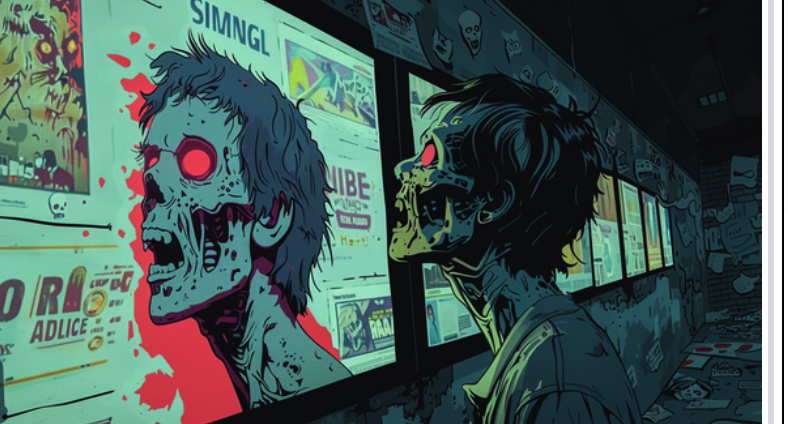
DSPs: The Zombie Platforms Shuffling Through AdtechWhen innovation dies but the platforms keep walking.

We’re talking about DSPs—those clunky, overstuffed jalopies that are clogging up the digital ad freeway like a never-ending traffic jam. Right now, we’ve got a DSP market that’s bloated, overcooked, and way past its expiration date. 

And I don’t know who needs to hear this, but most of them aren’t doing anything new or useful. It’s like a room full of magicians, all trying to sell you the same disappearing coin trick, except the coin is your ad budget, and it’s disappearing into thin air.

Too Many DSPs: The Land of the Walking Dead Platforms

The adtech space is littered with DSPs like an overbooked tech conference, but guess what? Most of these DSPs are just hanging on by a thread, desperately trying to convince you they’ve got a better way to target your precious audience, all while shuffling the same deck of cards as everyone else. It’s like being at a terrible casino where every table has the same rigged game, and the house always wins. Spoiler: you’re not the house.

Once upon a time, DSPs came into this world with the promise of revolutionizing ad buying. They were supposed to make things simple—plug in your budget, and boom! You’re hitting your audience with laser-like precision. But, like an iPhone update that promises longer battery life, all we got was more bloat, more complexity, and a whole lot more of the same recycled inventory. The DSP market now looks like a middle school dance—everyone’s trying to look cooler than they actually are, and the real action is happening in the corners you can’t see.

The Reality: DSPs Are Becoming the Flavorless Spam of Adtech

Let’s be honest—this party’s not just over, it’s crashed, burned, and now the neighbors are complaining about the noise. The DSP world is a sad, bloated buffet of mediocrity that’s in desperate need of a Marie Kondo intervention. Half of these platforms wouldn’t know how to spark joy if you plugged them into the mains, and most advertisers have already Marie Kondo’d them straight into the digital garbage. We’re long past the glory days when being a DSP meant something; now it’s like trying to sell expired canned tuna in a Whole Foods. No one’s biting.

If there’s a future for DSPs—and that’s a big if—it’s going to be in the hands of 4 or 5 actual contenders who didn’t forget to pack their big-boy pants. These platforms are the ones who actually know how to do the job without accidentally setting your ad budget on fire. The rest of them? They’re either pivoting to selling snake oil under the guise of “ad optimizations” or slinking off into irrelevance like the embarrassing tech relics they are. Think Netscape Navigator, but without the nostalgia.

It’s Darwinism in real-time, folks, and evolution doesn’t have time for DSPs still struggling to figure out which end of the programmatic pool they’re swimming in. You’ve got Connected TV (CTV) walking in like the high school quarterback who grew up to be a billionaire, and it’s devouring everything in its path. CTV is the new lunchroom king, and digital DSPs are just the sad leftovers nobody wants anymore. It’s a full-on game of musical chairs, and guess what? Most DSPs are still fumbling with the remote, hoping they can get Netflix to load before they run out of time. Spoiler alert: they won’t.

Here’s the ugly truth—if your DSP can’t handle CTV, it’s not just behind, it’s about to be extinct. We’re already watching the great DSP cull happen right before our eyes. Only the ones that can actually deal with high-quality video inventory will make it to the other side. The rest? They’re going the way of the Blackberry, that once-beloved gadget now gathering dust in some tech museum no one visits. These DSPs will either get absorbed into a few major players like your quirky startup friend who finally sold out to a corporate overlord, or they’ll pivot to selling sketchy ad fraud packages with a side of desperation. In other words: fraud vendors.

And for those that don’t even make that pivot? They’ll just disappear. Gone. Poof. Like they never existed, except for the vague memory of someone once trying to explain why their DSP was different—just before they ran out of funding. You think The Leftovers was a bleak vision of society? Wait until you see what happens to half of these DSPs. One day they’re here, the next day their Twitter handle’s been repurposed by a bot.

The Great DSP Bloodbath Is Coming (And CTV Is Holding the Knife)

Let’s talk about Connected TV (CTV) and how it’s absolutely gutting the DSP market. CTV is rolling in like the Terminator—relentless, efficient, and making DSPs that can’t keep up look like they belong in a tech graveyard. Why? Because the era of static banner ads plastered across sketchy websites is dead. Advertisers are waking up to the sweet realization that premium video content is where the eyeballs (and dollars) are. If your DSP can’t handle that shift, it might as well be selling typewriters in the age of AI.

CTV Isn’t Just Disrupting—It’s Rewriting the Rules

The rise of CTV isn’t just a new trend; it’s fundamentally changing the programmatic advertising game. The days of DSPs juggling cheap banner ads across dodgy websites are over. CTV brings premium, engaging content, and advertisers finally realize they want real people watching their ads—not bots or “users” in far-flung data centers. If your DSP can’t deliver high-quality, fraud-free video ads, it’s not just playing catch-up—it’s already obsolete.

Here’s the thing about CTV: it’s where all the action is. The inventory is limited, premium, and priced like a black-tie gala. We’re talking Super Bowl-level attention on a Tuesday night for your campaign—if you can afford it. And, unlike the endless inventory of banner ads on websites no one actually reads, CTV ads aren’t cheap. They’re prime real estate, and only a handful of DSPs have the infrastructure to handle it. Everyone else? They’re standing in the corner with a sad PowerPoint, trying to convince you why they’re different.

DSPs: The Middleman Nobody Wants Anymore

Here’s where it gets fun: even in CTV, advertisers and publishers are realizing they don’t need DSPs as middlemen. Why pay a third cousin to negotiate your Netflix subscription? You don’t need them—and DSPs are making the process unnecessarily convoluted. Enter direct-to-publisher buys, and suddenly, DSPs are looking more and more like the forgotten fax machines of adtech.

With platforms like The Trade Desk’s OpenPath and PubMatic’s Activate, the programmatic world is making moves to cut out the middleman entirely. These platforms let advertisers go straight to publishers, removing the need for DSPs to take a chunk of your ad spend just for playing middleman. It’s like going back to the days of ad networks—only now it’s faster, smarter, and sprinkled with tech jargon to make it sound fancy.

The adtech giants are already making their play: OpenPath and Activate are all about premium video and CTV inventory, and they’re doing it without needing DSPs to hold their hand. Publishers like the sound of this—more control, more money, fewer middlemen. Advertisers? They’re loving the transparency, direct access, and higher ROI. This trend is only accelerating, and guess who’s left out in the cold? That’s right, your average DSP.

DSP Fraud: The Ugly Side Hustle

Let’s talk fraud, folks, because if DSPs have perfected anything, it’s how to create the perfect breeding ground for shady operators. Think of DSPs as the digital version of a cheap magic show—lots of smoke, mirrors, and sleight of hand, but the only thing disappearing is your ad dollars. It’s like they’ve set up a clearance sale for fraudsters, and guess what? You’re the sucker buying the same counterfeit goods over and over again. Bots, click farms, ghost websites—it’s all part of the act, and DSPs are just standing there with jazz hands, hoping you won’t notice that your hard-earned budget is going down the drain.

But let’s be clear: the problem is baked right into how these DSPs operate. They’re masters at piling on layers of complexity—pixel tracking, attribution modeling, programmatic bidding algorithms that sound way fancier than they are—and behind all that tech mumbo jumbo, fraudsters are running rampant. You think you’re targeting your ideal audience, but half the time, your ads are being clicked on by some bot in a server farm. It’s like buying a seat at the high-stakes poker table only to find out everyone else is bluffing with monopoly money, and you’re the only one still playing with the real thing.

And the kicker? This has been going on for years, and DSPs have more or less shrugged it off. Programmatic display ads have become so riddled with fraud that we’ve started treating it like an annoying roommate—yeah, they’re a pain, but we’ve learned to live with it. It’s as if we’ve accepted that a decent chunk of our ad budget is going to disappear into the digital ether, never to be seen again. Fraud in display is so common it’s like that leaky faucet you keep meaning to fix but never do, so you just put a bucket underneath and hope for the best.

But here’s the thing: CTV is a whole different ballgame. In the world of Connected TV, CPMs are through the roof, and advertisers aren’t just throwing around pocket change here. We’re talking serious dollars being funneled into premium ad slots during prime-time content. No one’s playing around when it comes to CTV—brands expect their ads to be seen by actual humans, watching actual content. If your DSP is serving those ads to a bunch of bots or streaming on some shady knock-off channel nobody’s ever heard of, you’re not just going to get a slap on the wrist—you’re getting roasted.

Now, if you think the fraud in programmatic display is bad, just wait until CTV ad spend really starts skyrocketing. The fraudsters are already drooling over the opportunity to wreak havoc on this emerging space. They’re gearing up to swarm the market like flies on a steak, and DSPs that aren’t built to handle this level of transparency? They’re going to get crushed. Bots will evolve, fake impressions will multiply, and if your DSP can’t sort out the legitimate traffic from the fraud? You’re toast.

The fact is, advertisers simply won’t stand for the same shenanigans in CTV that they’ve tolerated in display ads. When you’re paying top dollar for a prime spot in someone’s living room, you expect more than just a “trust us, it’s working” report from your DSP. You want real transparency. Not that half-baked, convoluted garbage DSPs have been dishing out for years. If a DSP can’t provide a crystal-clear look at where the ad’s running, who’s seeing it, and whether those impressions are real, they’re done. CTV is the new frontier, and DSPs that can’t handle it are about to find themselves on the wrong side of history.

The Future: Only a Few DSPs Will Live to See Tomorrow

So, where does that leave us? Buckle up because the future is going to be lean and mean. In a few years, we’re going to see 4 or 5 DSPs ruling the roost, and the rest will be footnotes in the sad history of adtech’s great DSP implosion. Those that survive will have to evolve—they’ll need direct connections to premium publishers, bulletproof fraud protection, and real-time bidding systems that don’t feel like you’re just burning money.

We’re headed for massive consolidation, and DSPs that don’t have a unique selling point are going to be snapped up like clearance items at a going-out-of-business sale. You don’t need a crystal ball to see this coming—it’s basic math. With CTV in the driver’s seat and everyone trying to grab a slice of that pie, the only DSPs that will survive are the ones that can handle the heavy lifting of video ads, cut out fraud, and actually make a difference.

Everyone else? They’ll become the RadioShacks of adtech—relics of a bygone era, desperately trying to sell the same inventory you’ve seen a million times, but no one’s buying anymore. And honestly? Good riddance. The DSP bubble is about to pop, and it’s long overdue.

End scene.

Data, AI, and Pants: Why Jennifer Jackson Says Only 4% Are Truly Dressed for Succes

Jennifer Jackson’s career path reads like the script of a tech-world reboot where the hero doesn’t save the day with algorithms or gadgets but with a deep-seated love of data and a refusal to take marketing at face value. From chemical engineer to marketing exec, Jackson is the ultimate plot twist. She’s one of those people who, after mixing chemicals and formulas, realized, “You know what? The real chemistry here is between me and marketing strategy.” And, let’s be clear, we should all be thankful she made the switch.

Before becoming CMO at Actian, Jennifer spent her time leveling up digital marketing strategies at Teradata, where she basically rewrote the company’s digital playbook. Think of her like the GM who comes in to turn around a floundering sports team: within a few seasons, the branding and customer engagement were winning trophies, and the fans—aka stakeholders—were back in their seats. She’s not just someone who pushes numbers around a spreadsheet; she’s leading the charge on how data can reshape an entire organization’s market strategy.

At Actian, she’s turned the place upside down in the best way possible. In her first act, she expanded the marketing team by 5x. Yeah, five times. That’s like walking into a one-bedroom apartment and turning it into a mansion with nothing but grit, some top-tier hires, and a data-driven vision. Actian’s marketing under her leadership became the kind of well-oiled machine that Silicon Valley dreams of. She’s focused on storytelling—but not the cheap kind. No, she’s all about compelling content that resonates, engages, and converts. It’s the stuff that doesn’t just grab attention but holds onto it like it’s a lifeline in a sea of SaaS competitors.

What makes Jackson different from every other marketing leader trying to ride the AI hype wave? For starters, she’s not just spouting AI buzzwords; she’s making sure her team is data-ready for AI. That’s the difference between Jennifer Jackson and the rest of the AI enthusiasts who dive headfirst into generative AI without thinking twice about whether their data even knows how to swim. She knows that without proper data quality and prep, your AI initiatives are doomed before they even leave the dock. Jackson isn’t one for hype. She’s for reality checks, delivering brutal truths to companies about their lack of data preparedness while handing out practical solutions. It’s a “tough love” approach, but it’s exactly what businesses need to hear if they don’t want their AI projects to end up like a tech industry cautionary tale.

She’s got a checklist for that, too—a GenAI Data Readiness Checklist. This isn’t some flowery list of things you “could” do; it’s a get-your-act-together guide to ensure companies don’t blow up their AI projects by overlooking basic stuff like data quality, integration, and management. According to Jackson, 87% of people agree that data readiness is essential, but only 4% are actually prepared. It’s like saying 87% of people agree that wearing pants is important, but only 4% actually put them on in the morning.

Beyond the practicalities, Jackson has a keen eye on the broader marketing world. She’s not interested in throwing around half-baked strategies or copycat ideas. In the SaaS space, where everyone thinks they’re revolutionizing something, Jackson doesn’t believe in easy wins. She’s built marketing teams that dive deep into messaging, data analysis, and operations—crafting an approach that’s both sophisticated and nimble enough to adjust on the fly. If B2B marketing seems a little like herding cats, Jackson’s out there with an army of catnip, getting things done.

And let’s not gloss over the fact that she knows how to harness the power of AI without letting it become the be-all and end-all. AI in Jackson’s world is like a very useful intern—good for research, content ideation, and the occasional coffee run, but it doesn’t replace the real brainpower that comes from human marketers. She’s been experimenting with AI as a productivity booster, whether for generating campaign ideas or handling routine content adaptation. But make no mistake: for Jennifer Jackson, humans and their creativity remain at the core. She sees AI as a tool, not a replacement—helpful for jumping off the starting blocks but not for crossing the finish line.

What does the future look like with Jackson at the helm of Actian’s marketing ship? Buckle up, because it’s going to be a wild ride of leveraging advanced data analytics, diving deeper into generative AI (but responsibly), and pushing the boundaries of what content can achieve in the B2B space. She’s got a no-nonsense approach to staying ahead in a landscape crowded with martech vendors. If your tech stack can’t scale, if your content doesn’t pop, if your data is a mess—well, you’re not going to cut it. Jackson has seen the top of the mountain, and she’s bringing Actian right to the summit with her.

Her formula for success is deceptively simple: data-driven strategies, a strong team, and authentic storytelling. But if it sounds easy, it’s because she’s one of those rare people who makes everything look effortless. Behind the scenes, though, it’s all meticulous planning, strategy, and—yes—data. Because as Jackson would tell you, “the data never lies.”

The CMO Who Doesn’t Play by the Rules: Chris Koehler’s Mission to Break Down Silos

Chris Koehler, Twilio’s Chief Marketing Officer, isn’t just another marketer who throws around buzzwords like “disruption” and “innovation” while making it sound like he’s reading from a teleprompter at a TED Talk. No, this guy’s the real deal—think of him as the marketing world’s Swiss Army knife. Koehler’s resume reads like a “choose your own adventure” novel: customer success, product management, marketing analytics, even some consulting thrown in for flavor. It’s this general manager mindset, rather than the narrow “I’m a marketing guy” mentality, that sets him apart.

He didn’t just wake up one day and say, “Let’s sell some APIs.” Instead, he’s spent 25+ years leading everything from demand generation at Adobe to marketing at Box, and now Twilio. He’s the type of guy who looks at marketing and asks, “How does this grow the entire business?”—not just, “Can I get more people to click on this banner ad?” His non-traditional path is a masterclass in thinking holistically. And honestly, if more CMOs thought this way, they wouldn’t need to jump ship every two years when their campaigns fail to produce.

Why Twilio? Why Now?

So, what’s the draw of Twilio for Koehler? Let’s just say the man’s been fangirling over their Segment CDP (Customer Data Platform) for years. When the chance came to hop on board, it was like destiny. Plus, Twilio isn’t your average Silicon Valley startup throwing spaghetti at the wall to see what sticks. The company’s deep dive into AI and customer engagement has them poised to become the next big thing, and Koehler is steering that ship with the confidence of a guy who’s played this game before.

“I’m a longtime Segment customer,” Koehler admits, making it clear that this wasn’t a job; it was a calling. Twilio, with its insane focus on customer engagement through CPaaS (Communication Platform as a Service), is exactly the type of company a CMO like Koehler wants to lead. The tools are already there, and now he’s ready to unleash AI and martech like a kid who’s just unwrapped the ultimate Lego set on Hanukkah.

What’s Broken in B2B Marketing? Buckle Up

Ask Koehler what’s wrong with B2B marketing today, and he’ll let loose. The silos are killing us. Everyone’s running their own little fiefdom: sales, customer experience, marketing. And surprise! None of these departments talk to each other. The result? A disjointed customer experience that leaves people more confused than a Kanye tweet storm.

Koehler’s mission at Twilio is to break down these silos like a wrecking ball. He’s putting CX, marketing, and sales on the same page, sharing data and insights to create a seamless customer journey from first touch to final transaction. If you’ve got killer marketing but your customer experience feels like a trip to the DMV, guess what? You’ve failed. Koehler’s out here telling us that the future of business isn’t about killer campaigns—it’s about killer experiences. And frankly, he’s not wrong.

Koehler’s Three Marketing Pillars: A Crash Course

Koehler’s marketing philosophy? It’s deceptively simple but powerful, like the first time you saw a “skip ad” button on YouTube. His strategy revolves around three core principles:

  1. Customer-Centric Focus: Koehler’s not interested in spray-and-pray marketing tactics. He puts the customer front and center, making sure every interaction feels relevant and empathetic. It’s not about pushing product features; it’s about solving problems for the customer.
  2. Data-Driven Decisions: Data isn’t just a tool for Koehler—it’s the entire playbook. At Twilio, they’re using data to constantly refine and optimize their campaigns. Koehler’s team doesn’t just set it and forget it; they’re learning from every customer interaction to get better. Imagine if your Fitbit also did your taxes—that’s how data-driven Koehler’s team is.
  3. Agility: Marketing plans are cool, but being able to pivot when the market changes is cooler. Koehler’s team is built to be nimble, adapting to customer behavior in real time. It’s the digital equivalent of always having a “get out of jail free” card in Monopoly.

AI: The Not-So-Secret Sauce

Speaking of data, let’s talk AI. Koehler sees Twilio’s AI-powered tools as the future of customer engagement. Segment’s CDP lets his team pull data from across the customer journey and use predictive AI to anticipate what customers want before they even know it themselves. Add in some generative AI for personalized campaigns, and you’ve got marketing that doesn’t feel like marketing—it feels like magic. And yes, that’s probably the dream every marketing exec has been selling you for a decade, but Koehler’s actually doing it.

For Koehler, AI is the real equalizer. While every company under the sun is trying to crack the code of personalized 1:1 marketing, Twilio is already putting the pieces together. It’s no longer about selling at scale; it’s about personalizing at scale. The future isn’t mass marketing—it’s hyper-targeted, data-driven experiences that feel like they’re made just for you. Creepy? Maybe. Effective? Absolutely.

What’s Next? (Hint: It’s Not a Return to the ‘Good Old Days’)

The future of marketing, according to Koehler, is a lot less about mass communications and a lot more about individual connections. We’re talking AI, customer data, and 1:1 personalization at scale. It’s the stuff that’s been hyped for years, but now, with Twilio’s tech stack, it’s actually becoming a reality. The tools are there; the data is there. It’s just a matter of executing with precision.

But Koehler’s not just focused on the external. Internally, he’s building a marketing team that reflects the agile, customer-first philosophy he espouses. He’s creating a culture of constant experimentation, where failure isn’t the end—it’s part of the process. In a world where marketing departments are often weighed down by bureaucracy and red tape, Koehler’s fostering a “fail fast, learn faster” approach.

And Did We Mention the Side Hustles?

Let’s not forget Koehler’s extracurriculars. As if leading Twilio’s global marketing wasn’t enough, he’s also a strategic advisor for Cresta, where they’re using AI to turn your average customer service rep into a Jedi-level expert from day one. Oh, and he’s on the board of CareerVillage.org, an organization that helps underrepresented youth access career advice they’d otherwise never get. This guy isn’t just changing how companies talk to customers; he’s also making sure the next generation of workers is better prepared for the challenges ahead.

The Verdict: This Guy Gets It

At the end of the day, Chris Koehler is more than just a CMO—he’s a marketing rebel with a cause. He’s tearing down silos, dragging B2B marketing into the future, and using AI to make customer engagement feel personal again. Whether you’re a fan of his “whole-business” approach or just excited to see Twilio lead the AI charge, one thing’s clear: Koehler is the kind of marketing leader who’s actually worth listening to.

So, grab your popcorn, because Twilio’s about to show the rest of the marketing world how it’s done—under Koehler’s unapologetically forward-thinking leadership.

Mike Follett of Lumen Research: Viewability Is the Trophy You Get for Showing Up Late to the Party

Mike Follett has been on a relentless quest for attention—not his own, mind you, but yours—for longer than most marketers can even remember.

 He’s been preaching the importance of attention metrics since the early days of the internet, back when we were all still marveling at the sound of dial-up modems and clicking on banner ads without a second thought. 

In digital terms, Follett is practically a time traveler, coming to us from the ancient days of online advertising to remind us of something so fundamental that it’s almost embarrassing we still don’t get it: if people aren’t paying attention to your ads, they may as well not exist. He’s been that guy—the one up on the proverbial mountain, screaming, “If no one’s paying attention, your ad is like a tree falling in the forest when no one’s around—does it even make a sound?” And while it’s a catchy metaphor, it’s also Follett’s professional creed. He’s been repeating it for years, probably to the point of exhaustion, while the ad world has continued to sleepwalk through outdated metrics like viewability.’

For years, Follett has been the lone prophet in the desert, screaming into the wind about how the industry has it all wrong. Marketers and advertisers have been too busy drooling over viewability stats, patting themselves on the back for reaching some magical percentage that supposedly proves their ad was “seen,” even though they all know deep down it’s not really doing what it’s supposed to. Follett’s been standing on the sidelines, shaking his head, as if watching a child proudly tie their shoelaces wrong. “Just because an ad is on the screen doesn’t mean anyone’s actually seen it,” he says, and you can practically hear the sigh in his voice. It’s so simple, yet so widely ignored. For Follett, the obsession with viewability is like celebrating because your billboard is visible from the highway, even though everyone driving by is staring at their phones.

For years, Mike Follett has been the unwavering voice in the wilderness, resolutely sticking to his guns while the advertising industry stumbled from one trend to the next. As marketers jumped aboard every new bandwagon—whether it was programmatic advertising, influencer marketing, or whatever the latest shiny object of the day was—Follett refused to be swayed. He didn’t chase the buzzwords; he chased the one thing he knew really mattered: attention. In an industry that often seemed more interested in flashy presentations and empty metrics, Follett remained laser-focused on what actually drives results. It’s not that he was stubborn or unwilling to evolve with the times—it’s that he already knew the truth before the rest of the industry even realized there was a problem. Attention, not gimmicks, is what makes advertising work, and Follett wasn’t going to budge until the world caught on.

And finally, after years of beating the same drum, it seems like the industry is starting to catch up. For Follett, it must feel like vindication after spending what felt like an eternity shouting into the void. “We’ve been banging on about attention for years,” Follett says, and there’s a palpable sense of relief in his voice, “and finally, people are waking up to the fact that it’s the thing that really moves the needle.” It’s not just a metric; it’s the metric. While marketers were busy obsessing over impressions, click-through rates, and viewability percentages, Follett stayed in his lane, focused on proving that none of it mattered if no one was actually paying attention. Slowly but surely, the industry began to wake up to his message: attention isn’t just a bonus—it’s the cornerstone of effective advertising.

To Follett, attention is far more than a bullet point in a media plan or an optional metric to consider. It’s the oxygen that fuels the entire advertising ecosystem. Without attention, you might as well be shouting into the wind. He’s been saying it for years, practically screaming from the rooftops: if people aren’t paying attention, all those fancy ad campaigns, those shiny programmatic buys, and those influencer deals are nothing more than wasted effort. Attention isn’t a peripheral concern—it’s the lifeblood of advertising effectiveness, the one thing that can make or break a campaign. And now, after years of what must have felt like trying to teach a brick wall how to dance, the world is finally catching up. But for Follett, it was never a matter of if the industry would realize this—it was always just a matter of when.

But Follett isn’t just content to preach about the importance of attention—he’s built an empire around proving it. Enter Lumen Research, the company he founded to measure, quantify, and validate the one thing he knows matters: whether or not people are actually looking at your ads. This isn’t some abstract, feel-good mission; it’s based on cold, hard data, collected from actual human beings. Lumen uses eye-tracking technology to see if users are paying attention to ads or just mindlessly scrolling through their feeds. “Attention is what links media exposure to business outcomes,” Follett explains. And he’s not talking about casual glances; he’s measuring real engagement, down to the second. For Follett, the difference between an ad that’s technically viewable and one that actually captures attention is like night and day. If your ad isn’t grabbing attention, he says, you might as well be throwing money into the wind.

And Follett’s got the receipts to back it up. His company, Lumen Research, has analyzed a staggering 9,000 brand lift studies—yes, nine thousand—to prove, once and for all, that attention is the real driver of success in advertising. “We’ve shown that attention is the metric that correlates with brand outcomes like awareness and purchase intent,” Follett says, with the confidence of someone who knows he’s right. “It’s not just about whether someone could see the ad, but whether they did see it—and for how long.” This isn’t just conjecture; it’s data, pure and simple. Follett’s been vindicated by the numbers, and now he’s on a mission to get the rest of the industry to pay attention—literally and figuratively. If viewability is the attendance sheet—yeah, you showed up—attention is the report card that shows whether you actually learned anything.

But here’s the thing: despite all the data, despite the 9,000 studies and the mountain of evidence, Follett still has to deal with an industry that’s obsessed with the wrong metrics. “Too many brands are obsessed with viewability like it’s some kind of golden ticket,” he says, clearly frustrated. “But viewability is table stakes—it’s just the juice you have to pay to get into the game.” In other words, viewability is the bare minimum. It’s the participation trophy of advertising metrics. It’s not enough to just have your ad technically visible on a screen; you need to know if people are actually paying attention. And yet, so many marketers are still clinging to viewability like it’s the holy grail. “The real question isn’t whether your ad was viewable,” Follett explains, “it’s whether it was seen—and more importantly, did anyone care?” For Follett, this is the crux of the matter. He’s spent years trying to get the industry to shift its focus away from vanity metrics and onto what really matters: whether anyone actually notices your ad.

One of Follett’s favorite targets for his scorn is social media advertising. And honestly, who can blame him? “Are you really telling me that ads buried between TikTok dance videos are getting the same level of attention as a high-quality spot on a premium news site?” he asks, incredulous. It’s a rhetorical question, of course, because the answer is obviously no. And yet, brands continue to pour money into social media campaigns without any real understanding of where their ads are landing. “Context matters,” Follett says, “and brands that ignore that are just burning money for clicks.” He’s got a point—there’s a world of difference between a well-placed ad on a site where people are actively engaged and an ad that pops up between cat memes and viral dance challenges. But try telling that to marketers who are chasing impressions like they’re going out of style.

And don’t even get him started on clutter. If there’s one thing that drives Follett up the wall, it’s the over-saturation of ads on websites that are so cluttered with flashing banners and autoplay videos that you can barely find the actual content. “Cluttered sites with six ads firing at once? That’s not how you get more attention—that’s how you make sure people are tuning out,” he says, with the weariness of someone who’s had this argument far too many times. According to Follett, fewer, better-placed ads would actually increase attention, and as a result, increase the impact of the brand. It’s almost as if Follett is trying to drag the ad industry, kicking and screaming, into a future where less is more. He’s the guy at the party telling everyone to chill out with the fireworks and just focus on creating something that’s worth looking at in the first place.

But Follett isn’t just here to complain—he’s got solutions, too. He’s not content to just point out the problems; he’s also laying the groundwork for how to fix them. According to Follett, attention data can save programmatic from itself. “Attention data can cut through all the noise. It’s a beacon, a signal that says, ‘Here’s the good stuff,’” he explains. In his vision, attention data will help marketers identify which sites are actually worth investing in—sites where people are paying attention, not just clicking for the sake of clicking. “Sites with fewer ads, cleaner layouts—that’s where attention flows naturally,” he says. And here’s the kicker: those sites are often high-quality news outlets, the kind of places where people actually engage with the content they’re consuming. “This is how we start to funnel money toward cleaner, more enjoyable sites,” Follett says, with the confidence of someone who’s already seen the future.

So, what’s the takeaway here? Follett’s not just some old-school ad guy screaming into the wind. He’s a man with a vision—a vision that says the future of advertising belongs to those who understand that attention is the most valuable currency of all. And if the rest of the industry doesn’t catch on soon, they’re going to find themselves left in the dust. In Follett’s world, attention is king, and everything else is just noise.

The Art of Empowerment: Stacy Bohrer’s Blueprint for a Better Ad Ecosystem

Stacy Bohrer, the VP of Buyer Development at OpenX, is a force of nature in the adtech realm, and if you’re not paying attention, you might just miss the whirlwind that is her career. With more than two decades of experience stretching across the media landscape—radio, print, TV, and digital—Stacy is no stranger to navigating the chaotic waters of advertising. She’s got the wisdom of an industry veteran and the energy of someone just getting started, making her a remarkable leader in the digital advertising space.

The Path to OpenX: A Career Built on Disruption

Before joining OpenX in March 2022, Stacy was busy building a legacy at The Trade Desk and Crisp, where she ascended to the ranks of programmatic buying royalty. At The Trade Desk, she didn’t just help establish the Midwest sales team; she single-handedly turned it into a juggernaut, proving that she could not only talk the talk but also strut the walk while juggling the demands of advertisers like a seasoned circus performer. Imagine a ringmaster in a digital carnival, expertly balancing flaming torches and spinning plates, all while keeping the crowd entertained. Her blend of experience gives her a superhuman ability to decode what clients need, which is crucial in an industry where the only constant is change—and that change can hit harder than a caffeinated intern on a Monday morning.

When she leaped to OpenX, it wasn’t just a career move; it was akin to stepping onto the battlefield armed with a sharpened sword and a vision to redefine what an SSP (Supply Side Platform) can do. In a world where everyone seems to be flinging around buzzwords like “transparency” and “data privacy” as if they were free samples at a supermarket, Stacy is the one ensuring that OpenX actually lives up to those promises. She’s the real deal in a landscape littered with jargon, cutting through the clutter with the precision of a samurai. Her mission? To transform OpenX from just another cog in the adtech machine into a powerhouse that not only promises but delivers.

Stacy’s approach is unapologetically bold and refreshingly straightforward. She doesn’t do fluffy talk or vague assurances; she’s all about results and accountability. When she says OpenX is committed to transparency, she doesn’t just mean it in passing. She means they’re putting their money where their mouth is, creating structures and systems that genuinely reflect their values. It’s like the difference between a fast-food joint that claims to serve “fresh ingredients” and a farm-to-table restaurant that actually shows you the local produce. In a space where integrity is often sacrificed on the altar of profit, Stacy stands firm, crafting a narrative that resonates with both clients and consumers alike.

Stacy is no stranger to the chaotic dance of digital advertising. She thrives in the chaos, using her superhuman insights to anticipate shifts in the market before they happen. In an industry notorious for its volatility, she operates with a level of foresight that many can only dream of. This knack for understanding not just the numbers but the emotional drivers behind them allows her to craft campaigns that aren’t just effective but also impactful. It’s like she has a crystal ball that shows her not just what consumers want but what they will want tomorrow—an enviable skill in a world where trends can change with the flick of a smartphone screen.

Her journey at OpenX is a testament to her unwavering belief that advertising can—and should—be more than just a transaction. It should be a dialogue, a dance, a partnership built on trust and mutual success. She’s here to shatter the old paradigms that have held the industry back, making way for a new era where genuine connection reigns supreme. In her world, advertisers are not just checking boxes; they’re telling stories, creating experiences, and fostering communities. This vision of a more holistic approach to advertising sets OpenX apart and makes Stacy a force to be reckoned with in the ever-evolving adtech landscape.

Curation and Control: The New Ad Game

Stacy Bohrer is on a crusade to make advertising great again—sorry, not sorry, I couldn’t resist. Her mantra? Curation is king. This isn’t just a catchy phrase; it’s a battle cry for her approach to modern marketing. Stacy is passionate about the idea that effective advertising is all about delivering unforgettable experiences to audiences, and she isn’t shy about articulating this vision. For her, curation is the strategic art of assembling and activating advanced audiences while filtering out the fluff that can clutter campaigns. In a world overwhelmed by digital noise, she believes it’s crucial to cut through the chaos and deliver messages that resonate deeply with target consumers. If you’re just throwing spaghetti at the wall to see what sticks, you’re doing it wrong.

Under Stacy’s guidance, OpenX has transformed into a powerhouse of supply-side curation, revolutionizing the way advertisers connect with their audiences. Gone are the days when marketers could rely on broad-brush strategies and hope for the best. Today’s buyers demand transparency and quality like never before, and Stacy recognizes that delivering on these expectations is non-negotiable. They don’t just want impressions; they want clarity. They want to know exactly what they’re getting for their hard-earned cash, and they deserve nothing less. This has led OpenX to adopt a more refined approach to advertising, where understanding audience intent and preferences takes precedence.

Stacy’s commitment to curation doesn’t merely improve efficiency; it enhances the overall effectiveness of advertising campaigns. By meticulously assembling audience segments, OpenX enables advertisers to target their messaging with laser precision. This shift represents a fundamental change in how ads are bought and sold, moving away from the scattergun approach to a more targeted, strategic framework. The result? Campaigns that not only reach the right people but also engage them in meaningful ways. For marketers who are tired of seeing their messages lost in the noise, OpenX provides a beacon of hope—an opportunity to connect authentically with audiences.

Moreover, Stacy understands that the landscape of digital advertising is constantly evolving, influenced by shifting consumer behaviors and regulatory changes. This reality further underscores the importance of curation in her strategy. As data privacy becomes increasingly paramount, the need for responsible and ethical advertising practices grows stronger. Stacy champions a multi-faceted approach that not only respects consumer privacy but also fosters trust. Advertisers can no longer afford to operate in silos; collaboration and transparency are essential to maintaining strong relationships with consumers.

Stacy’s vision for OpenX is also a call to action for advertisers to rethink their strategies. In her eyes, the industry must embrace curation not just as a tactic but as a guiding principle. By doing so, marketers can create campaigns that truly resonate and drive results. This perspective empowers advertisers to take ownership of their messaging and positions OpenX as a partner in achieving their goals. The emphasis on quality over quantity ensures that resources are invested wisely, leading to higher returns on investment and more impactful connections with audiences.

In this brave new world of advertising, Stacy Bohrer is leading the charge, encouraging marketers to elevate their game through thoughtful curation. Her approach is a refreshing antidote to the overwhelming complexities of the digital landscape, reminding everyone that advertising is ultimately about creating connections. As she continues to pave the way for innovative strategies at OpenX, Stacy is not just transforming the company; she’s setting new standards for the entire industry. With curation at the heart of her philosophy, she’s proving that the future of advertising can be both effective and meaningful.

Embracing Challenges Like a Boss

Stacy Bohrer is acutely aware of the myriad challenges modern marketers face, particularly in an environment marked by rapid change and uncertainty. Data privacy regulations are tightening, and the impending shift to a cookieless world presents significant hurdles for advertisers trying to effectively reach their audiences. With consumers becoming more privacy-conscious and demanding transparency about how their data is used, marketers are scrambling for innovative solutions to navigate these new waters. Stacy emphasizes that “solving these addressability issues requires a multi-layered approach,” which is critical in an era where traditional tracking methods are being dismantled. OpenX has been laying the groundwork for addressing these challenges for nearly a decade, ensuring that it is ahead of the curve in developing tools that empower marketers to succeed without compromising consumer privacy.

This long-term vision is not just about surviving in a cookieless future; it’s about thriving by providing marketers with the necessary insights and resources to craft successful strategies. By investing in technologies that promote data interoperability and adopting robust privacy practices, OpenX is setting itself apart as a leader in the field. Stacy’s emphasis on a multi-layered strategy underscores the need for innovation in data collection and audience engagement methods. This might involve leveraging first-party data, utilizing contextual targeting, and integrating advanced identity solutions that allow marketers to connect with their audiences effectively while adhering to new privacy standards. It’s a complex puzzle, but Stacy is confident that OpenX has the pieces to make it work.

In a world filled with digital chaos, where every click and impression can feel like a gamble, Stacy firmly believes in the power of trusted partnerships. Advertisers need allies who are willing to roll up their sleeves and work alongside them, rather than merely offering services from a distance. She recognizes that the best outcomes arise from collaboration, where both parties are invested in mutual success. This philosophy goes beyond transactional relationships; it’s about creating genuine value and understanding what clients will need both today and tomorrow. By being attuned to the evolving landscape of digital advertising, Stacy ensures that OpenX can not only meet the immediate needs of its clients but also anticipate their future requirements.

Sustainability and Responsible Media: A Personal Mission

Stacy’s vision extends beyond immediate advertising concerns; she’s deeply invested in creating a sustainable digital advertising ecosystem. OpenX’s impressive feat of achieving Net-Zero certification sets a benchmark in the industry. By migrating their technology infrastructure to the cloud and prioritizing remote work, OpenX has successfully reduced its carbon footprint while still driving substantial ad revenue. This commitment to sustainability showcases that profitability and environmental responsibility can coexist.

Moreover, Stacy is passionate about responsible media practices, underscoring the significance of diversity, equity, and inclusion (DEI) in the adtech space. She has become a vocal advocate for increasing the representation of women, particularly BIPOC women, in leadership roles. As she points out, seeing more women in leadership positions inherently encourages others to envision a pathway for themselves in tech. This representation is crucial in fostering a diverse workforce that drives innovation and success within organizations.

Leadership Philosophy: Empowerment Over Micromanagement

Stacy Bohrer’s leadership style is a refreshing breath of air in an industry often bogged down by the weight of hierarchy and bureaucracy. She firmly believes in the principles of empathy and empowerment, championing a servant leadership model that focuses on prioritizing the needs of her team. In her view, effective leaders don’t just delegate tasks; they actively remove obstacles that could hinder their team’s success. By fostering an environment where employees feel safe and supported, Stacy encourages her team members to express their authentic selves. This openness is not merely a nicety; it’s a strategic choice that enhances creativity and drives performance. When team members know they can take risks and explore innovative ideas without fear of reprimand, the entire organization benefits from a culture of ingenuity.

Stacy’s commitment to servant leadership goes beyond internal team dynamics; it manifests in her dedication to mentorship and community support. She actively participates in various mentorship programs designed to uplift the next generation of women in tech. In an industry where female representation still lags, Stacy recognizes the urgency of fostering diversity and inclusion. Her involvement in these initiatives is not just about checking a box; it’s about creating pathways for women to thrive in tech roles traditionally dominated by men. By sharing her experiences and insights, she aims to inspire and guide young professionals, helping them navigate the complexities of their careers.

What sets Stacy apart is her tangible commitment to supporting these initiatives financially. All proceeds from her mentoring sessions are directed toward organizations dedicated to increasing female representation in technology. This philanthropic approach underscores her belief that mentorship should be both impactful and sustainable. By investing in the next generation, she’s not only giving back to the community but also cultivating a stronger, more diverse workforce for the future. Her actions speak volumes about her values, reflecting a deep-seated belief that empowering others is the key to long-term success.

Ultimately, Stacy Bohrer’s approach to leadership serves as a model for others in the industry. By prioritizing empathy, removing barriers, and investing in mentorship, she not only elevates her team but also contributes to a broader movement toward inclusivity in tech. Her commitment to fostering an environment where everyone can succeed creates a ripple effect that extends beyond OpenX, inspiring other organizations to adopt similar practices. In a landscape that often feels fragmented and competitive, Stacy is a beacon of hope, proving that when leaders invest in their people and communities, the entire industry can thrive.

The Road Ahead: A Bright Future

With her keen insight and expertise, Stacy Bohrer is poised to continue her influential role at OpenX, where she will undoubtedly keep pushing the boundaries of what is possible in digital advertising. As the industry grapples with the complexities of data privacy, sustainability, and the need for authentic partnerships, Stacy’s leadership and vision will be pivotal in shaping a more transparent and responsible advertising landscape.

In a digital advertising world often likened to the Wild West, Stacy Bohrer emerges as a steady hand, guiding her team and clients through the dust and chaos with determination and strategic foresight. Her journey is a testament to the power of leadership rooted in empathy, empowerment, and a fierce commitment to sustainability—a beacon of hope for the future of adtech.

Stacy’s insights and experiences offer invaluable lessons on resilience, creativity, and the importance of lifting others as we climb. As she continues to make her mark, one thing is clear: the future of digital advertising is brighter, more inclusive, and more responsible with leaders like her at the helm.

ThinkPad to Think Big: Rabin’s No-Nonsense Path to Lenovo’s Future

David Rabin, Lenovo’s CMO for the Solutions and Services Group (SSG), is like the guy in a high-stakes poker game who looks at everyone else frantically tossing chips around and says, “Let’s not lose our heads here, folks.” He’s seen more martech trends come and go than most of us have had bad lattes. But unlike those who get whiplash from chasing every new shiny tool, Rabin has built a career on cutting through the noise with the sharp edge of common sense. And maybe a little bit of old-school customer obsession—just a bit.

Now, don’t get it twisted. Lenovo, for many, still conjures up images of your dad’s indestructible ThinkPad—a trusty but somewhat clunky laptop built like a brick. But Rabin’s not here for your outdated perceptions. He’s the guy tasked with shifting Lenovo from just “that hardware company” into a serious contender in the end-to-end technology solutions game. He’s been hustling at Lenovo for 18 years, and if anyone’s equipped to shake things up, it’s this guy. As Rabin puts it, Lenovo has been undergoing a “landmark transformation,” pivoting from hardware-focused to full-scale tech services powerhouse. And no, he doesn’t need another ThinkPad meme to remind him of where they came from.

But Rabin isn’t here to play nice or tiptoe around the obvious. One of his biggest gripes with B2B marketing is execs who don’t know how to stick to a strategy. “Pick a direction, stick with it, and give it time to work,” he advises, like the marketing Yoda we all need. It’s the equivalent of your personal trainer telling you to stop switching workout routines every week and actually give one a chance to, you know, do its job. Marketing doesn’t yield results overnight, and Rabin has no patience for executives who panic at the first sign of uncertainty and start changing lanes like a NASCAR driver hopped up on Red Bull.

Speaking of change, Rabin is very clear on one thing: data is crucial, but if you’re trusting it blindly, you’re cruising for a bruising. “Find the truth in data,” he says, but with a healthy dollop of skepticism. He’s seen too many marketers get duped by pretty numbers that don’t hold up under scrutiny. In Rabin’s world, gut-checking isn’t just optional—it’s required. If the data says one thing and your instincts scream another, it’s time to dig deeper. Marketers, he warns, need to triangulate their data like a survivalist with a compass, a map, and an SOS flare.

And then there’s the AI conversation—because of course, there is. While plenty of marketers are still wringing their hands over whether AI will take over their jobs, Rabin’s already making AI work for him. Lenovo’s use of AI in content creation has slashed costs by 70%, while speeding up production time by 4x. That’s not a typo. Four times faster. And here’s the kicker: Rabin doesn’t think AI is here to steal jobs. Instead, he believes it’s going to “reframe the work we do” and make smart marketers—those who actually know how to leverage AI—more valuable than ever.

But Rabin’s not all sunshine and rainbows about technology. He’s well aware of martech’s potential pitfalls. His mantra? Less is more. Lenovo consolidated its sales enablement tools from a bloated mess of dozens down to a single, streamlined platform. He’s not interested in fluff—if it doesn’t work, it gets tossed out like last year’s iPhone. As he puts it, “We get paid for impact, not outputs.” Translation: just because you’re churning out a ton of content doesn’t mean any of it’s good or useful. Rabin is the guy who will look at your 10-page marketing report and ask, “Yeah, but what did this actually do?”

When it comes to the future, Rabin’s vision is clear: AI is going to allow for hyper-personalization at speeds we couldn’t dream of a few years ago. But that doesn’t mean it’ll be a smooth ride. He anticipates a landscape of deeper fragmentation—more tools, more AI, more specialized solutions. In other words, the marketer of the future will need to be a bit of a tech-savvy juggler. And just in case you thought you could get by with today’s tactics, Rabin leaves you with a final thought: “If you don’t keep up, someone else will happily take your place.”

In a nutshell, Rabin is the no-BS CMO who’s seen it all, done most of it, and still has the energy to tell everyone else how it’s done. If you’re a marketer prone to shiny object syndrome, his advice is simple: calm down, focus, and get your act together before the competition eats your lunch.

AdTech’s Conductor of Chaos: How Dave Morgan Sees Through the Industry’s Smoke and Mirrors

Alright, everyone, hold onto your overpriced coffee cups because today we’re diving deep into the psyche of one of ad tech’s OG disruptors—Dave Morgan.

 You know, the guy who’s been playing 4D chess in TV advertising while the rest of you are still trying to figure out how to beat the algorithm on TikTok. Morgan, for those of you who’ve been living under a pile of discarded NFTs, is the Chairman and Founder of Simulmedia—an outfit that’s redefining how TV advertising works.

 Before that, he built Tacoda and Real Media, and yes, he’s been shaping the space since before “programmatic” was even a thing. And no, “programmatic” isn’t some fancy way to say you’re automating everything in your life, like a Roomba on steroids.

Let’s be clear, Dave Morgan isn’t your typical ad tech sage. He’s more like the Gandalf of TV advertising—minus the fluffy speeches and with way more side-eye. He’s the guy at the fancy industry mixer, casually sipping his scotch while everyone’s getting jazzed about the latest buzzword bingo. And just when the hype reaches its peak, he leans in, smirks, and says, “That’s not even remotely how this game is played.”

CTV: A $30 Billion Mirage?

Let’s start with the elephant in the room: Connected TV, or as the acronym-loving crowd calls it, CTV. If you’ve been paying any attention, you’ve probably noticed that everyone in the industry is hyping it up like it’s the second coming of digital advertising—some kind of magical cure for all the garbage banner ads, pre-roll disasters, and creepy retargeting that’s been following you around like a stalker on your worst day online. The industry treats CTV like it’s the panacea for all the sins of digital media, boasting projections of $30 billion in ad spend this year alone, as if tossing cash at a problem makes it go away.

But, folks, Dave Morgan isn’t here for your Kool-Aid. If you’re sipping the CTV hype, Dave’s about to knock that cup out of your hand with a big ol’ dose of reality. “There’s this notion that there’s an open web on CTV. There isn’t,” Morgan says, not even bothering to sugarcoat it. And he’s not wrong. For all the talk of CTV being the Wild West, where brands can stake their claim and advertisers have a level playing field, the truth is a little more exclusive. “If it’s not controlled by one of the nine major companies, it’s not real,” Dave continues. Essentially, if you’re not in with the big nine—think Amazon, Roku, Google, and their ilk—you’re playing in the minors, hustling on the outskirts while the big leagues control the game.

That dreamy idea of a democratized CTV landscape where anyone with a decent idea and some programmatic magic can hit it big? It’s like believing Facebook actually cares about your privacy. Sure, they say they do, but in reality, you’re just the product being sold. CTV’s no different. If you’re not on the inside, you’re the guy in the parking lot trying to sell bootleg mixtapes while the party rages inside the mansion.

Let’s not forget how everyone’s falling over themselves about the money. Oh, the money. With $30 billion on the line, people act like CTV is the next gold rush, throwing around figures so massive, it feels like you’re reading about a government bailout rather than ad spend projections. But Dave’s not buying into the frenzy. “We’re in a build-it-now, fix-it-later situation,” he says, and it’s a line that hits harder than a slap in the face with a reality check. Think about that for a second. This supposed $30 billion savior of the advertising industry? It’s more like an IKEA project—half-built, with missing pieces, and no real instructions. Sure, it looks good from afar, but up close, it’s wobbling on a shaky foundation.

Morgan doesn’t stop there. Ad serving in sports, one of the biggest growth areas for CTV, is also a hot mess. “Nobody’s even got a real-time ad server for sports on CTV,” he adds, almost incredulously. That’s right, despite all the posturing and promises from ad tech companies, we’re nowhere close to being able to deliver real-time, dynamic ads in sports—one of the biggest moneymakers in TV. Instead, what you’re watching are ads that were stitched together ahead of time like some kind of Frankenstein’s monster, sewn up with whatever tech could be cobbled together in time for the broadcast. You thought those ads during the big game were happening in real-time? Nope. They were stitched in like they were part of a pre-recorded sitcom.

Morgan’s take? We’re trying to push a system that isn’t ready for primetime, much less capable of handling the monumental growth being promised. He’s the guy pointing out that we’re building a rocket but forgot to check if we packed the parachutes. “It’s the shiny new thing everyone’s chasing,” he says, “but the infrastructure is still nowhere near where it needs to be.” It’s like a high-speed train barreling down a half-finished track, and everyone’s just hoping it doesn’t derail before it reaches the station.

The Easy Button Fantasy

Let’s talk about the industry’s favorite bedtime story—the “easy button.” If you’ve ever sat through a pitch where a company promises that their platform will “optimize your ads with one click,” you’ve been sold a dream, my friend. It’s as real as those “work from home” schemes your aunt keeps posting about on Facebook. According to Morgan, the easy button mentality is wrecking the ad tech world faster than crypto bros wrecked their portfolios last year.

“We’re simplifying things to the point of breaking,” Morgan says, with a tone that suggests he’s about ten seconds away from throwing his hands up and walking out of the room. Marketing used to be this noble profession where people actually had to think. Now, it’s “five percent of their job,” according to Morgan, and the rest of the time? They’re stuck managing a giveaway on Instagram or some “viral” TikTok challenge.

What’s the real problem? It’s not just lazy marketing—it’s an epidemic of ad tech companies bending over backward to give marketers exactly what they want, even when they have no idea what they want. The industry has turned into a wish-fulfillment machine, cranking out low-effort “solutions” that just paper over deeper problems. It’s like building a sandcastle while a tsunami’s coming in.

Morgan’s frustration is palpable. “We’re letting people push pricing down, delivering fake stuff, and then burning the market,” he says. It’s like a bad episode of “Shark Tank,” where everyone is throwing buzzwords around like confetti, hoping someone will actually make sense of them. But the kicker? The people pushing the easy button don’t even understand how advertising works. “They’ve been trained on banner programmatic and think that’s how brands are built,” Morgan laughs. Spoiler: It’s not.

Shoppable TV: Real Innovation or Digital Duct Tape?

Ah yes, shoppable TV. The buzzword du jour that’s supposed to “blur the line between entertainment and retail.” Picture this: You’re binge-watching Stranger Things, and suddenly, there’s a pop-up offering you a chance to buy Eleven’s sneakers. Isn’t that just what we’ve all been waiting for? According to Morgan, not so much. “We’re slapping a shopping cart on your Netflix binge watch,” he says, and it’s hard to argue with him.

Sure, Roku’s teamed up with DoorDash, and Amazon’s pushing shoppable content like a Black Friday sale that never ends, but Morgan sees right through it. He’s been around long enough to know that just because something is “new” doesn’t mean it’s better. “Look at QVC,” he says. “They’ve been doing this for decades, and while it may not be sexy, it works.” The lesson here? Just because you slap an “innovative” label on something doesn’t mean you’ve reinvented the wheel. Sometimes, it’s just a shinier version of what we already had.

The real winners, according to Morgan, are companies like Walmart. “Walmart Connect understands how TV ads and in-store experiences come together,” he says, giving a nod to Ryan Mayward over at Walmart, who’s got his hands deep in the retail media cookie jar. You want to see the future of shoppable TV? It’s not in some pie-in-the-sky Netflix integration—it’s in understanding how to move product, both online and in stores, in a way that makes sense.

Programmatic: The Wild West of Ad Tech

Let’s not forget the mess that is programmatic advertising. The digital supply chain is more bloated than a post-Thanksgiving dinner belly, and nobody seems to know where all the money’s going. “There are too many middlemen,” Morgan says flatly. “I keep hoping they’ll all get sucked out of the market, but they just keep hanging on.” It’s like a scene from a zombie apocalypse movie where no matter how many you take down, more keep popping up.

Morgan’s real gripe isn’t just with the bloat—it’s with the moral vacuum that’s been created in the process. Rebates, undisclosed fees, sketchy deals—it’s all part of the game, and most people don’t even want to know how deep the rabbit hole goes. “People don’t want to admit how much waste is in the system,” he says. And why would they? Admitting it would mean getting fired. It’s like discovering your kitchen’s infested with rats but deciding to burn the house down rather than deal with it.

Fraud and the Dark Underbelly of Ad Tech

Now, let’s get into the dark stuff—fraud. This is where the skeletons in the ad tech closet really start to pile up. If you’ve been in this industry for more than five minutes, you know fraud isn’t just an occasional hiccup; it’s baked into the very system. It’s the worst-kept secret, whispered behind closed doors and over overpriced drinks at every conference. The dirty little truth that nobody wants to acknowledge? “Half of their stuff is junk,” Dave Morgan says, not mincing a single word. “More than half has to be fake for them to get a margin.” Let that sink in for a minute. We’re talking about the majority of inventory in the market being either fake or so low-quality it makes you question the integrity of the entire system. It’s like buying a knockoff Rolex in Times Square but somehow managing to do it with millions of dollars at stake—and nobody’s calling the cops.

Morgan’s not pulling any punches here, and why should he? The fraud problem in ad tech is the kind of ugly truth that everyone’s happy to sweep under the rug because, frankly, it’s just too damn lucrative. We’re not talking about a few bad apples here; we’re talking about an orchard of rotting fruit. “The system’s too lucrative to fail,” Morgan says, summing up the core issue. The sheer volume of money sloshing around in programmatic advertising is enough to keep the wheels turning, no matter how much of it is wasted. Everyone’s making their cut, so why rock the boat? It’s like a casino where the house always wins—only in this case, the house is a labyrinthine mess of middlemen, kickbacks, and opaque deals that would make even the shadiest Wall Street broker blush.

And the real kicker? The system isn’t just built to handle fraud—it’s designed for it. “A lot of people don’t have the intellectual curiosity—or the desire—to know how it works,” Morgan says, hitting the nail on the head. It’s not just that people don’t know how deep the fraud runs; they don’t want to know. Pulling back the curtain on this mess is like opening Pandora’s box—once you see what’s inside, you can’t unsee it. The system is a Rube Goldberg machine of misaligned incentives, and most people are just happy to let it keep clanking along as long as their paycheck clears.

And really, who wants to admit they’re part of the problem? If you’re an agency or a marketer, confessing that half the inventory you’re selling is garbage is like admitting you’ve been peddling snake oil. It’s career suicide. “There’s so much money tied up in it that nobody wants to be the one to blow the whistle,” Morgan explains. It’s a classic case of willful ignorance—everyone’s in on the grift, but nobody’s willing to speak up because there’s just too much cash on the table. Imagine if a doctor knew that half the pills they were prescribing were sugar, but shrugged it off because the drug company was paying them under the table. Welcome to ad tech.

Morgan paints a bleak picture of just how deeply fraud is entrenched in the ecosystem. “You can’t deliver real stuff at the prices some of these companies are promising,” he says, pointing to absurdly low CPMs that are mathematically impossible without cutting major corners. For a real advertiser, the landscape looks less like an opportunity and more like a digital minefield. Every time you think you’re reaching an audience, there’s a decent chance you’re paying for bots, fake clicks, or straight-up ghost ads. It’s like throwing a party and realizing halfway through that half the guests are cardboard cutouts.

So, what’s the solution? Transparency, obviously, but that’s about as popular in ad tech as a tax audit. “We need to stop letting people sell lies,” Morgan says. He’s not asking for a revolution—just for a system where buyers actually know what they’re paying for. Crazy idea, right? Yet, here we are, still talking about this in 2024, while the fraudsters laugh all the way to the bank. It’s a game of smoke and mi

The Real Takeaway: Dave Morgan’s Big Picture

So, what’s the moral of the story? Well, if you’re looking for a neatly tied-up conclusion that’ll make you feel good about the state of ad tech, you’re in the wrong place. The industry is a mess, a convoluted jungle of middlemen, opaque deals, and outright fraud. And Dave Morgan, having seen it all from the front row, isn’t the kind of guy to sugarcoat that reality. He knows it’s not going to fix itself because the rot goes too deep. But here’s the kicker: Morgan isn’t just sitting around complaining about the state of things. He’s still in the game, pushing for the one thing this industry desperately needs but keeps dodging like a bad Tinder match—accountability.

Morgan’s been around the block enough times to know that the system isn’t built for easy fixes. The entire ad tech ecosystem, as he sees it, is too lucrative to fail and too flawed to thrive long term. But he’s not the kind of guy to throw up his hands and walk away. Instead, he’s advocating for transparency—not just the kind that gets you a gold star from your compliance department, but real transparency. The kind where you actually know where your ads are being placed, who’s selling them, and how much you’re paying for the privilege. In a world where most people are happy to stay in the dark, Morgan’s calling for everyone to flip on the lights and take a good, hard look at the mess we’ve all created.

Here’s the thing: Morgan’s not here for the industry buzzwords or the empty promises of “disruption” or “innovation” you hear at every ad tech conference. Those are just shiny distractions. “I don’t care about the fluff,” Morgan says. He’s after the truth, the ugly, inconvenient truth that nobody wants to confront because, well, the truth doesn’t sell software or win awards at Cannes. But that’s exactly what makes him the rare voice of reason in an industry that’s often more about appearances than results. Morgan’s been inside the machine long enough to know what’s really going on, and he’s not afraid to call it out.

And let’s be real—most people in ad tech don’t want to hear what Morgan has to say. Why? Because the truth is uncomfortable. The truth means admitting that a lot of what’s happening behind the scenes is straight-up broken. It means acknowledging that for every fancy dashboard you’re looking at, there’s a whole lot of garbage inventory and questionable data lurking behind the curtain. “Most people don’t want to know,” Morgan says. And that’s the crux of the problem. People are too busy patting themselves on the back for their “innovative” solutions to admit they’re part of a dysfunctional system.

But if you’re sitting there sipping your $6 oat milk latte, thinking about how to optimize your latest funnel or push your next programmatic campaign, just know that Dave Morgan is out there somewhere, shaking his head. He’s watching the industry try to duct-tape itself together, and probably muttering under his breath, “That’s not how any of this works.” Because here’s the thing—if you’re still treating ad tech like a game of darts, where you just throw money at a wall and hope something sticks, you’re missing the point entirely. The future of advertising doesn’t belong to the loudest hype or the most complicated tech stack. It belongs to those who actually understand how to fix the broken system.

And what does fixing it look like? It’s not glamorous. It’s not going to get you trending on Twitter or give you the keynote spot at AdWeek. But it’s necessary. “We need to build a better ecosystem,” Morgan insists. One where fraud is weeded out, transparency is the norm, and everyone—marketers, agencies, platforms—takes responsibility for cleaning up the mess we’re in. It’s not just about stopping the bad actors; it’s about holding ourselves accountable for the decisions we make every day in this business. That’s the kind of change Morgan is pushing for, and honestly, it’s the only kind that’s going to save this industry from itself.

Anthony Katsur: The Man, the Myth, the Cookie-Crushing, CTV-Wrangling Legend

If there’s one person who could navigate the mind-numbing intricacies of the digital ad ecosystem and still walk away with a smirk, it’s Anthony Katsur. I really like this guy.
 As the CEO of IAB Tech Lab, Katsur doesn’t just know where the proverbial bodies are buried in the industry—he probably had a hand in digging a few of those graves. We’ve had him on The ADOTAT Show before, and it’s no surprise we had to bring him back for more, because when someone’s juggling privacy standards, cookie apocalypses, and CTV chaos, there’s always a fresh fire to put out or a new digital labyrinth to untangle.

Katsur has been at the heart of adtech long enough to watch entire fads rise, fall, and be recycled under different names, all while keeping a straight face. He’s seen Google play chicken with the entire industry over cookies, the Wild West of Connected TV (CTV) grow into an unruly toddler on a sugar high, and witnessed privacy standards evolve from corporate jargon to full-blown regulatory gauntlets. And now, here he is, talking to us about the latest curveballs coming at the adtech world—curveballs that he’s not just watching but actively trying to bat away.

Three Years of Digital Firefighting: Katsur’s Take on Surviving IAB Tech Lab’s Rollercoaster

Most people might celebrate their three-year work anniversary with a cake or a half-hearted office party, but Anthony Katsur? He’s been wrangling the chaos of digital advertising at IAB Tech Lab for three years, and he’s still standing—barely. And when I say barely, I mean this man’s had his hands in so many fires that it’s a wonder he’s still got skin left.

When I asked Katsur about his most “I can’t believe this is my job” moment, the list was long and storied. From analyzing the Privacy Sandbox (more on that nightmare later) to rubbing shoulders with tech gods like Scott Galloway and Kara Swisher, Katsur’s had his share of “what is happening right now?” moments. But let’s get one thing straight—he’s not just there to shake hands and kiss babies. He’s orchestrating some of the most critical conversations about the future of digital advertising, and he’s loving every second of the insanity.

The real kicker came with the Tech Lab’s analysis of Google’s Privacy Sandbox last year, a watershed moment where Katsur’s team didn’t just poke holes in Google’s shiny new ideas—they used a flamethrower. And for good reason: the Sandbox, as it stands, could decimate publisher revenue while leaving adtech scrambling for cover. It’s like being invited to a party where the host forgot to buy snacks and then asked you to foot the bill. Katsur? He’s not afraid to call it like he sees it, even when Google’s the one holding the purse strings.

But let’s not kid ourselves—the guy thrives on this madness. He loves his job, and in an industry that’s been flipping tables and reinventing itself faster than a toddler hyped up on Pixy Stix, that’s saying something.


Cookies and the Apocalypse That Wasn’t

Remember when Google told us they were finally going to pull the plug on third-party cookies? Well, here we are, years later, and cookies are still hanging on for dear life. Every time we brace ourselves for the big moment, Google hits us with another delay like a broken record that won’t stop skipping. It’s like we’re all trapped in some surreal waiting room where the receptionist keeps saying, “The doctor will be right with you,” but the doctor’s halfway to Tulum sipping a margarita.

So, how does Katsur feel about this digital limbo? Is he rolling his eyes every time Google pulls another fast one? Not quite. In fact, Katsur has more sympathy for the search giant than you’d expect. According to him, what Google’s trying to do is a herculean task. They’re playing tug-of-war with privacy regulations, advertising use cases, and the relentless demands of regulators like the CMA in the UK. It’s a balancing act that makes the Flying Wallendas look like amateurs.

But don’t mistake Katsur’s sympathy for leniency. He’s quick to point out that while the third-party cookie might not be the sole cause of privacy woes, it’s certainly been the whipping boy of the digital advertising world. Cookies, he says, have been abused and over-promised, a scapegoat for privacy issues when the real problem lies in how they’ve been used. Katsur sums it up perfectly with one of his now-famous analogies: “Blaming the cookie for privacy lapses is like blaming the car for a drunk driving accident.” You know, it’s not really the cookie’s fault, but we’ve all let things get a little out of hand.

So where does that leave us? According to Katsur, the third-party cookie is already halfway in the grave—Apple and Mozilla have already dumped it like last season’s fashion trends. For Google, it’s not a question of if, but when. And when the time comes, we’ll all need to find a new data crutch. Luckily, Katsur’s got a plan for that, too.


The Global Privacy Platform: A Lifeline or a Lead Balloon?

Enter the Global Privacy Platform (GPP), Katsur’s pride and joy—a set of standards meant to help the ad industry navigate the stormy seas of global privacy laws. Sounds great, right? Well, sure, if you can get companies to actually adopt it. While dozens of companies have already signed on, from big publishers to major adtech players, there’s still a sense of dragging feet. It’s the age-old dilemma: everyone loves the idea of compliance… as long as someone else does the heavy lifting.

When I cheekily asked if some companies were just hoping regulators would get bored and move on, Katsur didn’t hold back. “No one is under the illusion that regulators are just going to forget about privacy,” he says. And he’s right. We’re in the early stages of what Katsur calls a “new privacy regime,” one that kicked off with the GDPR and has since spread like wildfire across the globe.

Now, every corner of the world has its own privacy standards, from California’s stringent laws to the comprehensive regulations coming down the pipeline in India. It’s like an endless game of regulatory whack-a-mole, and Katsur’s GPP is the hammer we’re supposed to use to keep up.

But here’s the catch: implementing privacy standards isn’t cheap, and it’s definitely not quick. For most companies, it’s not a question of cost, but of resources. Getting privacy compliance slotted into the corporate roadmap is like trying to add a new track to a high-speed train—good luck fitting that in without derailing everything else. Katsur, though, remains confident. He knows that privacy isn’t going away anytime soon, and the companies that fail to get on board will be left scrambling when the hammer finally comes down.


CTV: The Toddler on a Sugar High

Now, let’s talk about the wildest ride in adtech today: Connected TV. If the digital ad ecosystem were a zoo, CTV would be the cage where they keep the hyperactive toddler who’s just downed a 64-ounce Big Gulp. The energy is off the charts, the rules are nonexistent, and no one quite knows how to wrangle it all. But Anthony Katsur? He’s got a plan—or at least he’s working on one.

According to Katsur, CTV is the final frontier of advertising. It’s like space, uncharted and full of potential, but also littered with technical debris that needs serious cleanup. One of the biggest challenges? Creative formats. There’s no standardization, no agreed-upon definitions of what makes a pause ad, a squeeze ad, or any other format you can imagine. It’s like trying to build a skyscraper when no one can agree on what a brick looks like.

But the chaos doesn’t stop there. Katsur points out that the industry is obsessed with treating linear TV and streaming as a zero-sum game. As linear TV declines, streaming supposedly wins by default. But Katsur sees things differently. He envisions a world where advertisers don’t care whether their ads are delivered through a satellite dish, rabbit ears, or streaming. All that matters is getting their brand in front of consumers on that big flat screen hanging on your wall.

Of course, that’s easier said than done. With fragmented data sets, inconsistent audience definitions, and creative IDs spread across 14 different global frameworks, it’s a wonder anyone’s figured out how to advertise on CTV at all. But Katsur’s Tech Lab is on the case. They’ve developed the Ad Creative ID Framework to bring some much-needed order to the chaos. The goal? Universal reconciliation across screens and streamers, because if we can’t agree on how to measure ads, what’s the point?


AI: Messiah or Grim Reaper?

Ah, AI—the tech world’s favorite boogeyman. Depending on who you ask, it’s either going to steal all our jobs or usher in a new golden age of productivity and innovation. Katsur? He’s somewhere in the middle. While he acknowledges that AI will disrupt the industry (and probably put a few people out of work), he doesn’t think we’re quite ready for the apocalyptic AI takeover just yet.

Katsur sees AI’s biggest potential in two areas: dynamic creative and contextual relevance. Let’s be real—ad personalization has always been the holy grail of marketing, and AI just might be the tool we need to finally make it happen. Katsur’s especially bullish on dynamic creative, where AI can tailor ads to individual viewers on the fly. It’s like having a personal ad agency in your pocket, and it’s only going to get more sophisticated from here.

But AI isn’t without its dark side. There’s real concern about AI bias, the kind that perpetuates harmful stereotypes and reinforces societal divisions. Katsur’s answer? Open-source AI models. If we can peer under the hood of these algorithms and see how they’re built, we can root out the biases before they cause any real harm. Transparency, as always, is Katsur’s go-to solution.


The Katsur Legacy: Grit, Innovation, and Leaving the Industry Better Than He Found It

When you ask Anthony Katsur about his future in adtech, he’s not aiming for sainthood. He’s not even trying to be the guy who “saved” adtech from itself. What he wants is much simpler, and infinitely harder: to leave the industry better than he found it.

Katsur’s proud of the work the Tech Lab has done over the past three years. He’s pushed the organization to move faster, innovate more aggressively, and set standards that keep the industry ahead of the curve. But he’s also keenly aware that the adtech ecosystem is a thankless beast. No matter how much progress he makes, someone’s always upset. But that’s the nature of the job, and Katsur’s got the grit to handle it.

His legacy, he hopes, will be one of transparency, integrity, and a relentless drive to push the industry forward—even when it didn’t want to be pushed. He wants to be remembered as the guy who didn’t just follow the rules but helped rewrite them.

As for the future? Katsur’s always thinking five years ahead, planning for challenges that most of us haven’t even begun to consider. Whether it’s privacy, CTV, or AI, he’s confident that with the right approach, the adtech world can not only survive but thrive. And if he has his way, the internet might just be a little less annoying by the time he’s done.