Using Google+ To Get Better Rates?

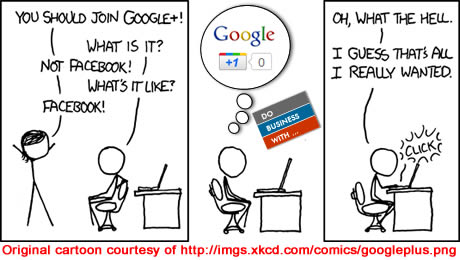
Google+ Pages for business is a new add-on that will change how we think of adwords in the next few months. Now, when businesses make a Page on Google+, they can connect the page to the website URLs in their Adwords account. This means that the +1s that are done on the linked URLs will now show +1’s for anything related to the brand.

What does this mean? That through advertising you can now have a significant viral impact on the brand. Advertising on Google Adwords will allow any company to promote themselves via Google+.

This is significant to Performance Marketers, because it will give them an advantage if they can get their product advertised being given more +1s.  When it comes to actual auction of the adwords, it also means the advertisements, both banners and text ads will eventually be given more weight based on the +1’s that it gets.

Does this mean that you will be able to pay less for Google adwords if you have more +1’s than your competitor? Not completely sure here, but Google has implied that they will favor those who have more social impact on Google+.

New Affiliate App Released

OmniStar, an affiliate software management company, has released a new mobile application that will allow affiliate managers to manage and control their affiliate programs remotely. This application will allow affiliate users to also sign up with affiliate programs that use OmniStar, and check their commissions and other statistics.

According to Chief Operating Officer Arlen Robinson, “We are extremely excited that are customers will now be able to empower their affiliate users with the ability to use their cell phones to manage their affiliate program.”

OmniStar’s program is compatible with almost every major phone including:

  •     iPhone 3G
  •     iPhone 3GS
  •     iPhone 4
  •     iPad
  •     Samsung Galaxy Tab
  •     Blackberry Torch
  •     HTC Incredible
  •     HTC EVO
  •     webOS
  •     Blackberry 6
  •     Android 2+

For affiliate program owners, it’s vital that you provide your affiliate users with the means to track their success, manage their program and stay connected at all times. With the new Omnistar affiliate marketing app, they can do all of that and more. Not only does that help ensure that your affiliates are successful, but that your program grows as well. Robinson states, “It is important that our customers allow their affiliate users access to their commissions and reports at any time and using whatever device.”

Omnistar was founded to provide a user-friendly way to manage multiple affiliate programs from a single interface. The company has been in operation for 11 years, serves more than 11,000 businesses and constantly strives to provide quality solutions that offer real benefits for affiliate program owners and their affiliate marketers including referral software, affiliate tracking software, document management solutions and more. Current clients include Macy’s, Cisco and Trek.

Is Interclick Yahoo!’S Remnant Revenue Savior?

ADOTAS – Somehow, Yahoo!’s third-quarter earnings proved to be worse than its second quarter earnings. The latter report raised a lot of eyebrows as U.S. display revenue — seemingly the only solid revenue performer, with the company’s search revenue still in freefall — took a major dive, attributed to a poorly implemented sales team reorganization that witnessed more turnover than expected. But by the time of the earnings, the situation had been taken care of — fresh bodies were manning the phones and keeping premium inventory off of the Right Media Exchange (which experienced some unexpected turnover itself last quarter).
Well, come third-quarter report time, CFO and interim CEO Tim Morse — on the job for a few weeks after the unceremonial firing of Carol Bartz — had a great deal of tap dancing to do. In general, revenue was down 5% year over year ex-TAC (24% GAAP-adjusted) and net earnings dropped 26% YOY, but now display revenue had actually slipped. See, in the second quarter, global display revenue was still up year over year (5% ex-TAC); in third quarter, display revenue ex-TAC was $449 million, down from $448 million during Q3 2010 — a 5% drop YOY. GAAP display revenue was $502 million, a decrease of 2% versus the $514 million reported in the third quarter of 2010.

Morse played the dip off as “flat,” but it takes a blind man not to see an inflection point. With the premium inventory sales team running at full steam, Yahoo! cited the culprit this time around as remnant inventory. Morse said straight up, premium (guaranteed) display revenue grew while non-premium (nonguaranteed) revenue display declined. It appeared that CPMs for non-premium inventory sold on RMX had been sinking like the Titanic, but Morse suggested that an in-house tech upgrade would turn the decline around. Kinda weird considering that the department has been running around headless for a few weeks.

Morse’s statement is only one reason why today’s announcement that Yahoo! is buying audience targeting platform Interclick for $270 million ($9 a share, a 22% premium to the price of the stock at Monday’s close) is a bit of a surprise. The others are a bit more obvious — Yahoo! doesn’t have a permanent CEO and is undergoing a “strategic review,” while cofounder and ex-CEO Jerry Yang is reportedly seeking funds to take the company private, or a merger with fellow beleaguered portal AOL is being considered. Seems like a weird time to lay down $270 million for a tech purchase.

But it’s definitely aimed at sealing the leak in Yahoo!’s remnant display revenue and getting more money out of the vast amount of remnant inventory on its content network, which is only growing through deals like the one recently signed with ABC News. In addition, Interclick features its own network of publishers, and a sales team that will be moving over.

It’s the audience segmentation and targeting technology that really has Yahoo! licking its chops. Interclick will be bringing over its Open Segment Manager audience targeting platform as well as inventory optimization technology for boosting remnant inventory CPMs via audience segmentation with smarter data insight. Earlier this year Interclick introduced a video ad platform designed to illuminate the correlations between display and video advertising campaigns. Also, the company recently released the self-service Genome platform for audience targeting and campaign planning.

A source told The Wall Street Journal that remnant ad inventory is a $600 million a year business — is that it? Really? In theory — with a solid integration, which is no guarantee considering Yahoo!’s track record — the acquisition could not only stem the display revenue decline but seriously turn it around, as Interclick sounds like the kind of advanced data-driven targeting platform Yahoo! was lacking to clean up on its remnant inventory.

And Interclick kinda needed a hand too — the stock hadn’t rebounded to it’s all time-high of $8.94 (just short of the $9 offer price) since slipping during the big stock market selloff this summer. The company was reported to pull in $53 million in revenue this year.

“Having worked closely with Yahoo! for the past few years, we have a deep appreciation of the quality of the inventory that Yahoo! brings to market,” said Michael Katz, founder and CEO of Interclick. ”The combination of Yahoo!’s premium data and inventory with our platforms will create tremendous value for clients.”

So the real question is, what does this mean for RMX? I imagine we’ll start seeing a lot less Yahoo! content network inventory on it, but the will the exchange finally become useless?

Google “Content Spam” Update Released

I asked last week if the new google algorithm, which is called by someone a “freshness update”, will seriously hurt the effort of marketers. After the week, reading other commentaries and seeing the results, if come to the conclusion that it might actually do more: incentivize people to write as much crap as possible in order to innodate Google with as many results and actually help promote crappy spam content sites.

Anyone know Huffpost’s model? Their model is basically to copy as many article as they can from other sites, refer to the sites a bit, but basically create as much content about as many topics as possible on a daily basis. That’s why if you real HuffPost, you’ll find loads of article about anything and everything.

Seems to me that the new system is actually rewarding spammers to create as much content as possible instead of relying on creating GOOD content.

AS Miranda Miller of Search Engine Watch puts it

 This may initially add a bit of fuel to the fire in the debate surrounding how often websites should be updated and whether Google penalizes those that don’t update on a regular basis. Many webmasters/publishers struggle to create new, engaging contenton a regular basis. Remember, though, that quality, evergreen content can hold its value for years; keep the topic and immediacy of searches in mind when creating new content.

It seems to me that marketers will now try to “refresh: their content by spinning as many versions of it over and over. This will benefit the spinners enormously, because they will create sites with specific content, and most likely just create a good wordpress plugin that will take the content, make new versions of it weekly and ping Google. Note: If you want to create a great product, there’s a free idea for you.

Again, the purpose of the update, as I mentioned before is to reward content sites and hurt SEO companies. SEO will be harder and harder to do through link building, but easier to do through duplicating crap. Basically, anyone who now creates a really good copying program can basically improve their rank over people with long lasting, real content.

Sponsored by: SafetyNet Media
Promote Identity Theft Products
http://www.safetynetmedia.net/affiliate_signup.aspx?r=58

Facebook Gives Huge Ad Discounts but not to Affiliates.

There have been tons of reports of major brands entering into agreements with Facebook to advertise their products. Most recently, Ford Motor Company had a well known campaign for the Ford Focus that was covered in the media on Facebook, that included a spokes puppet “Doug”.

Doug made over 43,000 “friends” on Facebook, and was seen as a great campaign to get the Focus name out there. It was considered an enormous success.  However, only a small part of their entire $95M campaign for focus was spent on Facebook… and was given at a discount.

See, in order to get brands interest, and to try to grow Facebook’s relationship with agencies and brands, they give significant discounts to Brand companies to advertise with Facebook. According to agency insiders, Ford received a significant discount in comparison to what would have happened if they try to buy the advertising via the Facebook Advertising Dashboard.  The result I am told is that they paid more than half off the price.

Why? Facebook is trying to court brands and agencies and provide them customer service and unprecedented access to Facebook advertising. In order to do this, they need to make the agencies feel that they are “special” and with discounts and access, they know that they will get premium placement even if it knocks out marketers. While it is estimated that almost 95% of all money spent on Facebook comes from local companies, affiliates and marketers, they are always given worse treatment.

Anyone who has had to deal with Facebook’s customer service (or no service team) knows what I’m talking about.

It seems in order for Facebook to seem like a real company, they need the brands to pay more attention, even through more and more of the money in our industry is not from agencies, but instead from independent marketers and affiliates. Facebook is basically turning it’s back on the people who build their company, financed their success and pretending that they don’t owe our industry anything.

Affiliate In-Text Advertising Launches

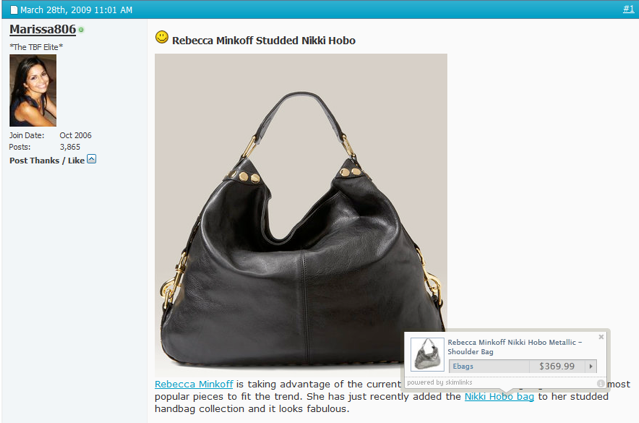
Skimlinks has announced that it is launching Skimwords 2.0, which will provide affiliate links within in-text ads. This opportunity will convert certain keywords into affiliate links from their acquisition of AtmaLinks. It will match over 20 million product in real time to create these advertisements.

Currently the product will only support product comparison services, by analyzing page content and turning them into links when moused-over.  There is no word yet whether it will in the future provide other affiliate marketing opportunities including buying keywords from the site, although the company said that they were open to new possibilities as the service grew.

Marketing Like the Greatful Dead

Sometime ago, a great little book arrived for us in the mail. And it’s very much both of those things: It’s compact and it’s exceptional. It was a copy of David Meerman Scott and Brian Halligan’s Marketing Lessons from the Grateful Dead: What Every Business Can Learn From the Most Iconic Band In History. Sure to those who aren’t Deadheads, “Most Iconic Band in History” might sound slightly superlative, but for all of us, the lessons are invaluable.

Scott and Halligan’s joint effort is broken down into three sections–appropriately dubbed The Band, The Fans, and The Business–which are further broken down into lessons. The structure is neat. They anecdotally outline a common facet about the Grateful Dead and then punctuate that with a lesson. For marketers–first-timers or industry veterans looking to become more well-rounded alike–it provides punchy lessons written in layman’s terms, about the types of strategies employed by one rock band that turned them into unintentional marketing superstars.

In the first chapter–The Band–Scott and Halligan write, “The Grateful Dead teaches us that a memorable name can bring success.” And most of us would be hard-pressed to name another band from the same era whose had even a fraction of the lasting power; indeed, the band’s namesake was namesake.

Another thing the Dead did so well according to the duo? Disrupt the marketplace. In this age of social and tech,market disruption is everywhere. But in their heyday, the Dead was disrupting in a variety of ways, including allowing fans to setup their own recording equipment by the mixing boards to bootleg their shows. This same hallmark is later referenced in The Business, under a lesson about how freeing up content can prove to be a marketing machine of its own. Scott and Halligan write:

Unlike other bands, the Dead encouraged concert-goers to record their live shows, establishing “taper sections” behind the mixing board where fans’ recording gear could be set up for best sound quality.

How did this disrupt the marketplace? Rather than banning fan recordings and pitching ads in the form of traditionally music videos–produced at the band’s expense–the Dead simply allowed their followers to become their marketing muscle in exchange for hassle-free bootlegs.

This ties in with another lesson Scott and Halligan outline about marketers easing their grip on the message they’re trying to affect. “By loosening up your brand, you allow your company to show its personality–and, by extension, its ability to roll with the punches.”

On the whole, all these lessons seem to underscore the importance of the book’s second chapter: The Followers. By being flexible and looking for new ways to disrupt the market, this band affected the type of marketing legacy rivaled only by titanic consumer-facing brands like McDonald’s: They created generations of followers–and not the type who might go onto iTunes to buy a song for $1 and then forget about them, but the type who follow them from one concert date to the next. Regardless of industry, that’s exactly the type of customer loyalty that many of us are frequently after.

From the BluePhoenix Blog

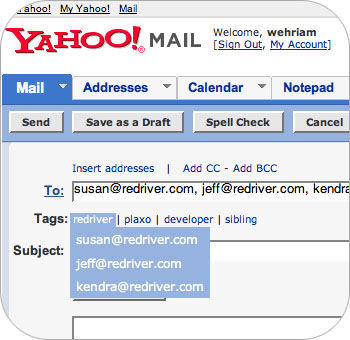
Myths of Yahoo Email Marketing

James Jrumbly of The Email Guide was curious about what exactly gets through from email marketers to Yahoo users.  So he decided to use Yahoo’s email visualization tool and learned quite a bit about the subject.

This is a pretty damn good tool, and one of the things he noted is that almost 100,000 emails a second are delivered through Yahoo’s email systems.

So, how much exactly gets through spam filters? Quite a bit it seems. Most importantly, despite what people say, the keyword “FREE” is not actually blocked by Yahoo email, and all the weird variations such as F.R.E.E. and FWEE are also blocked.

Why? Because IP address, sender and message content are much more important than the subject lines in determining what is spam.

Groupon has CPA to Thank!

Despite all the naysayers about Groupon and its business model, the facts remain the same: Groupon is an enormous success and helped to launch an entire industry. Whether it will be worth $5 billion or $20 billion based on market capitalization will be determined by investors, but its anticipated valuation is noteworthy for a three-year-old company. What’s most interesting is that Groupon built its empire with one major proven method: performance advertising.

In early 2010, from what I am told, the company knew that it was more than just a “small hit.” As Russian investment firm Digital Sky Technologies (DST) invested $135 million in Groupon in April 2010 and more and more companies sought to acquire Groupon, the executive team and investors realized they needed to do something fast.

They needed to show that the Groupon model worked not only amazingly, but worked everywhere and could easily get tons of new users overnight wherever it launched.

So Groupon started to work extensively with performance marketing companies, spending much of its investments on cost-per-action offers to drive new users to its site. At one time, Groupon was perhaps the biggest CPA advertiser on the planet, driving tens of millions of dollars on over 30 different CPA networks, paying for each visitor who signed up from each new city it was expanding into.

Everyone always talks about how performance marketing is a great way to help secure a positive ROI. Commission-based systems like Amazon’s associates are easy ways to sell products and only pay on those sold products. Affiliate and performance marketing represents one of the fastest growing segments of the industry despite the lackluster economy.

Groupon demonstrated that using CPA advertising to obtain new subscribers is an effective approach. Consider these facts provided by Groupon to the Securities and Exchange Commission:

  • Its subscriber base grew from 152,203 as of June 2009 to 115.7 million as of June 2011.
  • It sold 116,231 Groupons in Q2 2009 compared to 32.5 million Groupons in Q2 2011.
  • It expanded from five North American markets as of June 2009 to 175 North American markets and 45 countries as of June 2011.

According to a TakingPitches.com report, Groupon’s marketing spend in 2010 was 94 percent of its gross profit. This is an amazingly high margin, showing that Groupon considered new customer acquisition to be a key goal before it was bought out or filed for an IPO.

Its technique worked, because Groupon went from an estimated $1.35 billion valuation in mid-April 2010 (Source: TechCrunch) to $15 billion in January 2011 (Source: NYTimes.com) to most recently $25 billion to $30 billion (Source: NYTimes.com).

This is an incredible valuation growth, based almost completely on its enormous performance-based advertising budget. It’s really quiet amazing: Groupon’s valuation has increased exponentially in relationship to its traffic and user base. Over time, each user in each country seems to have been worth more to the market than the previous user.

Financial analysts must start taking into account this new metric. What’s great is that it’s completely based on performance-based marketing, in which acquiring more and more users in the international Internet marketplace grows your value exponentially. For companies looking for funding and eventually looking to pursue an IPO or major sale, this is a revolutionary trend. This is why performance-based marketing is the fastest growing segment of our industry and more importantly, one of the most effective.

Marketers Must Start Bing Optimization

Here’s the issue simply. Almost every SEO Company works completely on Google optimization. In fact, almost SEO companies seem to spend all their time obsessing over Google’s infamous algorithyms, how these affect the search engine results and what they can do to get better results. Without knowing what Google is doing, how to make the changes, they can’t advise their clients and make money.  If you are to believe the news, Google Panda is Causing Job Losses.

Depending on Google Optimization is a great strategy, but let’s be honest here, it’s one of diminishing value.  Since Google’s Famous Panda Update, a lot of the tricks and strategies that “grey-hat” marketers use are not working. Read my article on Google Panda and notice why content is king.

However, if you are late to the Google optimization game, there is something you need to pay attention to. It’s called Bing. Yes, Bing, Microsoft’s Search engine service is slowly growing as much as 3-4% each month and according to some numbers Google is loosing as much as 1-2% of their users each month. If you are focusing on Google, you are ignoring a great opportunity in Bing.

Bing isn’t that different than Google, and from what I’m told, uses algorithms similar to Google and some of them make a lot of common sense. One thing that is evidence in Bing is that similarly, Content Sites that have more than 300 words do better than sites with little or no text.

One huge difference in Bing is that backlinks take a significant less priority than Google.  This means that people who have sites that have been around a while, with more content, will always almost be favored more than those that just came around and are trying to use backlink strategy. If you want to think “Bing” you need to start now with creating high content sites that will be around a lot.

Matt Cutts of Google: SEO Is Good

Matt Cutts, the guy who determines what SEO spam is, what blackhat and white hat, and can basically ban your site from Google has been nice enough to share the following video which basically says that he really loves SEO. In a few words, he says that people are better than technology and SEO does a lot of great things including helping people discover new and great content. He of course points out that there are SEO firms that do things that Google does not like and goes way over the line. It’s a great watch in order to know the mind of the guy who can determine your ranking and success on Google.

Affiliates MUST attend ADTECH

November 8-10th in NYC, held at the worst convention center in the world (no hotels, no restaurants in the area) will be ADTECH. Many affiliates do not attend ADTECH feeling that it is not for the affiliate industry; thinking that the lack of training, affiliate centric topics will make it a boring event.  They are wrong, and in fact missing perhaps one of the top opportunities to really learn about the industry and grow their business.  ADTECH in fact may be one of the best opportunities for affiliates and here are my thoughts on it:

1)   First, the idea that the affiliate industry is separate from the rest of the industry is turning out to be a complete fallacy. The new term, as you may know, is Performance Marketing, and with being a more mature industry, comes more mature technologies. The rest of the industry is embracing Performance Marketing as a method to reach consumers and they are looking for people to help them. Go to ADTECH with your experience, with your resume, and perhaps you’ll get a good consulting gig or project that uses your expertise to make a lot of money.

2)   New Media Buying Opportunities are always launched at ADTECH. Don’t wait until your favorite blogger tells you that some new system is a good platform to buy media. Find out for yourself what is up and coming and more importantly where there is cheap inventory. If you are an experienced media buyer, ADTECH is a cornucopia of untapped inventory. New companies especially are looking for someone to help them monetize inventory and you never know, you might become their main source for affiliate campaigns.

3)   Open your Mind & Brainstorm. Being an affiliate is a great job, but what is better is coming out with product that everyone can use. Don’t fall into the trap of being just an “affiliate” who follows other – but instead learn to create things and think outside the box.  ADTECH is an amazing place to really learn about technologies and opportunities that exist and then think about applications for the affiliate industry. If you create a product or method that you can pass to other affiliates and more importantly, works, you’ll find yourself beyond any “super-affiliate.”

Last of all, the floor is absolutely free if you register. Register now, get an exhibition pass, and you can walk the floor all day, pick up all the pens, plushy mascots and flashlights you want.

Don’t forget to register for The Official CPAWAY KickAss Party @ Adtech

Is Flash Sales a New Opportunity?

Could Flash Sales be a new affiliate marketing opportunity? As more and more sites are turing to flash sales as a method of marketing, they seem to be almost expected. This technique, which seems to have a better longevity than the now failing Daily Deal model, provides significant discounts to consumers of certain products for a limited tiem

HubPages says of flash sales, that “one of the most crucial features of flash selling is, well, as the name abundantly suggests, abrupt offers for service at subsidized prices. The offers are ‘abrupt’ and lasts for a tiny window period – a brief time. It is also one of the safest deal takings. In other words you have to avail the opportunity as soon as you are offered the services. Consumers normally receive online offers including even invitations in the mail/emails.”

MarketingVox reports that Flash Sales in the Travel Industry are now a new staple in the travel industry:

…with Cruise price comparison website CruiseCompare teaming up with Cheapflights to launch a cruise flash sales on its site. The deals are available for seven days with savings of up to 50% being offered to members of the site on a range of cruises, according to Travolution.

Another example is Travelocity, which recently launched a twist on the concept: a single new “dashing deal,” available only on that day, but valid for travel for up to several months (via the Baltimore Sun).

Seems that many affiliates and CPA networks should partner up with retailers to promote their flash sales for unique positions both in social marketing and email marketing.

Google Panda Causes Job Losses?

If you didn’t know, just a few days ago, Google updated Panda again, and quite a few more sites dropped off the radar. This change however perhaps is one of the biggest changes since the original panda update. Tons of complaints have been logged all over the blogosphere with people calling Matt Cutts, the head of all search, nothing less than the devil.

According to reports, companies like Consumeraffairs, prnewswire, entrepenuer.com and even Technorati have been experiencing huge hits.

What is most interesting however is that according to a poll taken by Barry Schwartz at Search Engine Roundtable, almost 10% of the industry asked claimed to have actually lost a job because of the Google Panda update. Some 6.8% claimed  that they laid off people since the update. Even more interesting is that 25% of the industry said they were afraid they’d lose their job since the update.

Does this mean that Panda is evil, or perhaps that a great deal of the industry was doing blackhat SEO and just was caught?